
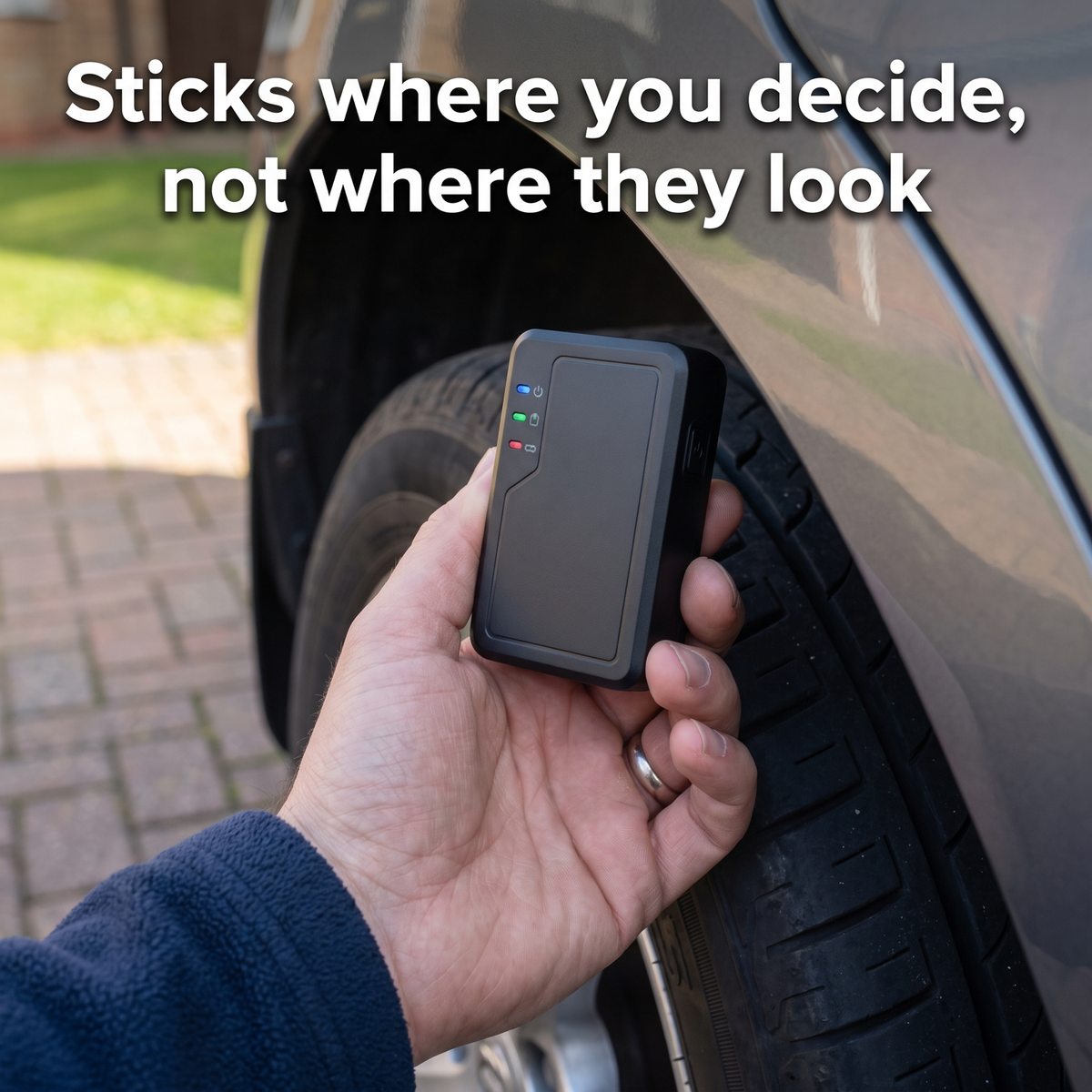
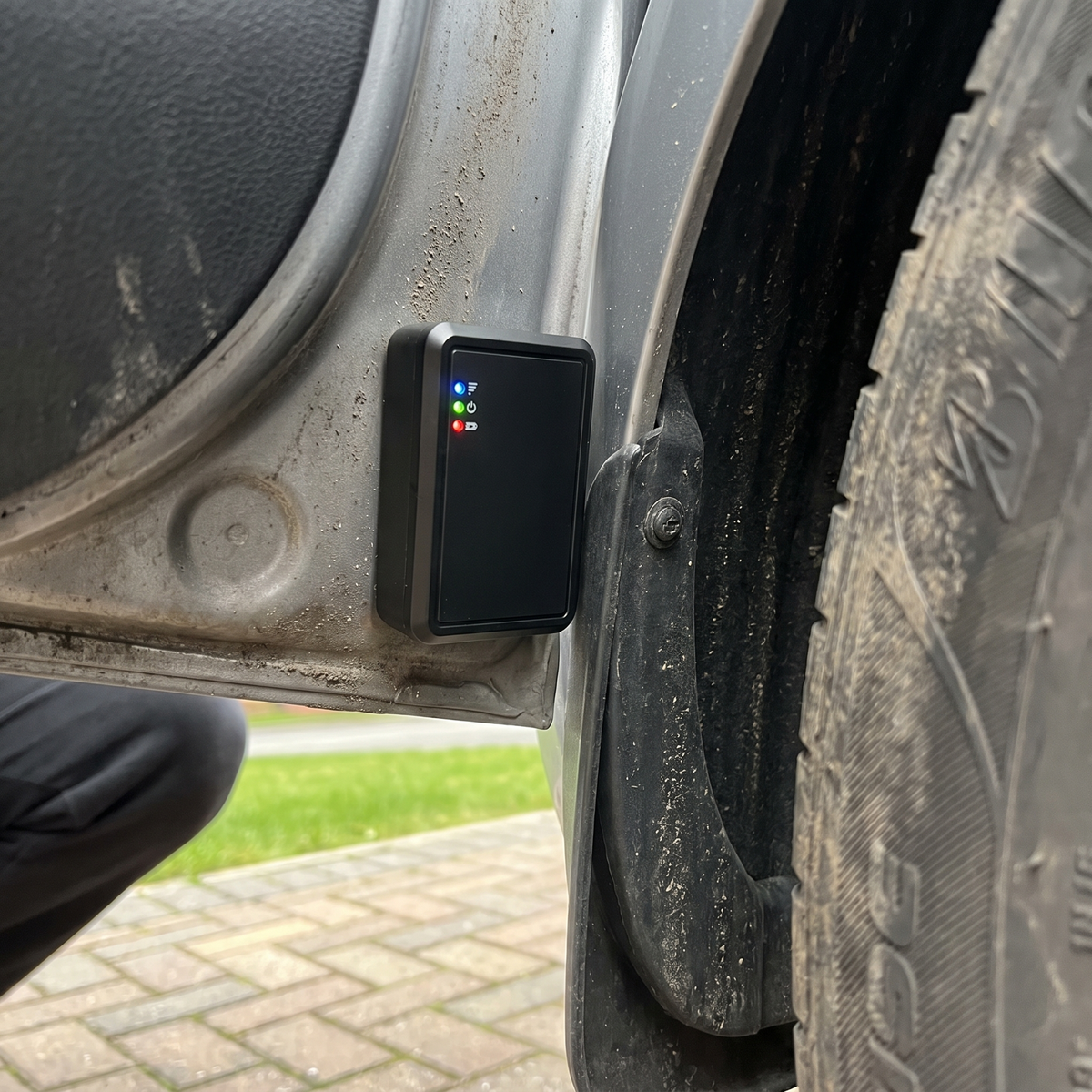
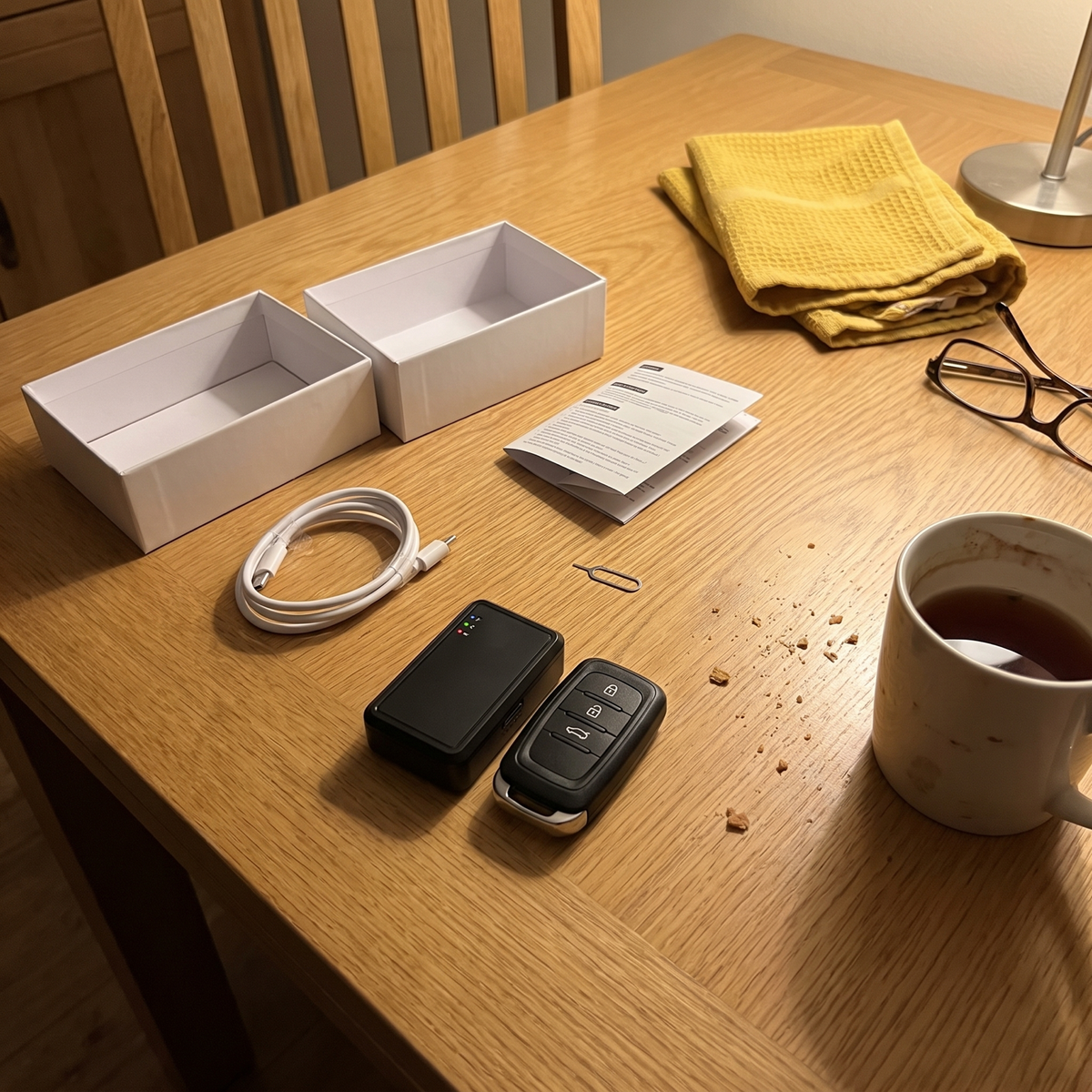
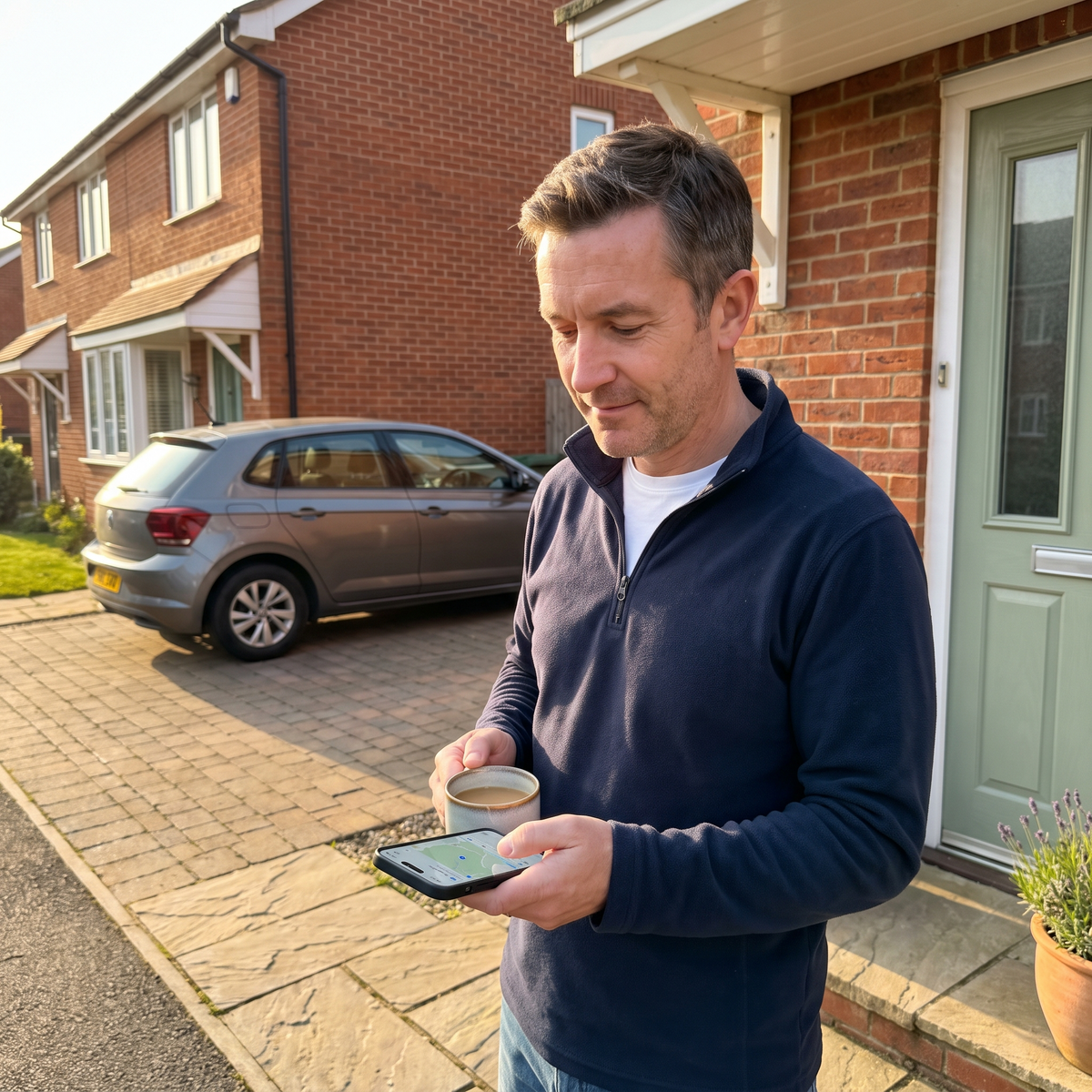
Spent a year looking at the subscription ones and never bought. This I ordered on a Tuesday night; by Friday it was under the back seat. It tells me when the car moves, and there’s nothing to renew.
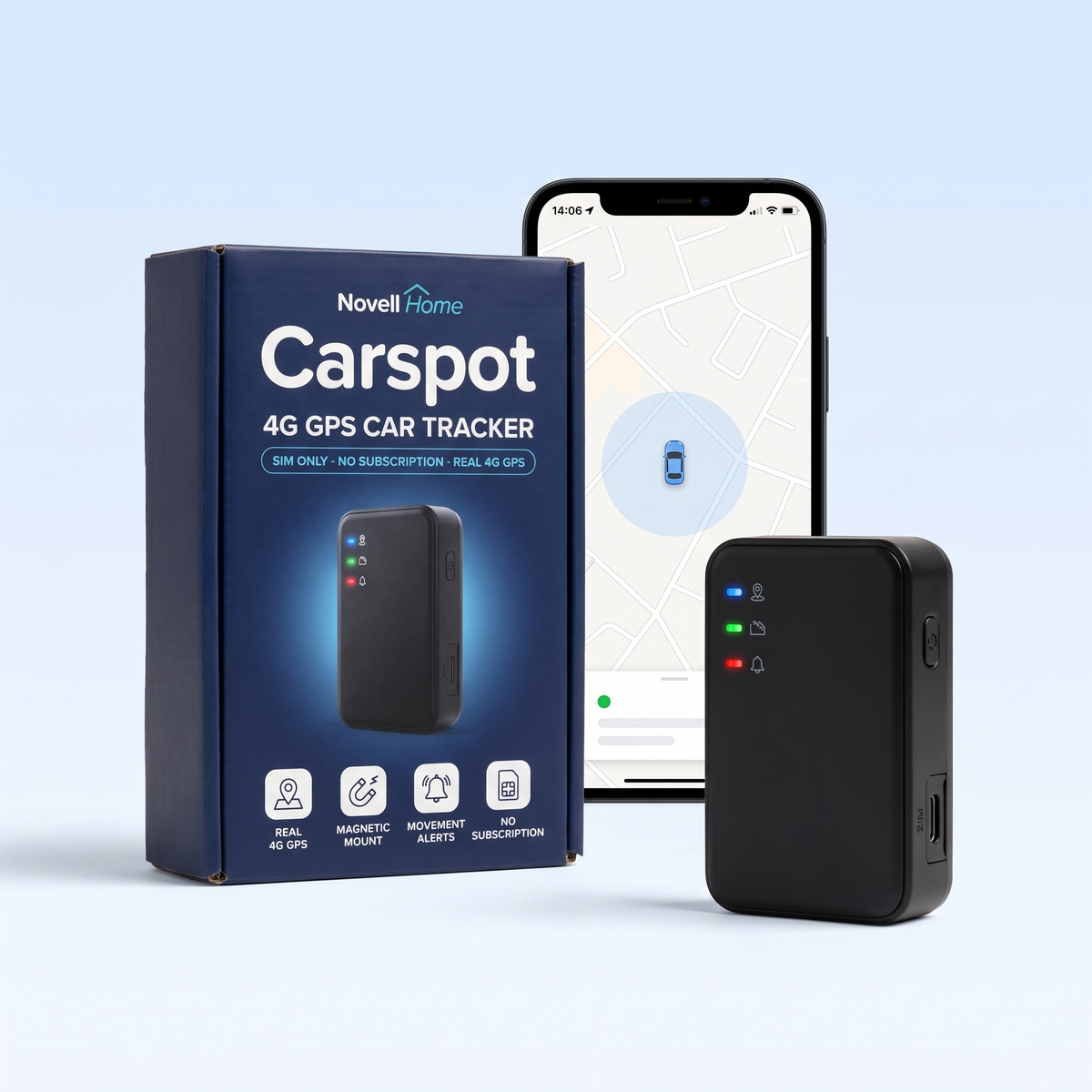
Carspot™ 4G GPS Car Tracker — SIM Only, No Subscription
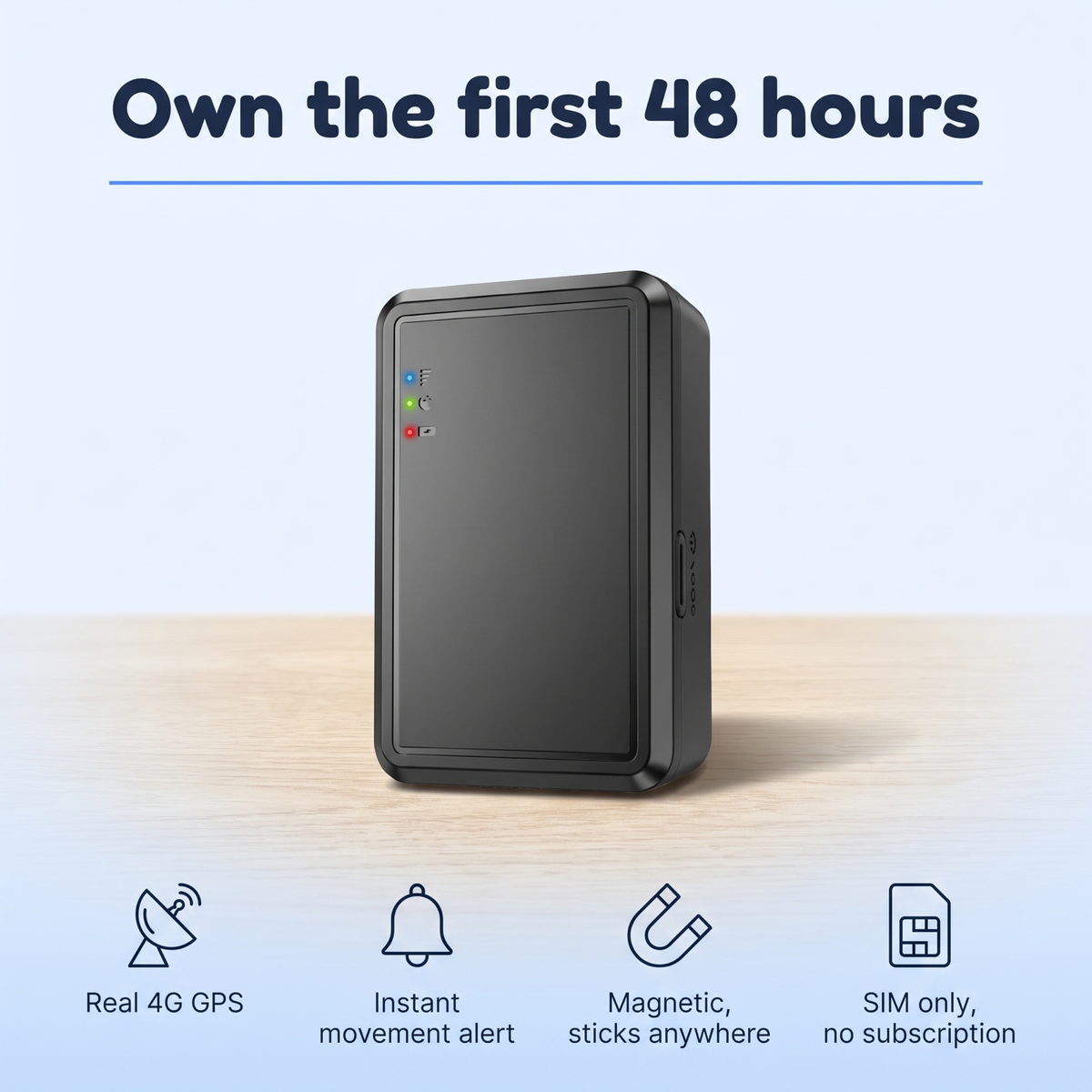
📍 Real 4G GPS, not Bluetooth — a live position on your phone the moment the car moves, plus a fence around your drive that tells you the instant it’s crossed
🔇 Silent, and hidden where you choose — no beep, no alert to the thief’s phone, nothing printed on the case. Built-in magnet, fits in five minutes, no wiring
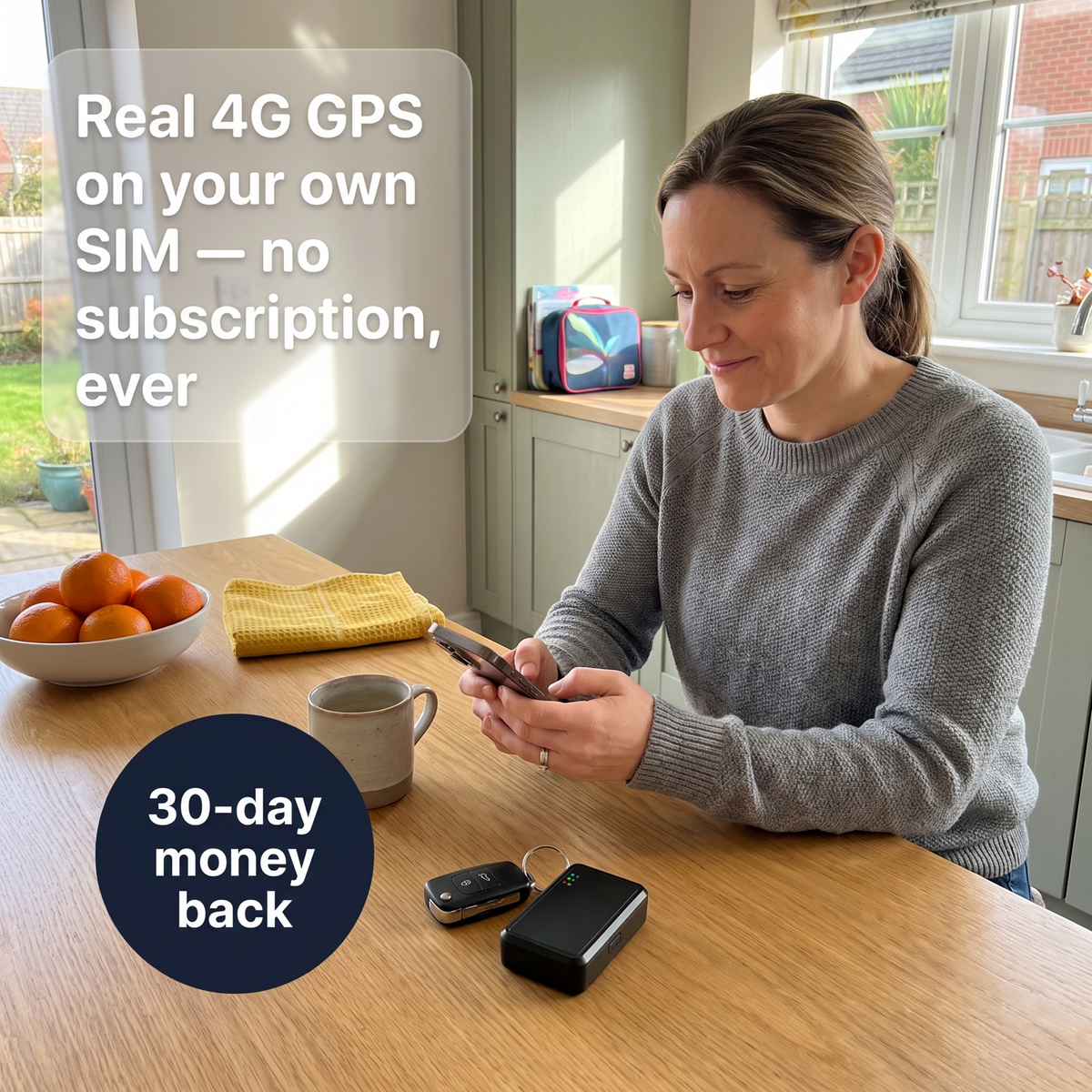
💷 SIM only — no subscription — nothing to renew, no platform that can switch it off. Fit your own SIM in three steps, or choose Ready and it arrives set up
A stolen car isn’t lost when it’s taken. It’s lost in the 48 hours nobody’s looking.
Here’s what actually happens after a car leaves a drive at three in the morning. Not the film version — the version in the forum threads, the crime statistics and the recovery trade’s own playbook.
Nobody comes
Most vehicle thefts in England and Wales are closed with no suspect identified — 84% of them, on the Home Office’s own figures. You get a crime reference number by email and a suggestion to start a claim. The search, if there is one, is yours.
The built-in tracker wakes up too late
Plenty of newer cars have a tracker from the factory. It can usually only be activated on request, through a process that takes a day or two. By the time it’s switched on, the car has already been where it was going.
The thief’s own test
Stolen cars are routinely parked up on a quiet street for a couple of days before they go anywhere. The people who took it are waiting to see whether anyone comes looking — whether it’s tracked. If nobody turns up, it moves on: to be stripped, or into a container. That parked-up car, two miles from your house, intact, is the whole opportunity. And nobody is watching it.
The car isn’t gone yet. It’s parked. The only question is whether anyone knows where.
Own the window.
Carspot is built for those first hours and nothing else. It doesn’t try to stop a theft — locks, an immobiliser and a well-lit drive are for that. It does one thing: the moment the car moves, your phone knows, and so do you.
A shove off the drive, a flatbed, a tow — the movement alert fires at the first metre, not after a scheduled check-in. Open the app and you’re looking at a live GPS position on a map, updating as the car moves. Draw a fence around your street and you’ll be told the instant it’s crossed.
Then the car does what stolen cars do: it gets parked somewhere quiet, to see if anyone comes. This time someone does — the police, with an address you gave them. Not two days later. Tonight.
Four ways a tracker fails the thief’s test. Carspot passes it in its sleep.
Thieves don’t just wait — they look. A tracker only wins the window if it survives being looked for. Here’s what gets found, and what doesn’t.
1. It’s silent
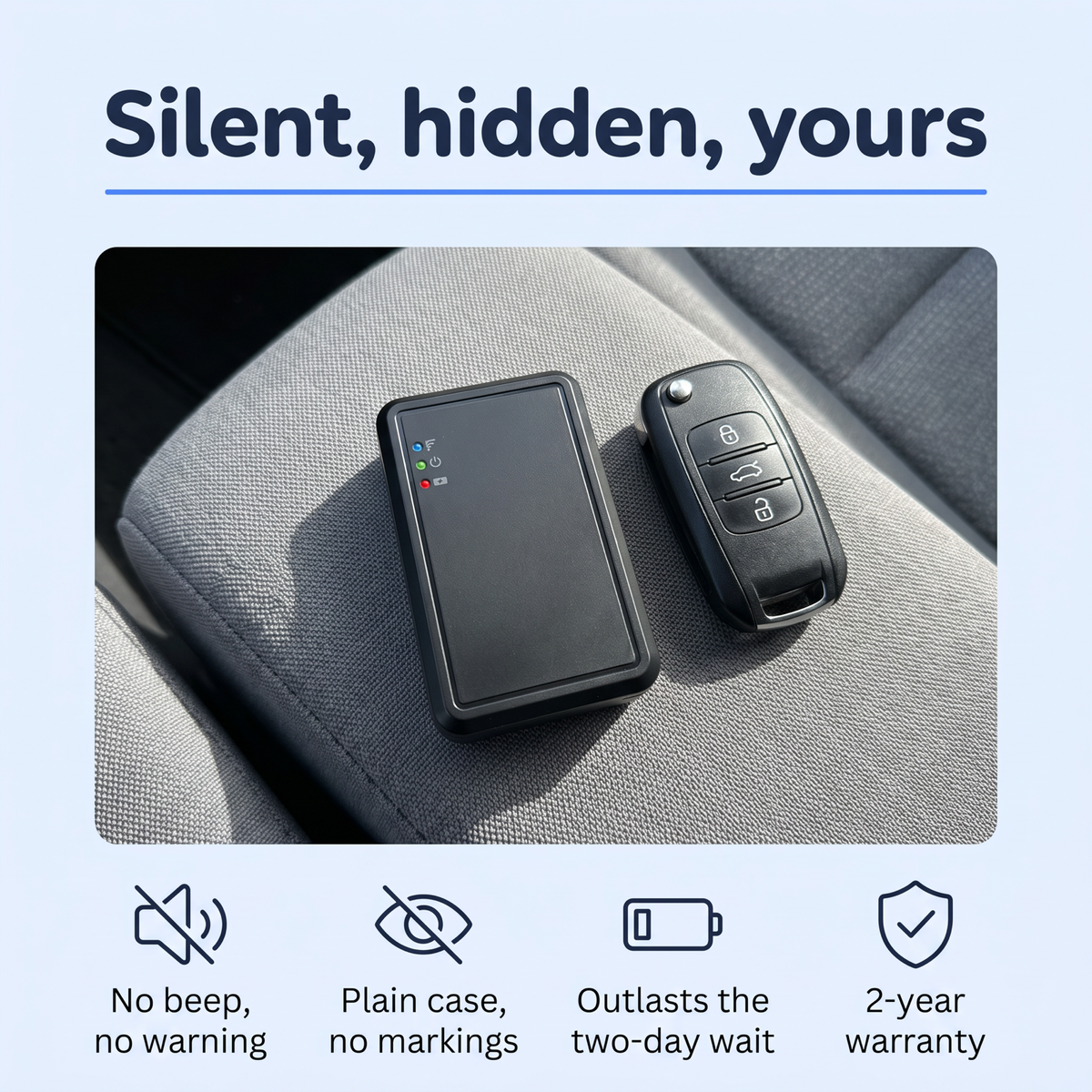
Bluetooth tags are designed to warn strangers they’re being followed — so a thief’s phone tells them the car is tagged, and some tags chirp on their own. Carspot doesn’t broadcast, doesn’t beep, and has nothing printed on the case. Nothing to hear, nothing to read.
2. It’s where you put it
A tracker fitted at a garage goes where trackers get fitted — and that’s where a thief looks first. Carspot is a magnet and a black box the size of a matchbox. It goes wherever you decide, and you’re the only person who knows.
3. It’s already awake
No “last seen 40 minutes ago”. The built-in motion sensor wakes the tracker on the first movement and sends the alert then. Shove, tow, flatbed — it doesn’t matter how the car leaves. And because it has its own battery, it doesn’t care whether the car is switched on.
4. It’s yours
It runs on your own SIM, not on a platform’s. No subscription to lapse, no plan to renew, no company that can switch it off, no monthly fee for knowing where your own car is. If you own the car, you own the tracker — completely.
Silent, hidden where you choose, awake at the first metre, and yours. That’s the whole test.
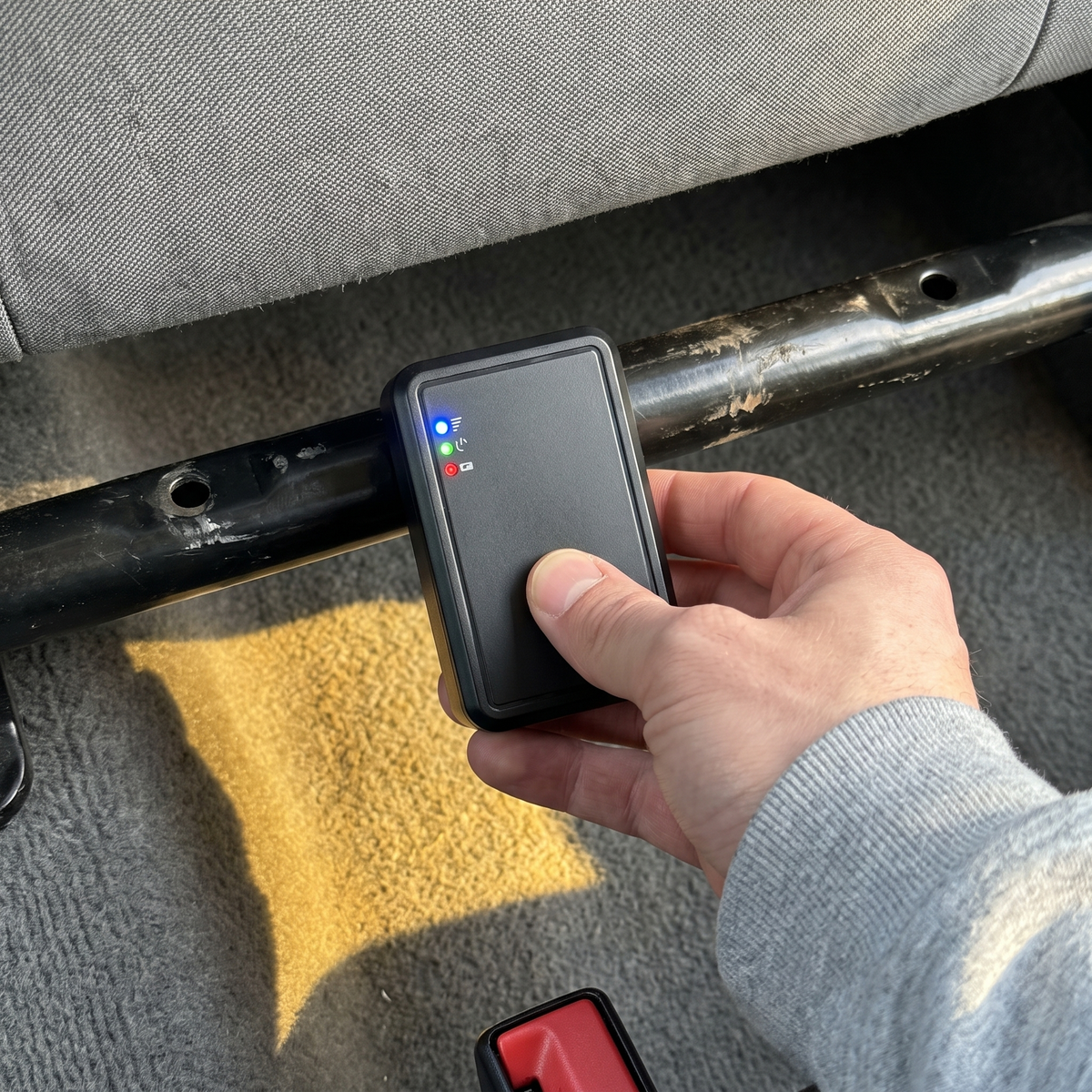
Where to hide it — and the three places not to.
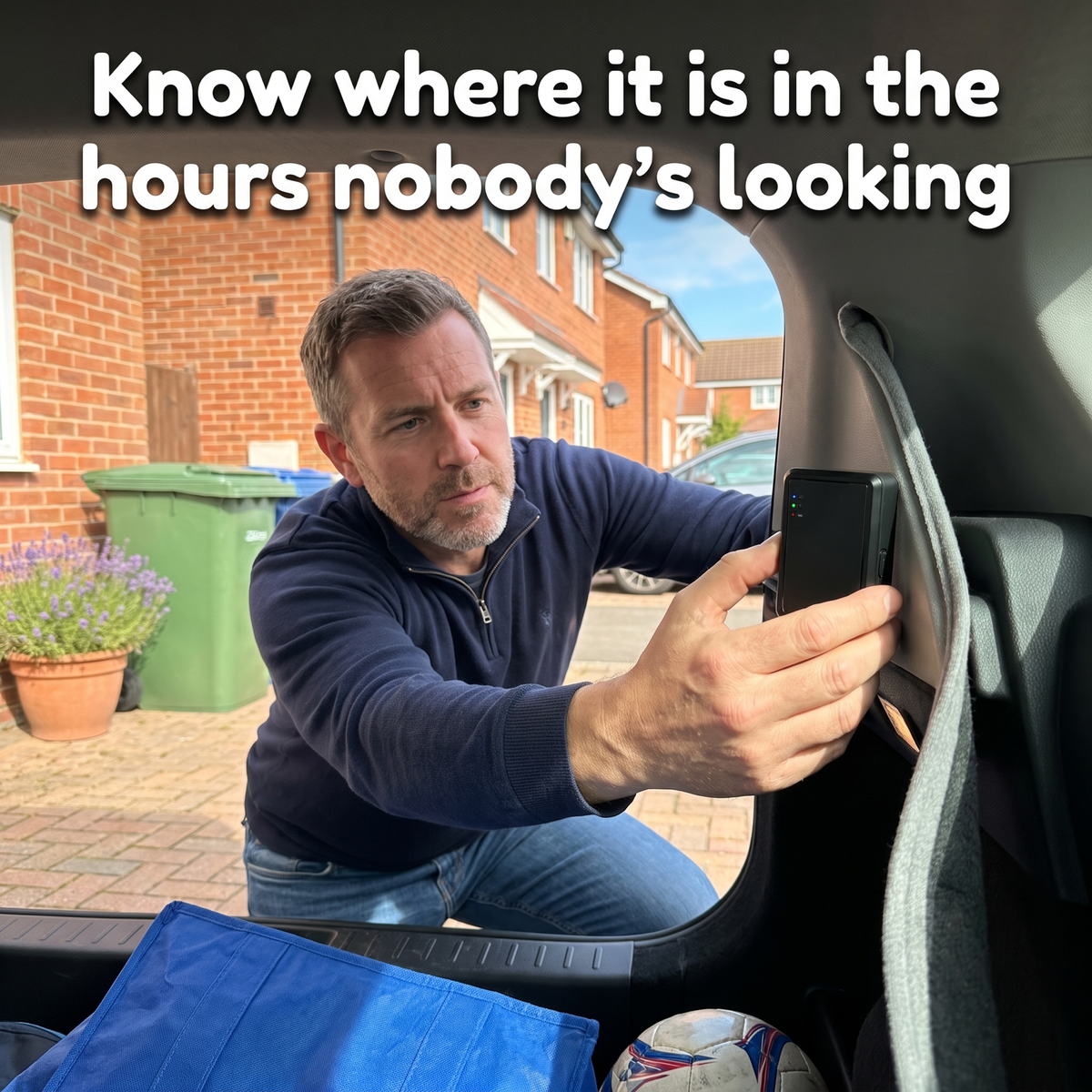
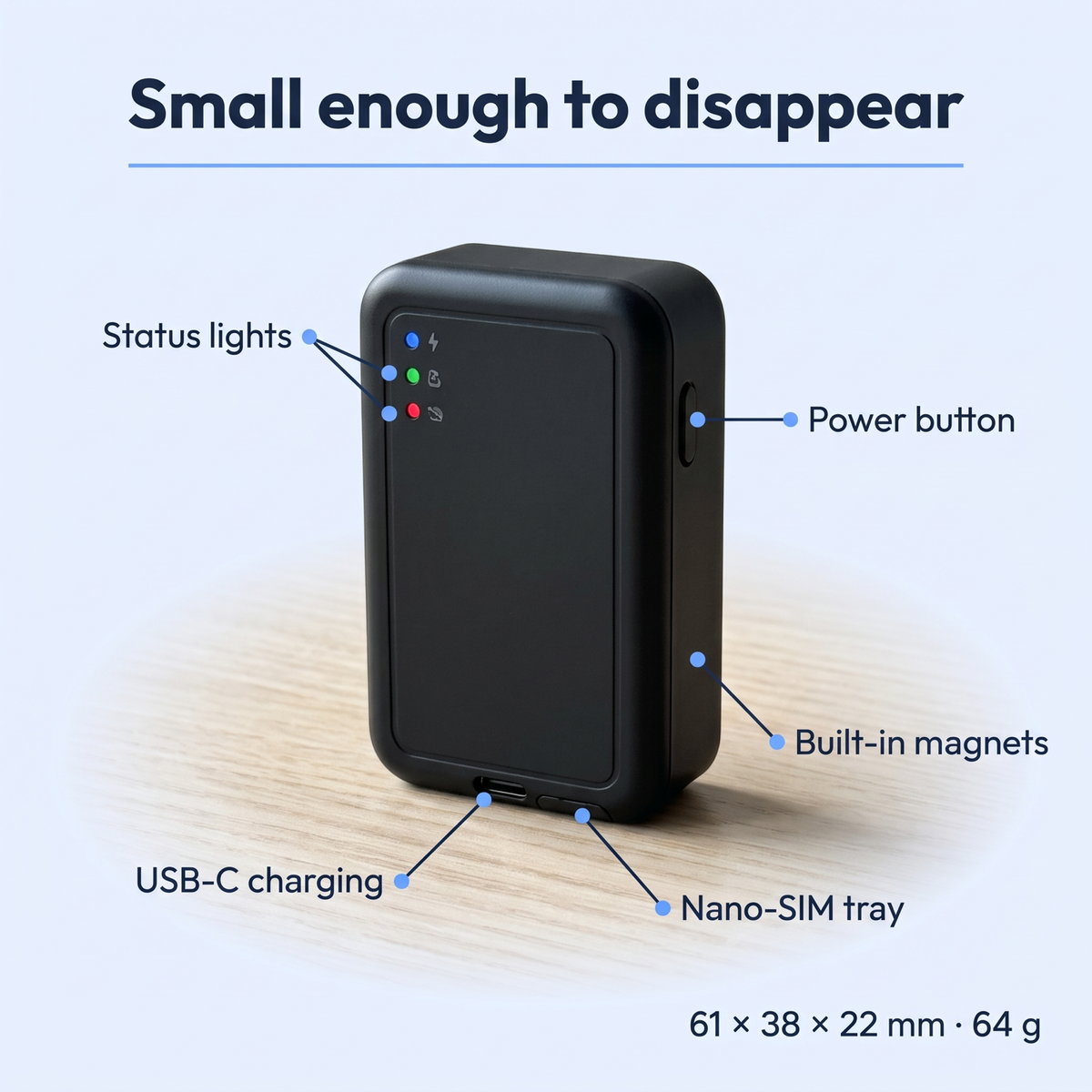
Carspot has a strong magnet built in and weighs about the same as a small bar of chocolate, so fitting is a five-minute job with no tools and no wiring. The point is to choose somewhere a person in a hurry, with a torch, wouldn’t think to check.
Don’t bother with the glovebox, under the driver’s seat, or the boot floor. Those are the first three places anyone looks, and they’re where cheap trackers get found in minutes.
Do try: the steel frame under a rear seat, behind the boot side trim, inside a rear wheel-arch lip, or under the parcel shelf. Wipe the metal clean and dry, press the tracker on, give it a tug. One honest note: most bumpers are plastic, so the magnet won’t hold there — use a cable tie instead. Keep it out of a fully enclosed steel box so it can still see the sky, and you’re done.
The card in the box lists the best spots by type of car. You’ll find a better one on your own car in ten minutes — and that’s exactly the idea.


They fitted Carspot™
They stopped checking the drive
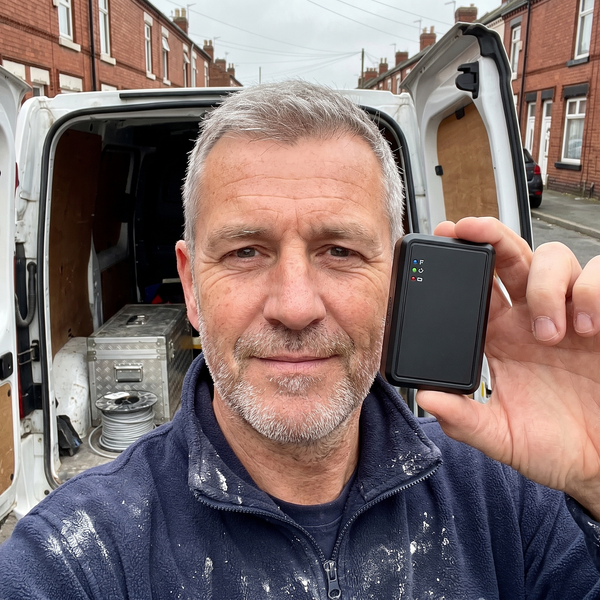
Tools in the back, van on the street, and two mates have lost vans this year. Put Carspot behind the bulkhead trim and drew a fence round the house. It’s told me twice the van was moving — both times it was me, forgetting I’d set it. Which is exactly what I want it to do.
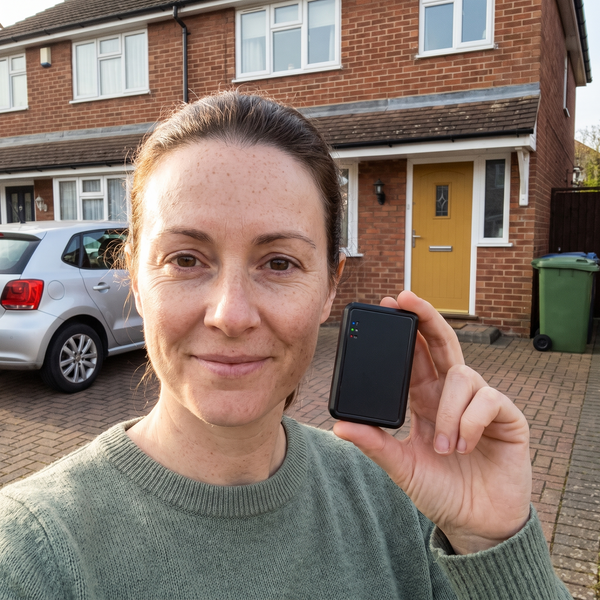
Two cars on our road went in a month, one the same model as ours. My husband spent a year looking at the subscription ones and never bought. This we ordered on a Tuesday night and it was under the back seat by Friday. I sleep properly now, which sounds dramatic until you’ve had that month.
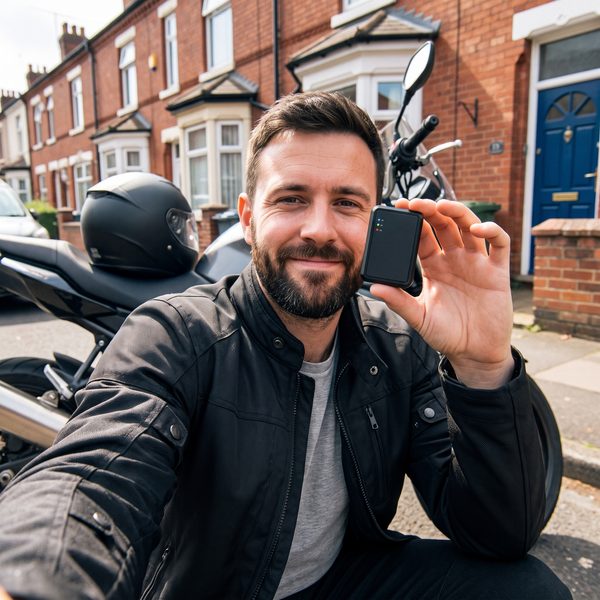
Bike lives under a cover on the drive. Tracker’s tucked under the seat pan, out of sight. The movement alert is instant — it goes off when I lift the cover. No plan, no monthly emails, it runs on a SIM I own. That’s the bit that sold me.
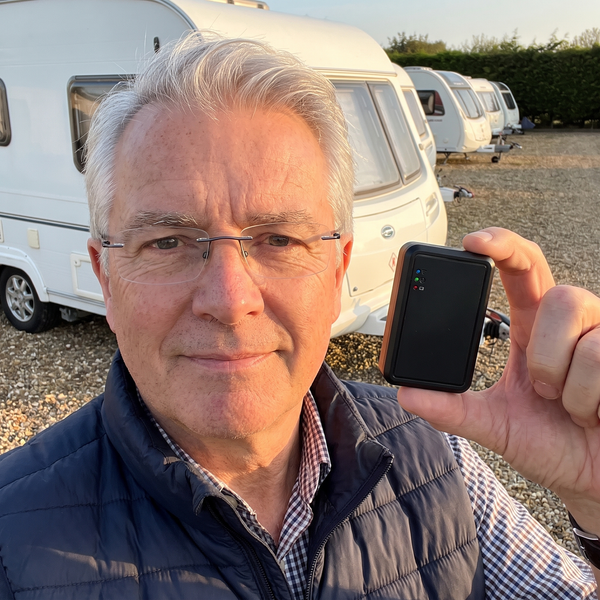
Caravan sits on a storage site all winter. Tracker’s inside a locker, magnet on the chassis. I check the app on a Sunday, it’s where I left it, and there’s no plan to renew in January. Battery has been fine on standby — I charge it when I visit.
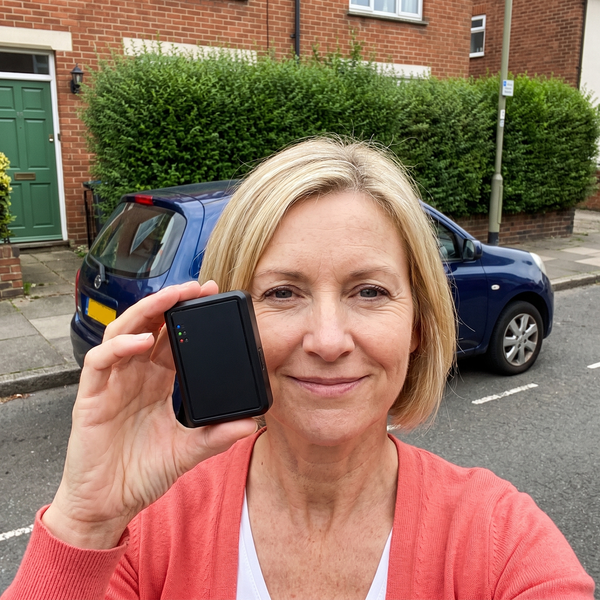
Bought it for our son’s first car more than for the car. If it goes from outside his flat we’ll have a location before he’s finished ringing us. He knows it’s there — it’s not about watching him. Setup was three steps and took less time than making the tea.
Three ways to know where your car is
Ticks and crosses in every column, including ours.
A £30 Bluetooth tag
Finds keys, not cars
- Cheap, and a year on one battery
- Fine for a lost bag
- Not GPS. It relies on passing phones — “last seen 40 minutes ago”
- Tells the thief’s phone it’s there. That’s what it’s designed to do
- Can chirp on its own, and ties you to one phone brand
A tracker with a plan
Real GPS, rented
- Real GPS, SIM already inside
- Works out of the box
- A monthly or yearly fee, for as long as you own the car
- Stops working the month the plan lapses
- Every extra vehicle is another plan
Carspot™
Real GPS, owned
- Real 4G GPS — movement alert at the first metre, geofence, 180 days of history
- Silent, nothing on the case, magnetic, hidden where you choose
- SIM only — no subscription. Nothing to renew, yours outright
- Needs a SIM: you fit one in three steps, or choose Ready and we do it
- Can’t see through a jammer or a shipping container — nothing can. That’s why the first hours matter
So what does knowing where your car is actually cost over five years?
You’re not paying for a fancier box. You’re paying to stop paying. Judge it on that: if it isn’t fitted, fenced and quietly doing its job inside 30 days, send it back.
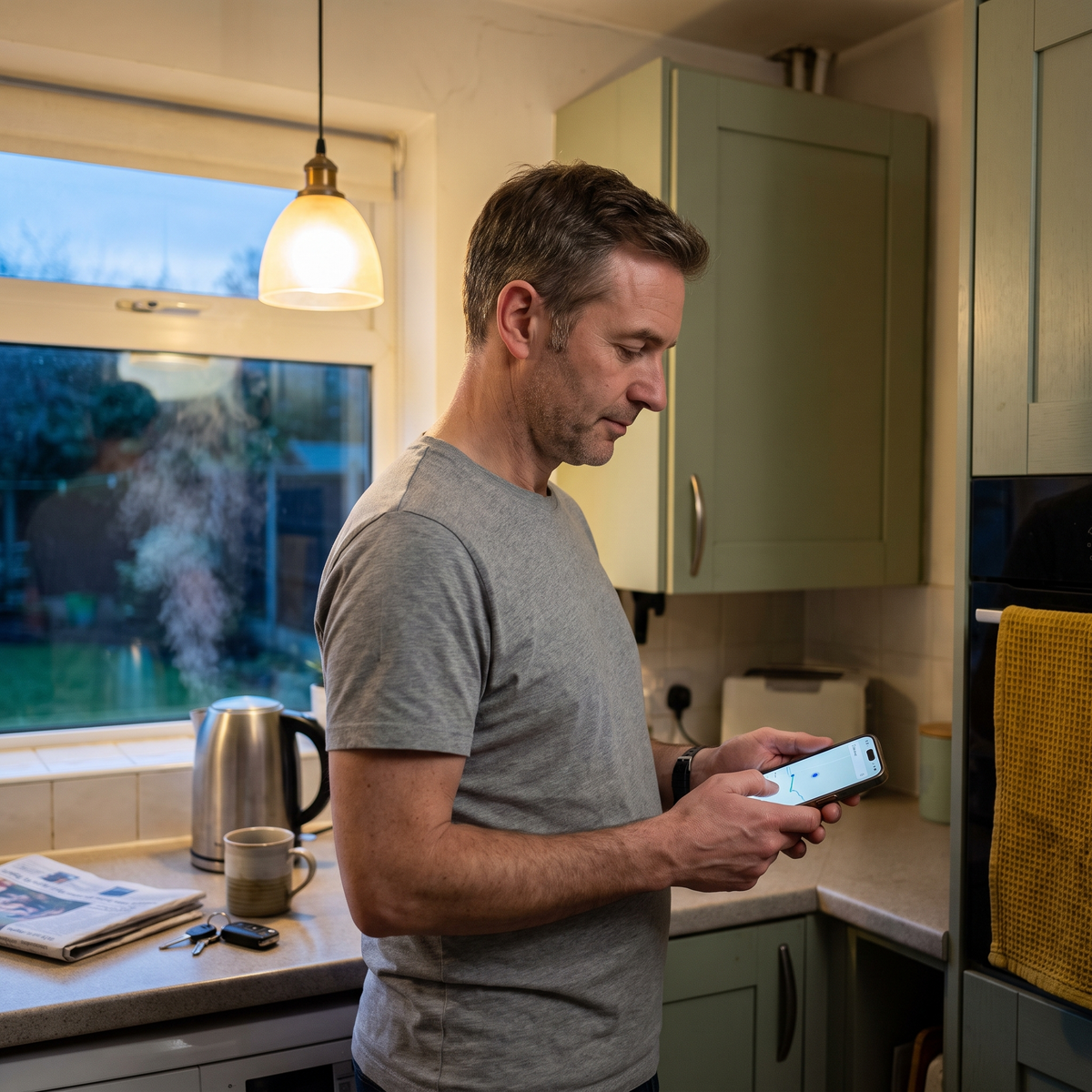
What to do at 3am if it moves.
The alert comes in. Here’s the plan — it’s on the card in the box too, because nobody thinks clearly at three in the morning.
1. Look, don’t go. Open the app and screenshot the map with the time showing. If the car is moving right now and you can see it, that’s a 999 call — a theft in progress. If it’s already parked up somewhere, it’s 101.
2. Give them an address, not a story. “My car was taken from my drive at ten to three. It’s now stationary on this street — here’s the live position.” A position is something a control room can send a unit to. A crime number isn’t.
3. Keep feeding them. If it moves again, ring back with the new position. Be politely persistent.
4. Never approach the car yourself. Not to look, not for a photo, not to “just check”. Nothing on the road is worth meeting the people who took it. Carspot’s job is to give you the address. The police’s job is to go to it.
SIM only — no subscription. Here’s exactly what that means.
Every “no monthly fee” tracker hides the SIM in the questions and answers. We’d rather put it here, in three steps.
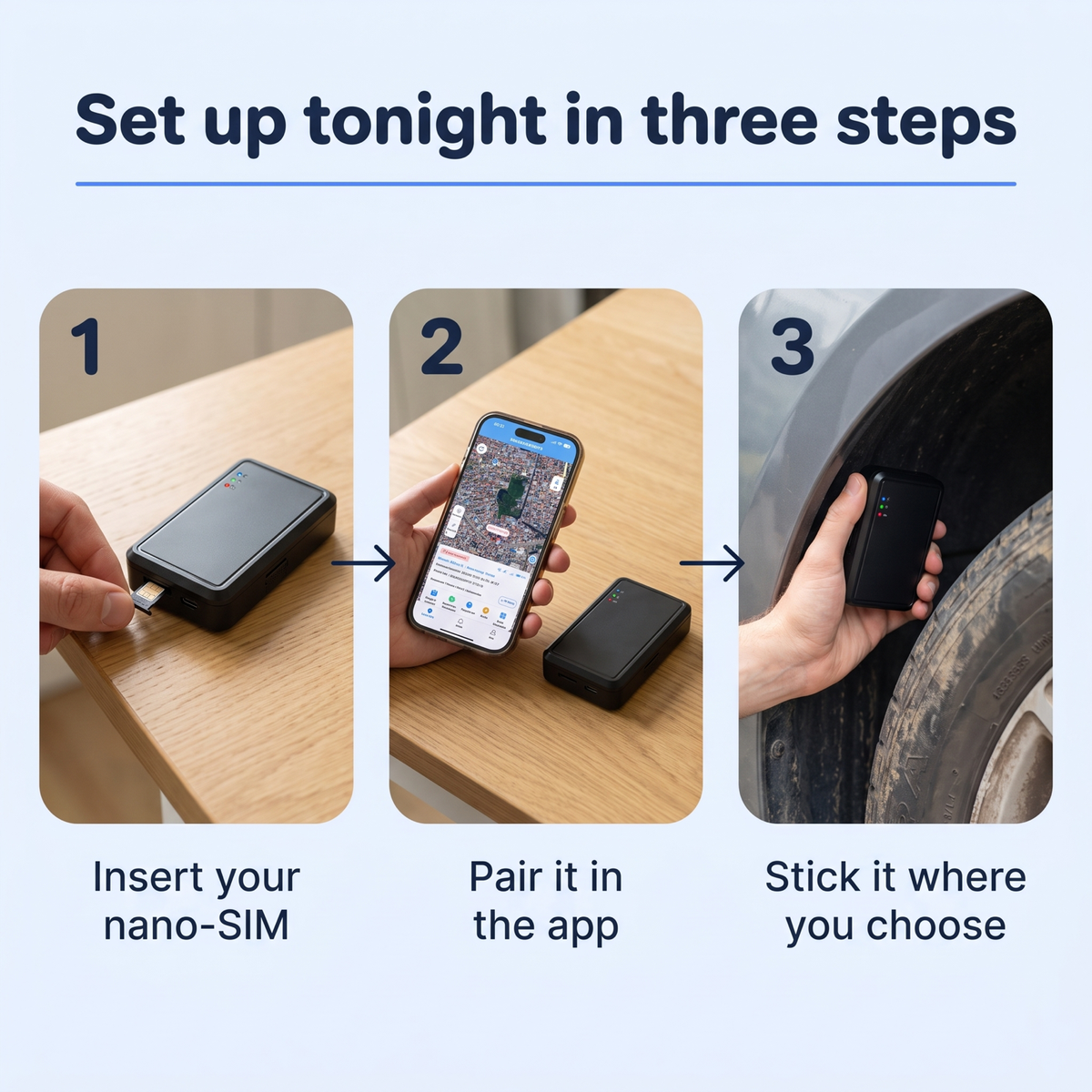
Get a nano-SIM with data
Any UK network, any pay-as-you-go data SIM — the same kind that goes in a phone. It’s yours: your number, your account, your choice of network. No plan from us, ever.
Slot it in, charge, switch on
The tray pops out on the side. Slide the SIM in, charge by USB-C (cable included), press the button. Three little lights tell you it has power, signal and a fix.
Scan, name it, draw a fence
Scan the code in the free app (iOS and Android), name your car, and draw a circle round your drive. You’re done. Everything after this is Carspot’s job.
What Carspot does — and what it honestly doesn’t
You read the three-star reviews first. So do we. Here they are, written by us before you have to go looking.
✅ What it does
- Real 4G GPS with a live position on a map, a movement alert at the first metre, fence alerts, and 180 days of history
- Silent, unmarked, magnetic — hidden where you choose, fitted in minutes, no wiring, its own battery
- Runs on your own SIM — no subscription, no platform fee, nothing to renew
- Standby battery rated by the maker at four days and more — enough to outlast the two-day “parked up” test. We’re measuring the real UK figure and will print it here
- Water-resistant for life under a car, in a wheel arch, on a caravan chassis
- 30-day returns, 2-year warranty, UK support
❌ What it doesn’t
- It won’t stop a theft. Locks and an immobiliser do that. Carspot tells you where the car went
- It can’t see through a signal jammer or a steel shipping container. No GPS can. That is exactly why everything on this page is about the first hours, before either of those happens
- It needs a SIM. There’s no subscription and no platform fee, but the tracker sends its position over the mobile network, and that means a SIM — yours, or fitted for you if you choose Ready
- Live tracking eats battery. Standby is days at a time; continuous live tracking is measured in hours, not weeks. Two figures, always — and we’ll print both measured numbers, not the ones on the box
- It needs mobile signal. Underground car parks and remote valleys are blind spots for every tracker on the market, ours included. The history fills in when it’s back in coverage
- Water-resistant, not submersible. Rain, spray and a wet road, yes. A pressure washer aimed straight at it, no
If a tracker page promises “no monthly fee” and doesn’t mention a SIM until the questions and answers, read the questions and answers. We’d rather you knew now.
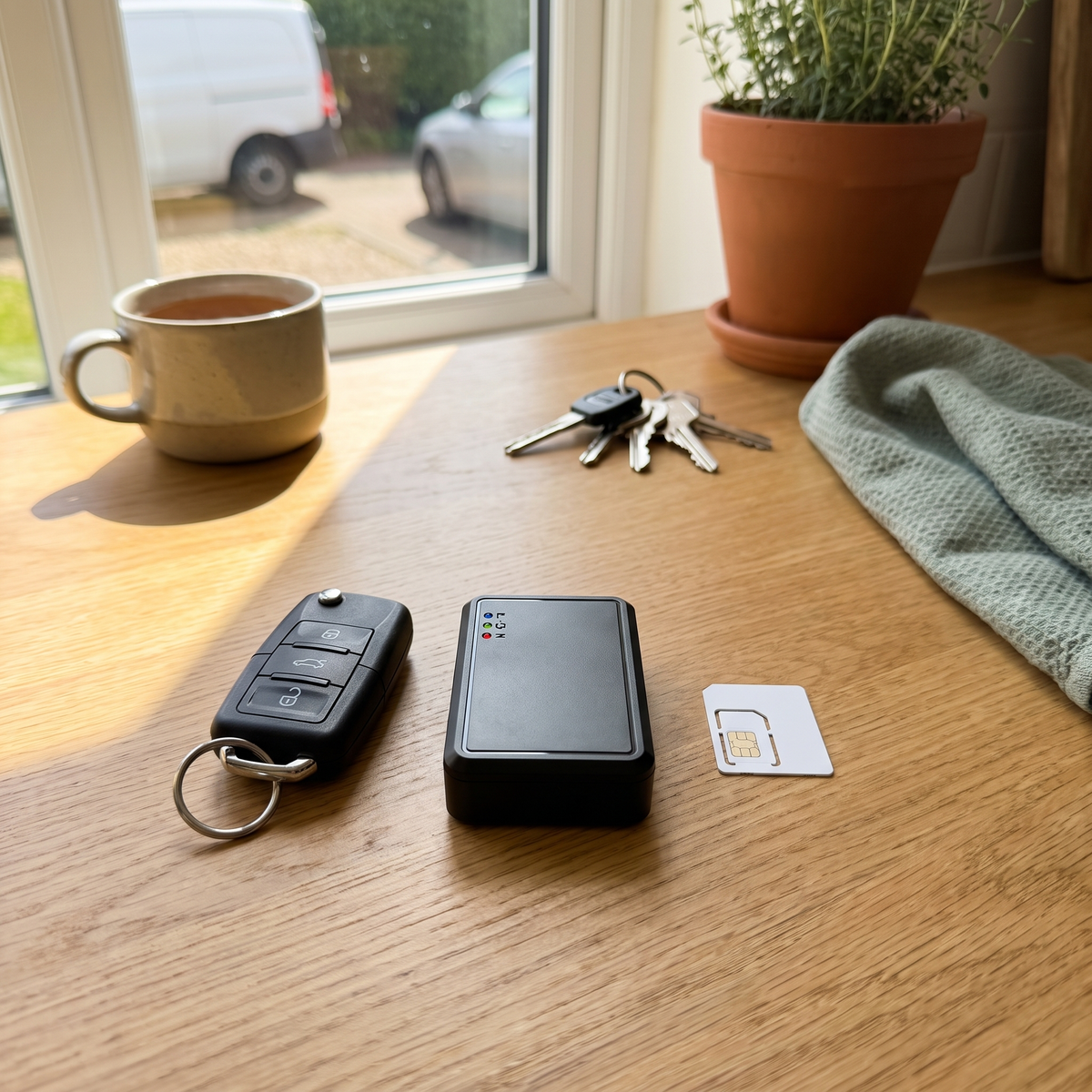
Why pay monthly to know where your own car is?
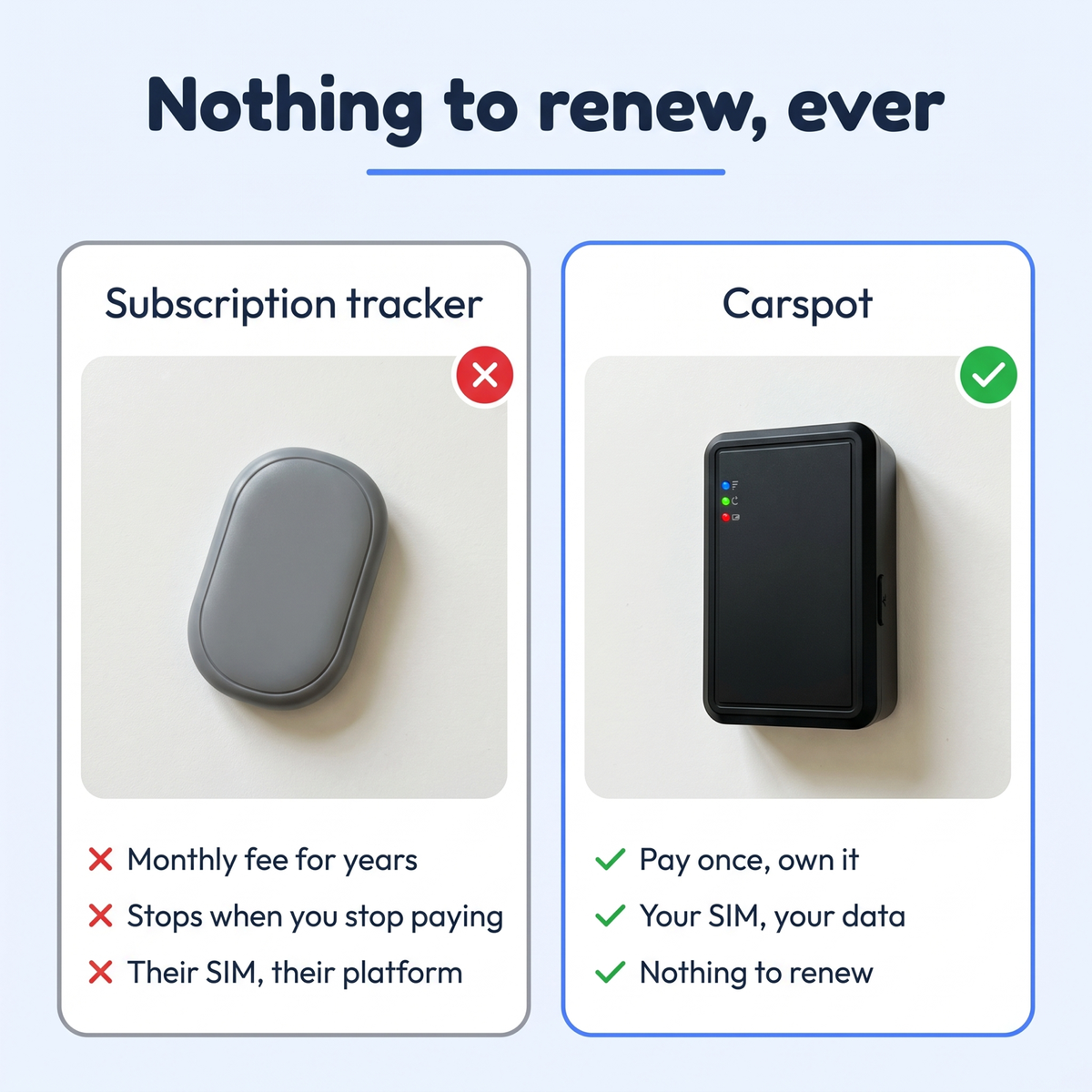
Every serious tracker sold in the UK comes with a SIM inside it and a plan wrapped round it. Pay monthly, or pay yearly, for as long as you own the car. Miss a payment and the tracker becomes a black plastic box. Sell the car, and the plan carries on until you remember to cancel it.
Carspot goes the other way. The network you need is already in your pocket. A data SIM you own, in a tracker you own, reporting to an app on your phone. No plan to lapse. No company between you and your car’s location. No renewal email in January.
It’s also why the second vehicle is cheap. The van, the bike, the caravan on the storage site — a second Carspot needs a second SIM, not a second subscription. That’s what the Twin pack is for.
Frequently Asked Questions
So it does need a SIM. Isn’t that a subscription in disguise?
No. A subscription is a fee you pay a company to keep their service switched on. A SIM is something you own, on your own account, with your own choice of network — the same as the one in your phone. There is no fee to us, no platform charge, and nothing that renews. If you’d rather not deal with the SIM at all, Carspot Ready arrives with one fitted, activated and paired.
Won’t the thieves just find it?
They find two kinds of tracker: the ones that announce themselves, and the ones in the usual places. A Bluetooth tag tells a thief’s phone it’s there. A tracker fitted at a garage is under the dash or behind the boot trim, where every tracker is. Carspot is silent, has nothing printed on the case, and goes wherever you decide. The card in the box lists spots by type of car; you’ll think of a better one on yours.
What about signal jammers and shipping containers?
Honestly: a jammer or a steel container blinds every GPS tracker made, at any price. That isn’t a reason to skip a tracker — it’s the reason the first hours matter so much. Stolen cars are usually parked up on a street for a day or two before they go into a container, to see if anyone comes. Carspot is built to make sure someone does — the police, with an address — during that window.
Isn’t a £30 Bluetooth tag enough?
It’s brilliant for keys. For a car it has three problems: it isn’t GPS, so it only reports when a passing phone happens to see it (“last seen 40 minutes ago”); it’s designed to warn a stranger that they’re being followed, which in this case is the thief; and some of them chirp. Carspot is a live 4G GPS position, and it says nothing to anyone but you.
How long does the battery really last?
Two figures, always. On standby — parked, waking only on movement — the maker rates it at four days and more, which is what the two-day “parked up” test needs. In continuous live tracking, with the position refreshing every few seconds, count in hours, not weeks. We’re measuring both on the final UK unit and will print the real numbers here rather than the ones on the box. The simple habit: charge it when you wash the car.
Will it still work after the 2G switch-off?
Yes. Carspot is a 4G tracker — that’s the network your phone uses today, and it’s the one that will still be here after the old 2G network is finally turned off. The older £30 trackers you’ll find online are mostly 2G, which is why so many of them go silent.
Does it need wiring into the car?
No. It has its own battery and a built-in magnet, so nothing is connected to the car at all. That’s deliberate: a tracker on the car’s own battery goes quiet when the car is loaded onto a flatbed with the ignition off. Carspot doesn’t know or care whether the car is running.
What do I actually do if it moves at 3am?
Look, don’t go. Screenshot the map with the time on it. If it’s moving right now, call 999; if it’s already parked up, call 101 and give them a street, not a story. Ring back with every new position. And never, ever approach the car yourself. Carspot gives you the address; the police go to it. The full plan is on the card in the box.
Can I use it on a van, a motorbike or a caravan?
Yes — anything with a steel surface for the magnet, or somewhere to cable-tie it. Vans and caravans on storage sites are exactly where the two-day “parked up” window plays out. A second Carspot needs a second SIM, not a second subscription, which is what the Twin pack is for.