
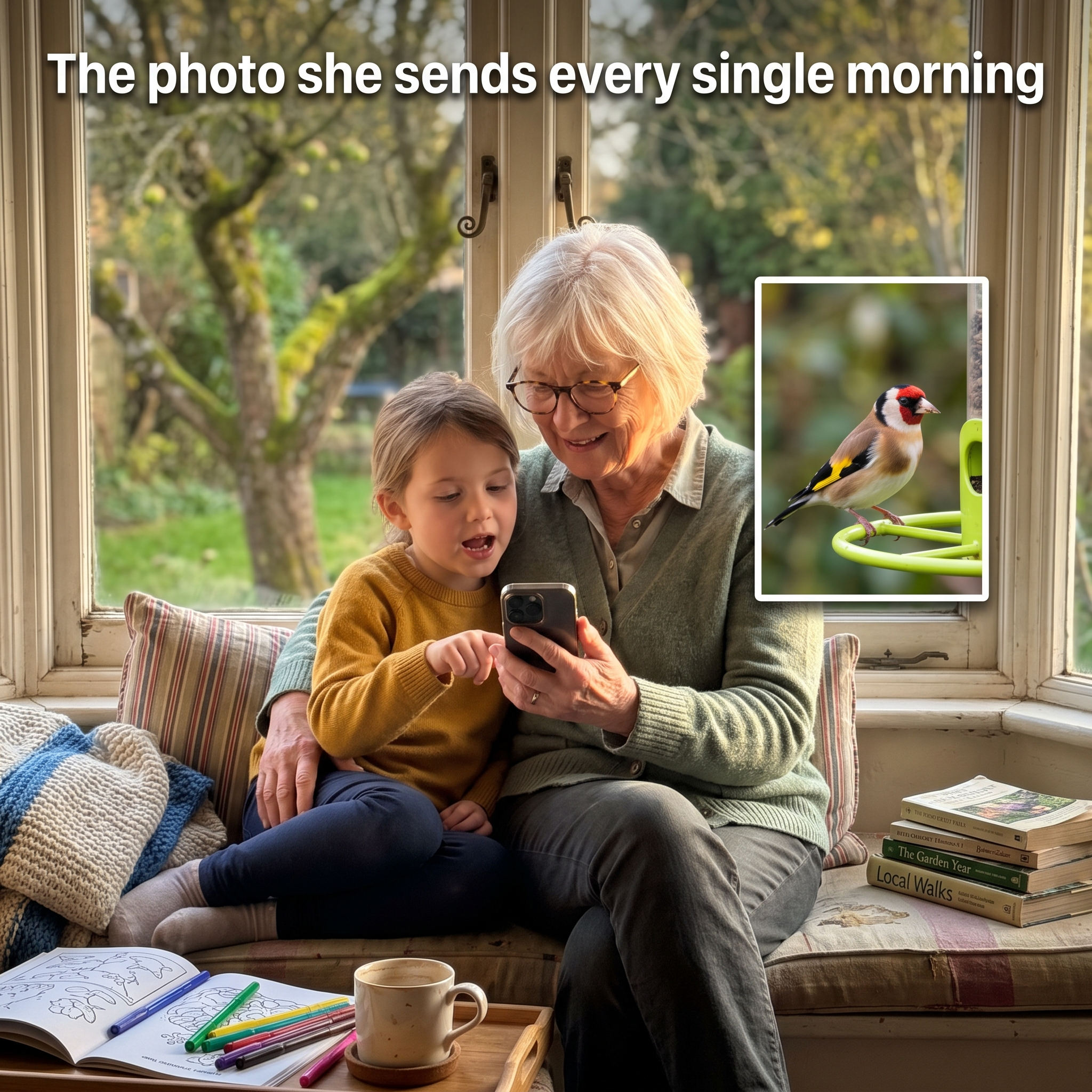
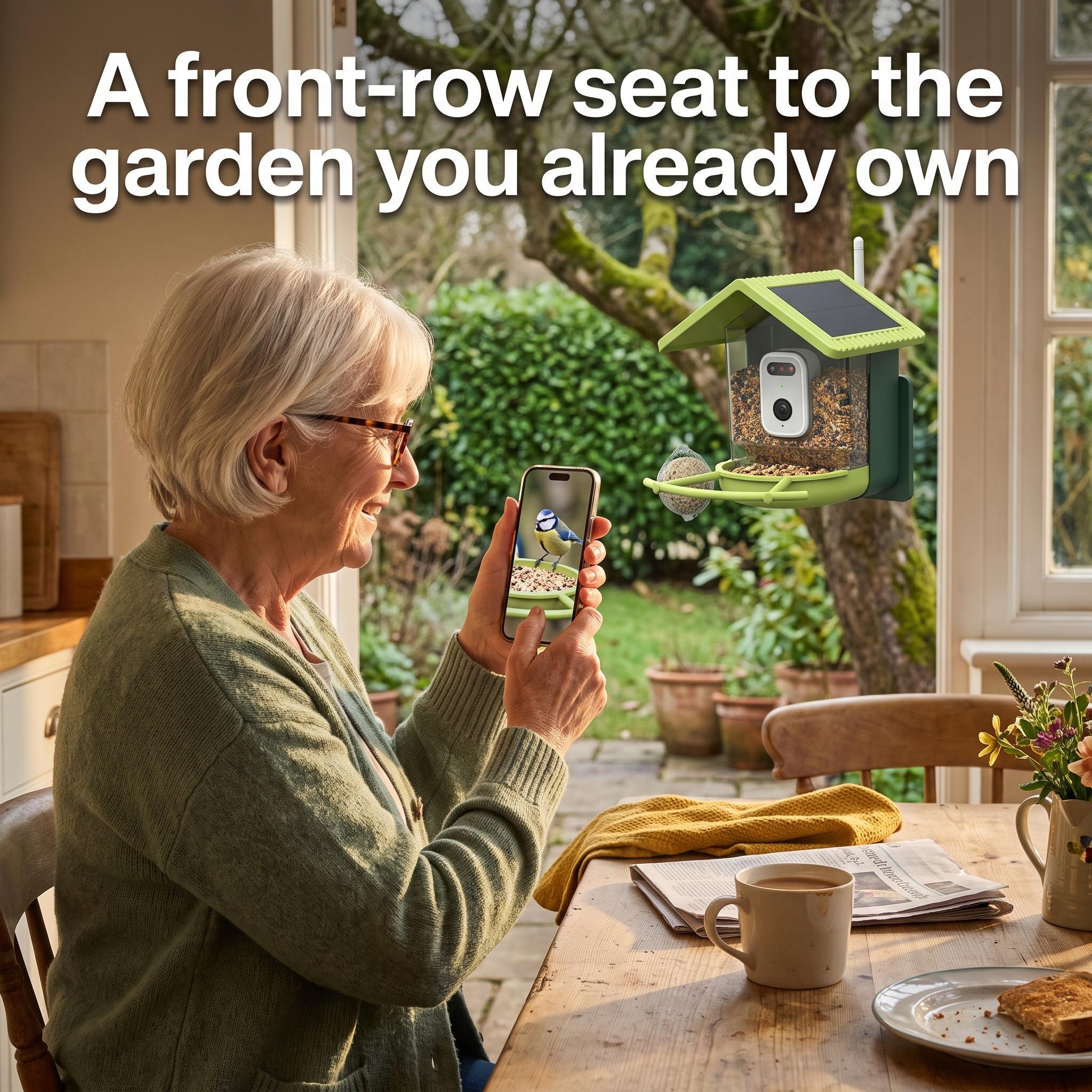
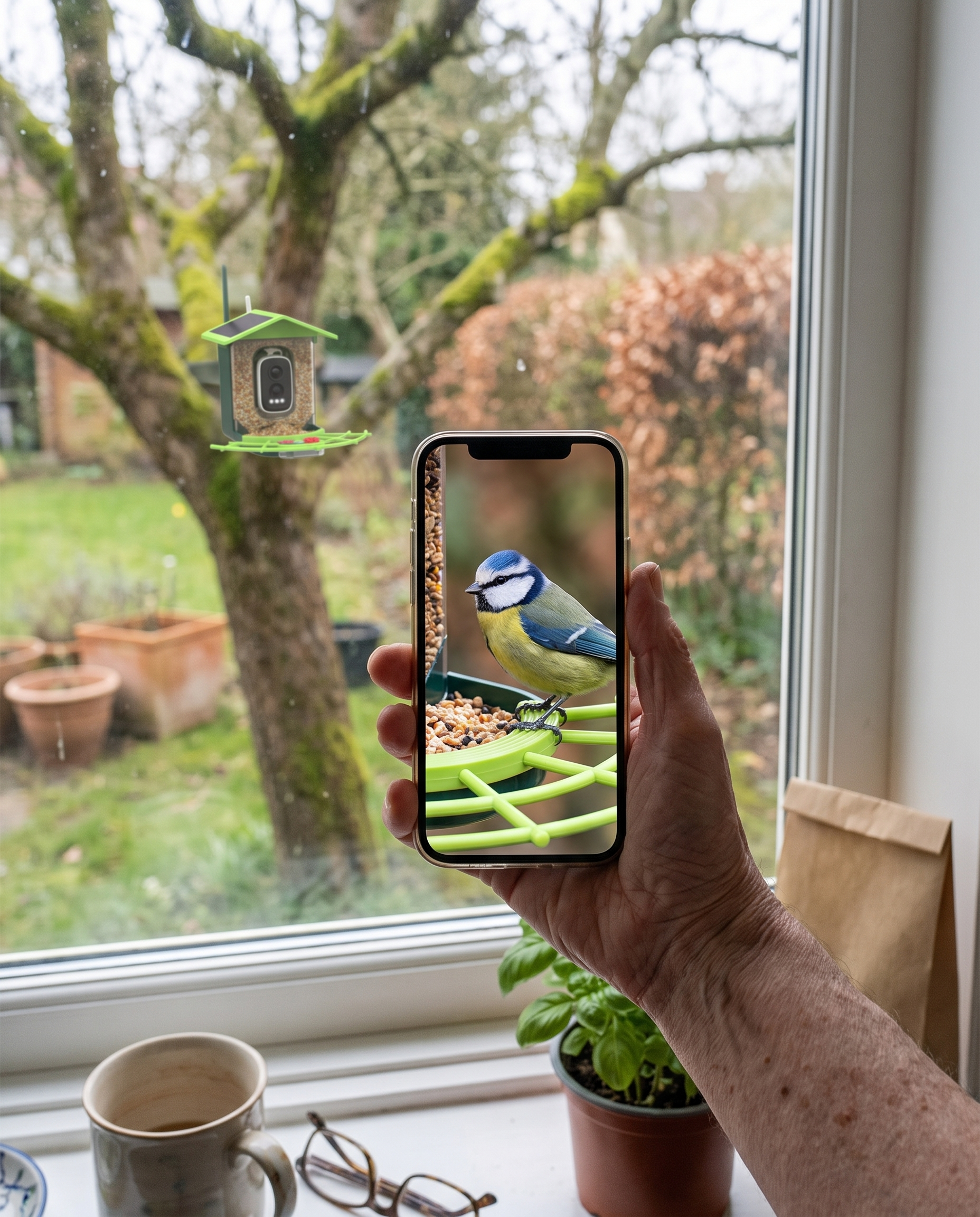
“Nothing for nine days. Then a blue tit, close enough to see its eye. I've fed them since 1994.”
Birdly™ Smart Bird Feeder Camera — See The Birds You've Fed For Thirty Years
🪶 Close enough to count the feathers — 2K camera at perch level, not through glass
📅 The first three weeks, sorted — placement card and 4-step setup, in the box
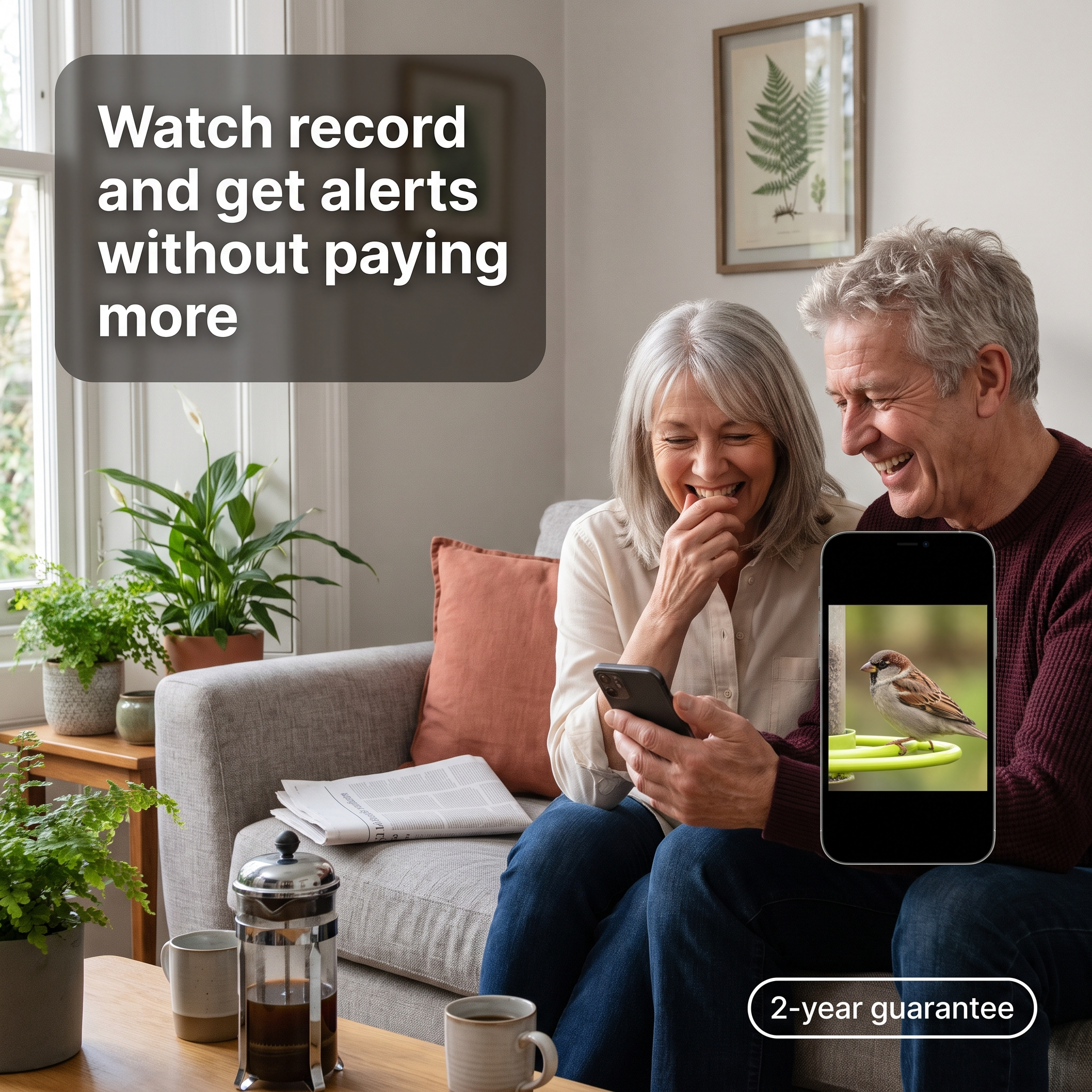
💾 Records to your own microSD — no cloud, nothing to renew
Birdly™ Smart Bird Feeder Camera — See The Birds You've Fed For Thirty Years
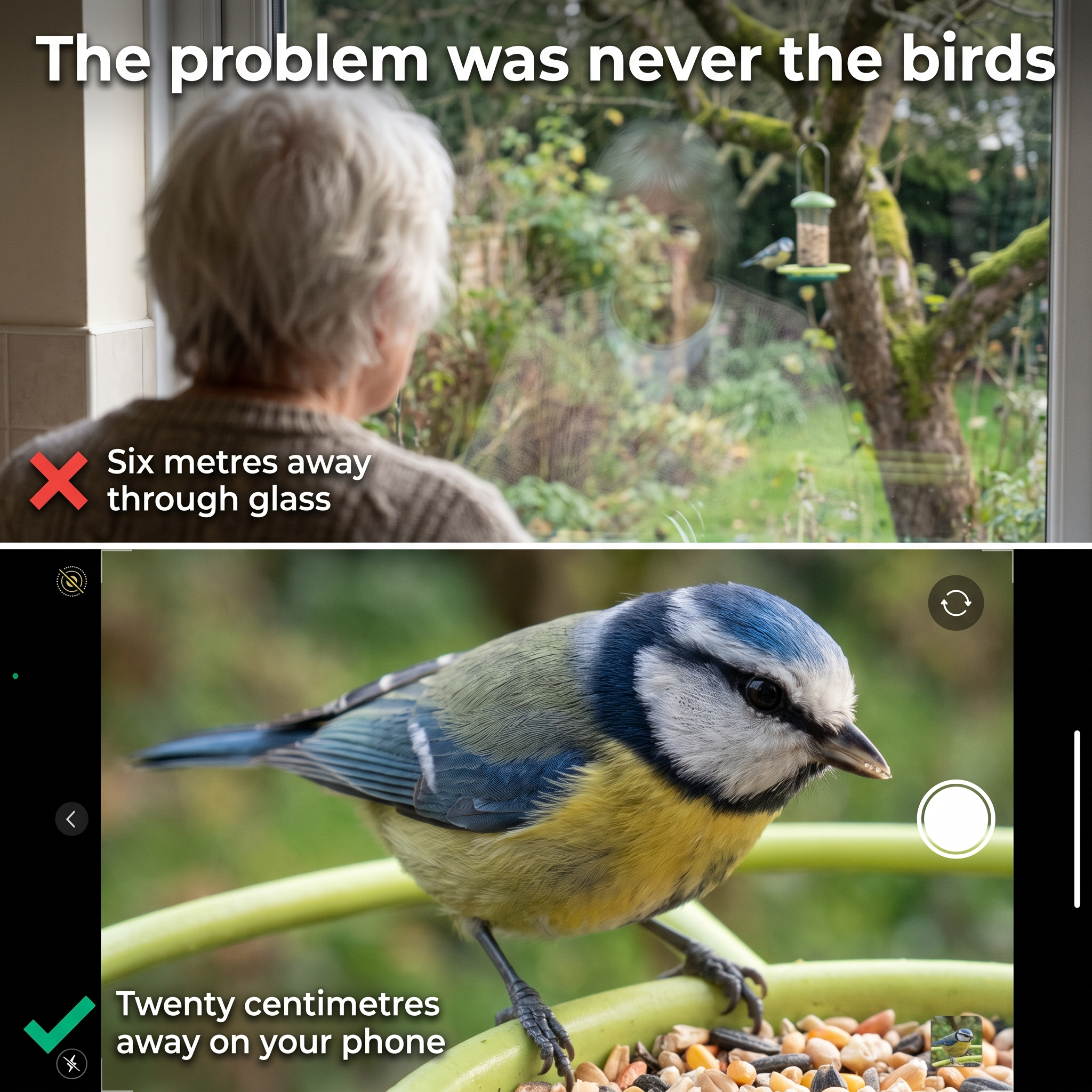
Thirty years of feeding them. You've never seen their faces.
Nothing here is a fault of yours, or of the birds. It's a distance problem, and it has never had a solution that didn't involve sitting very still in the cold.
Six metres and a pane of glass
You watch from the kitchen. At that range a goldfinch is a smudge of colour, and a wren is a guess.
“A little brown one”
You've fed them for decades and still can't name half of them. Not for lack of interest — you've simply never been close enough to tell a dunnock from a sparrow.
Gone before you reach the door
Every attempt to get nearer ends the same way. The garden empties, and you go back inside.
Meet Birdly™
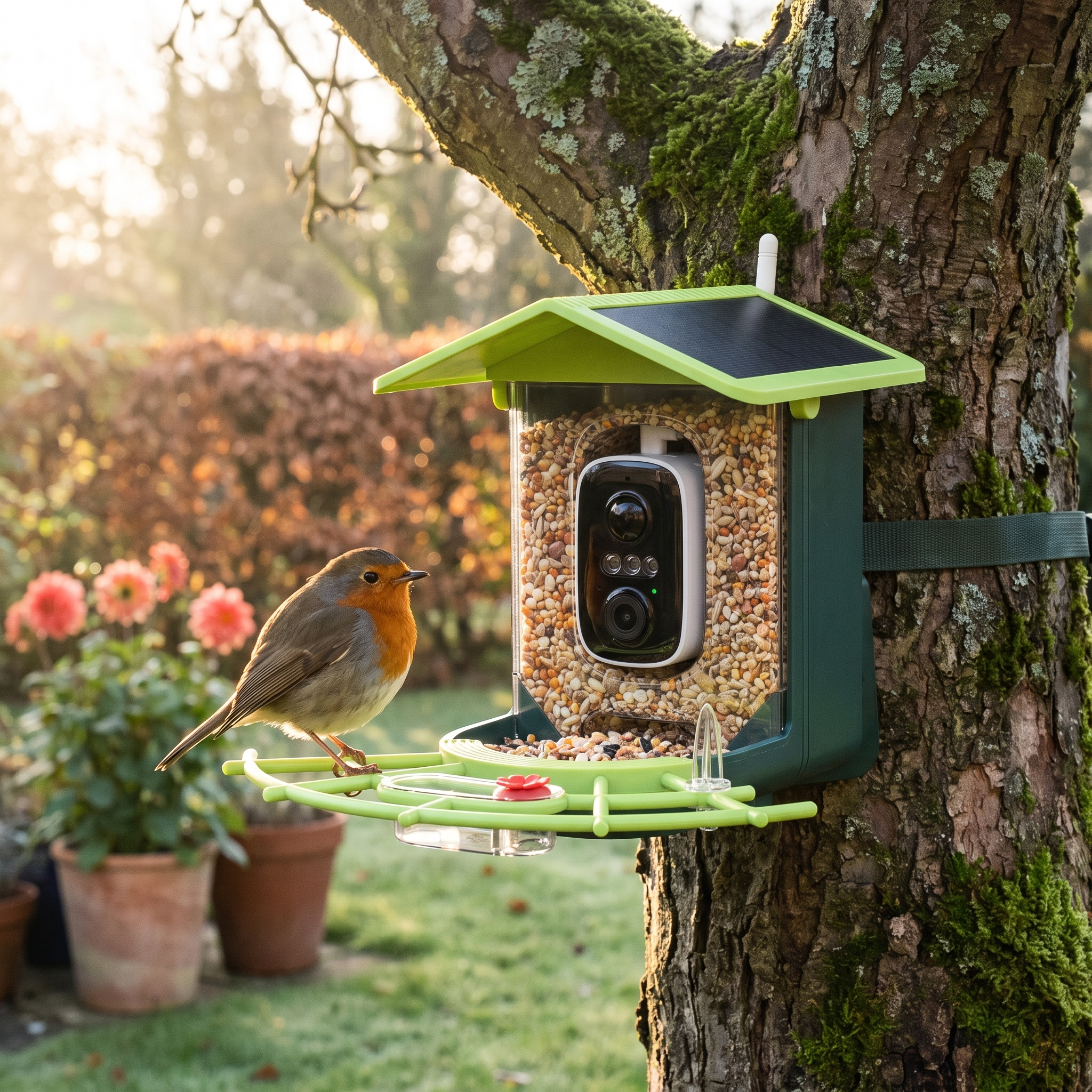
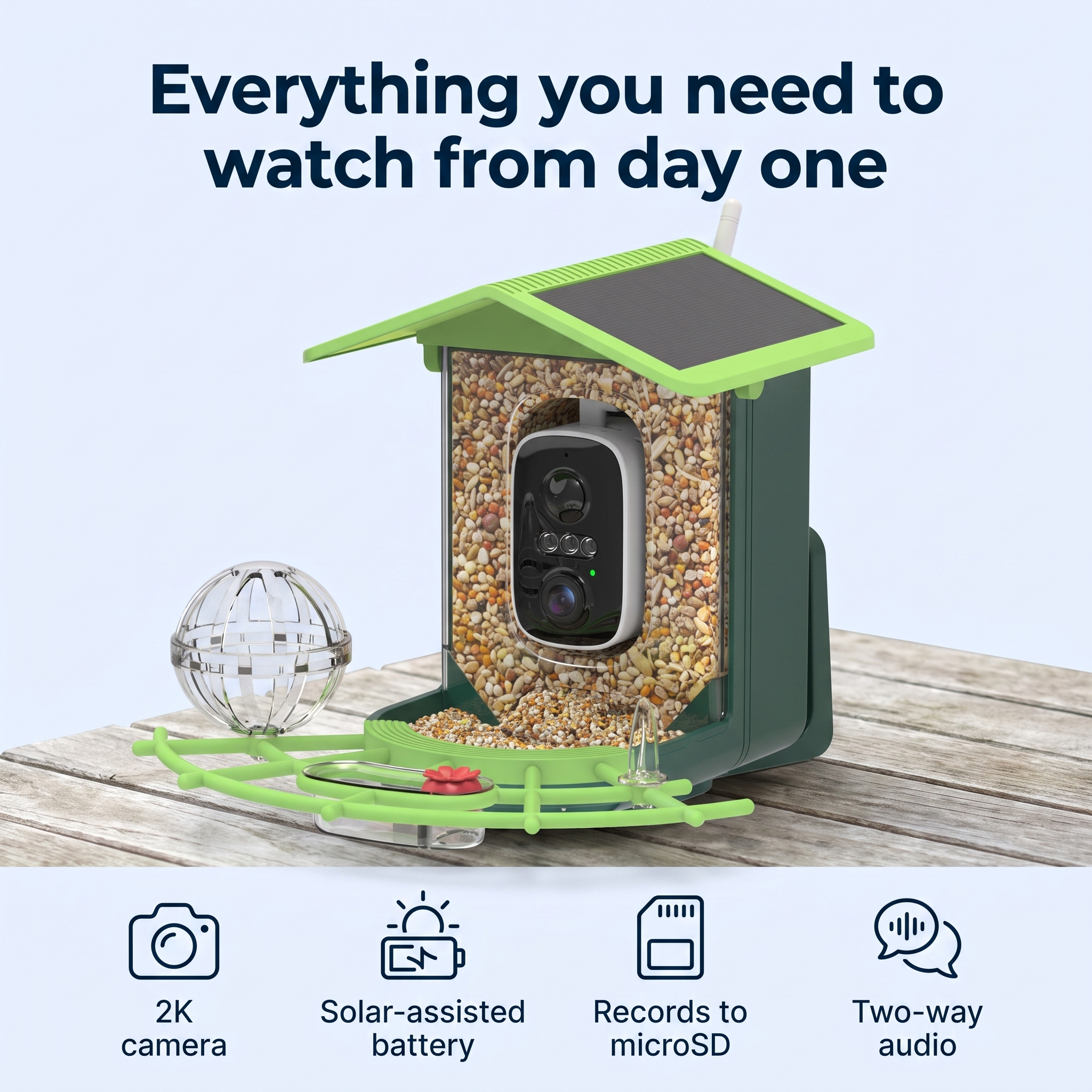
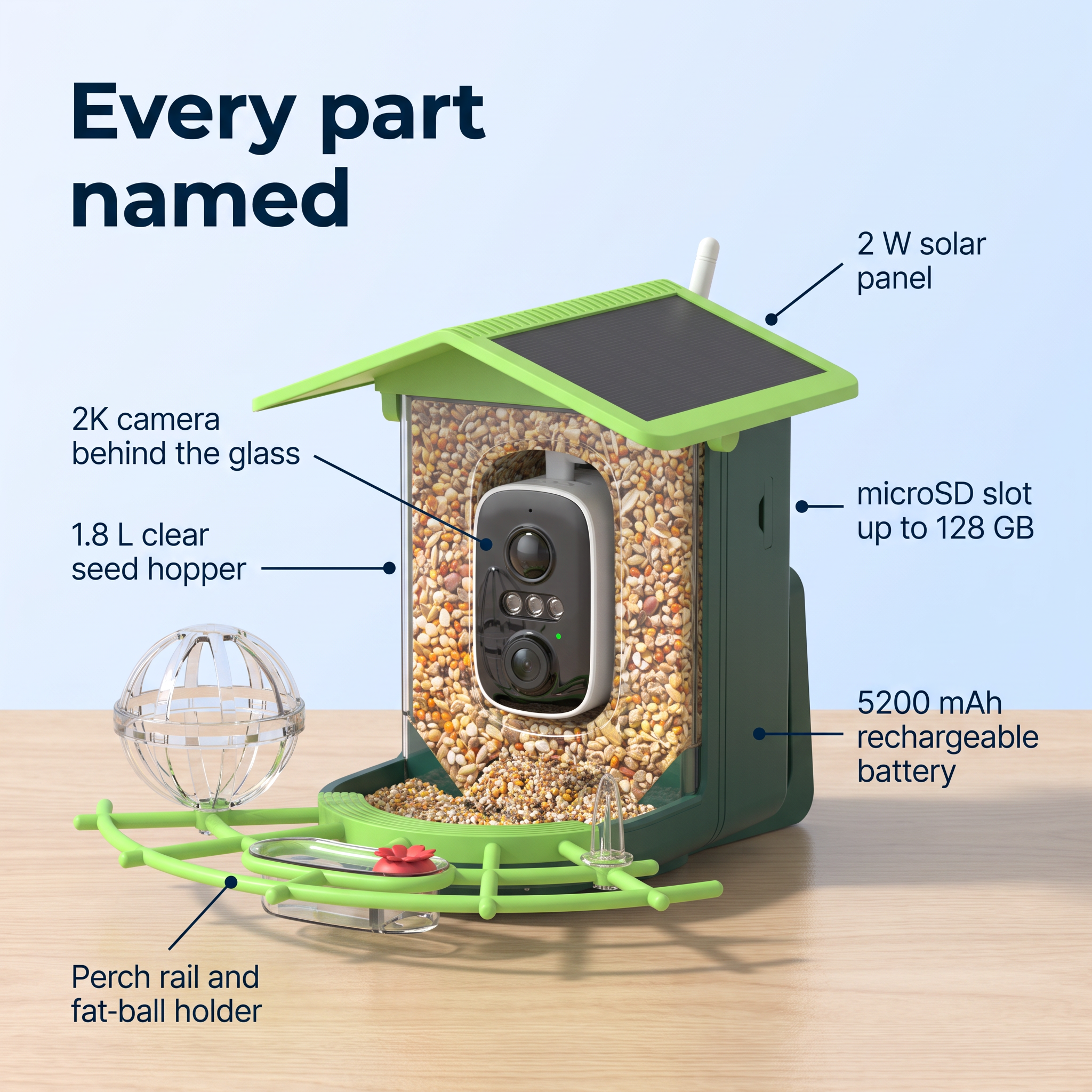
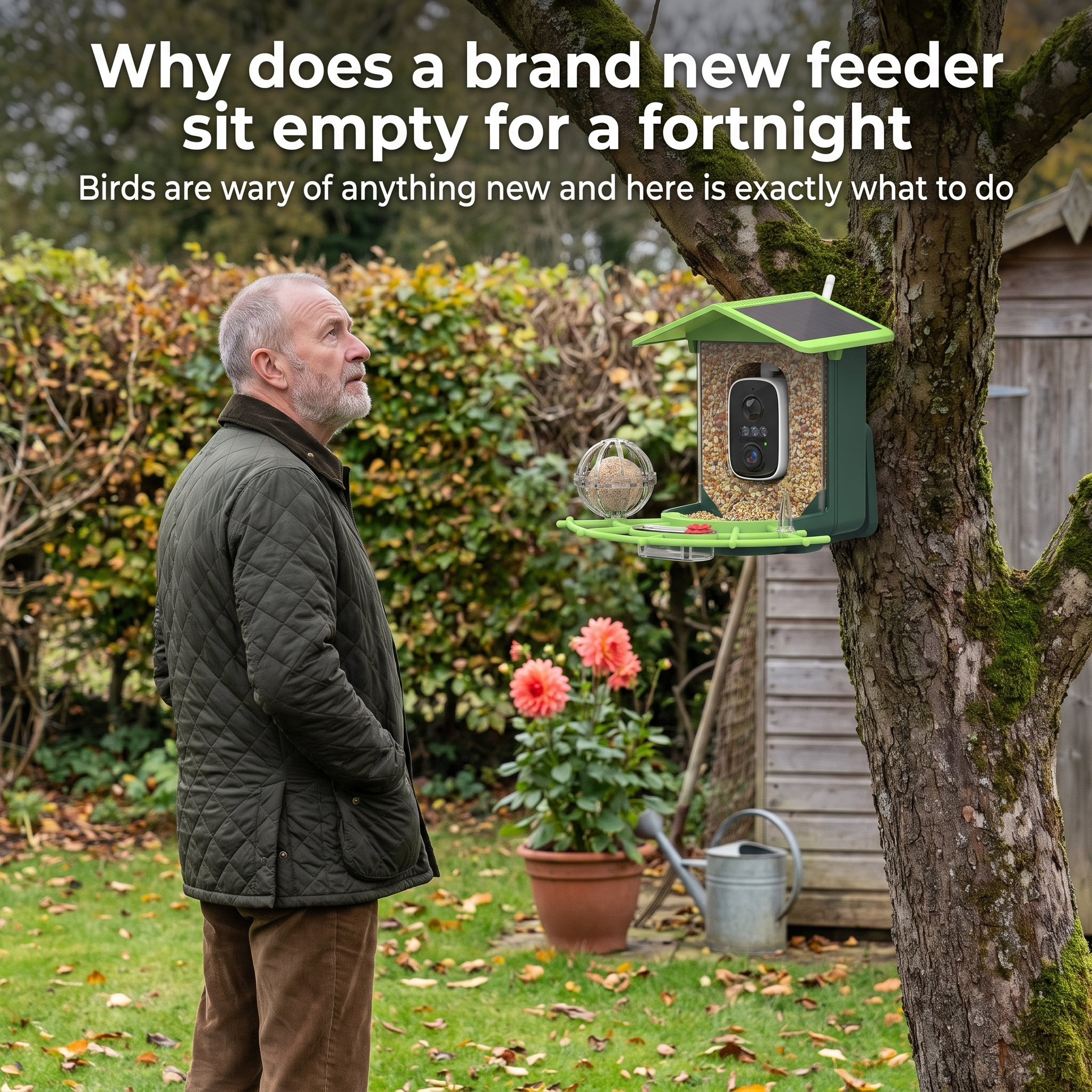
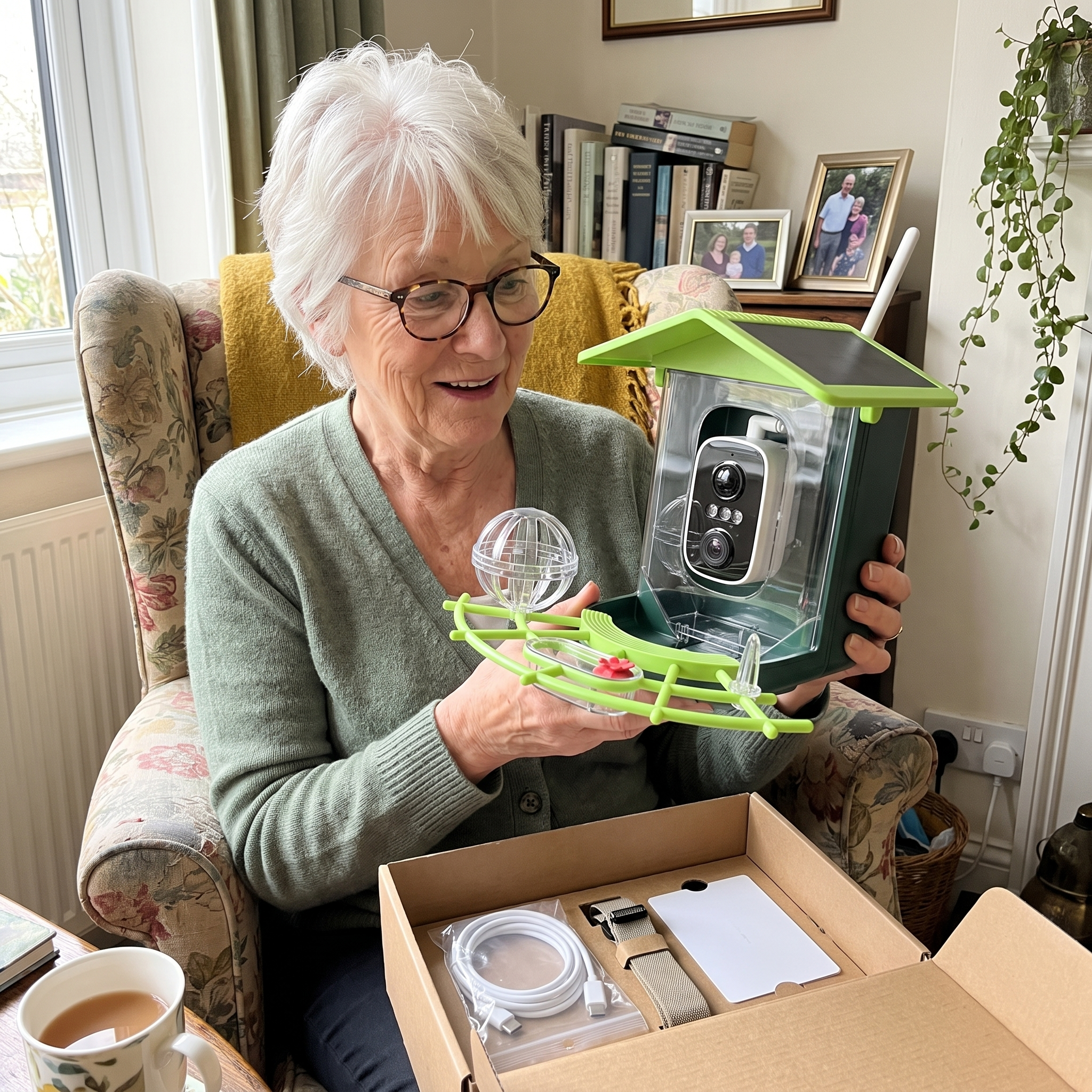
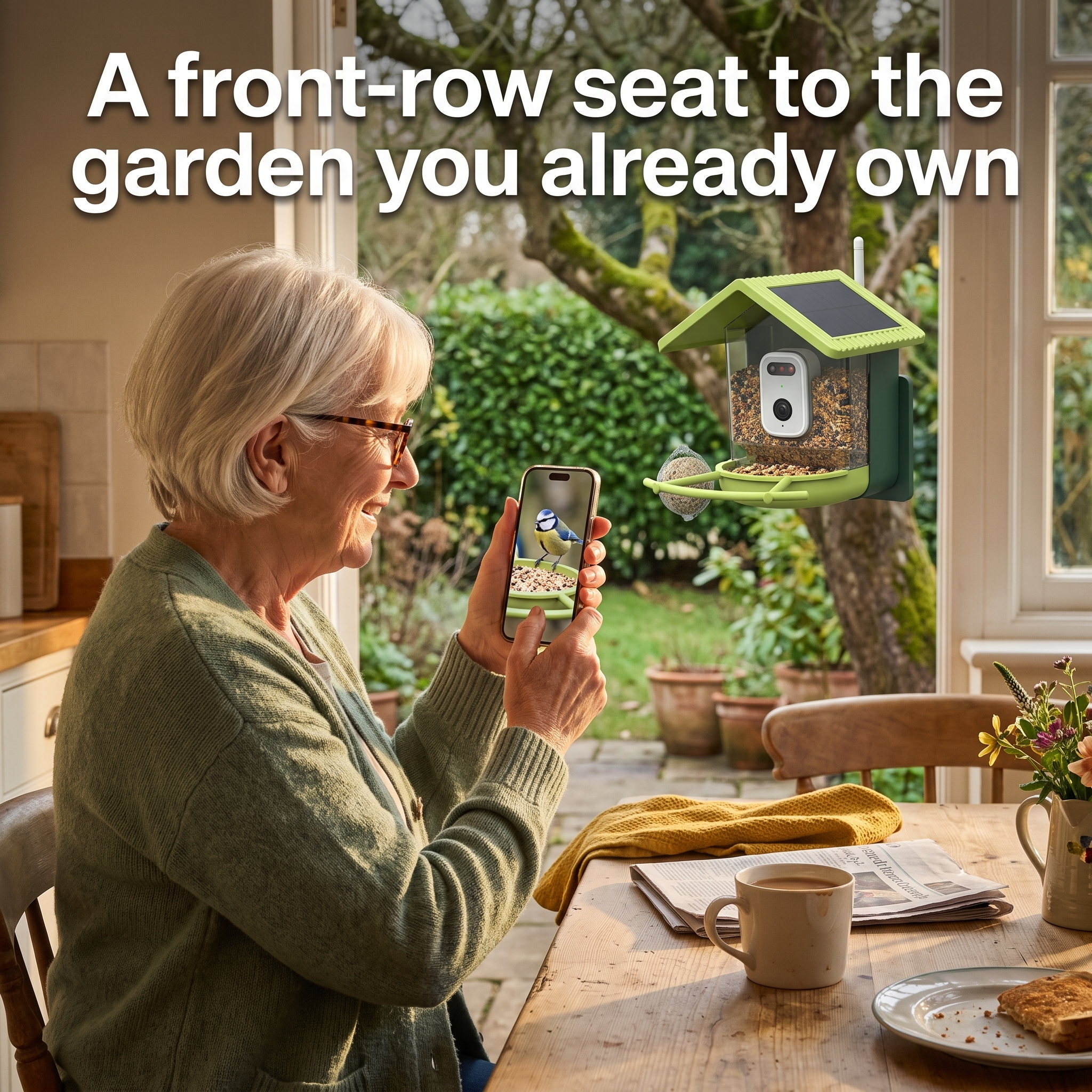
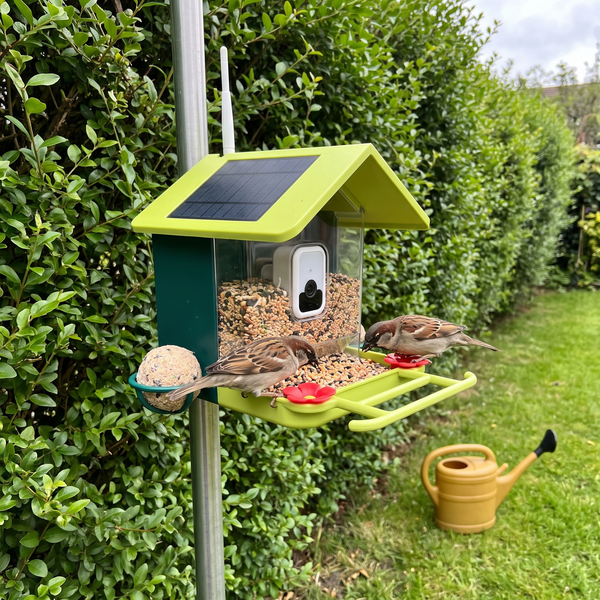
It's a feeder first: about 1.8 litres of seed under a pitched roof, the sort of thing that's hung in British gardens for a century. The difference is a 2K camera built into the perch, at beak height, about twenty centimetres from where they land.
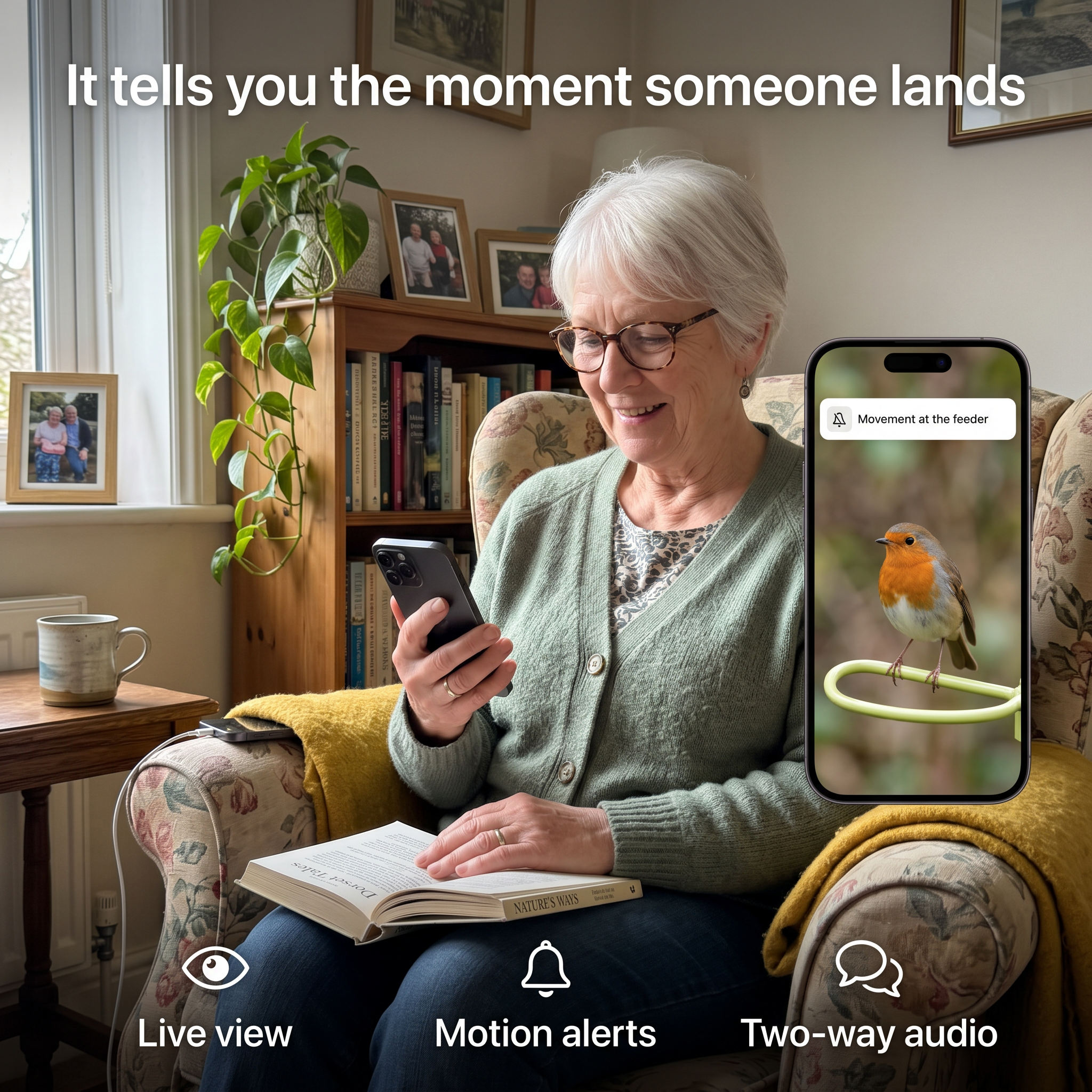
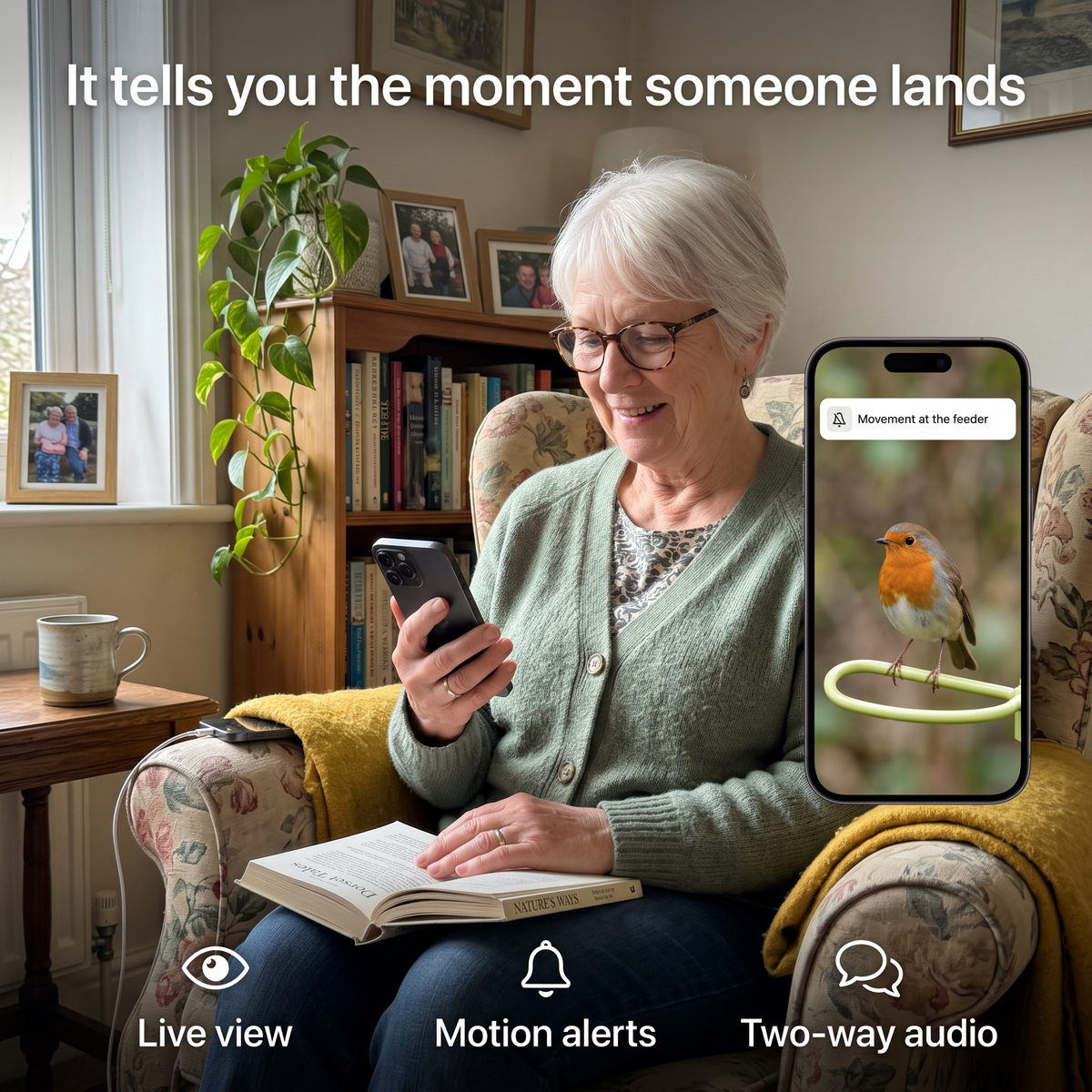
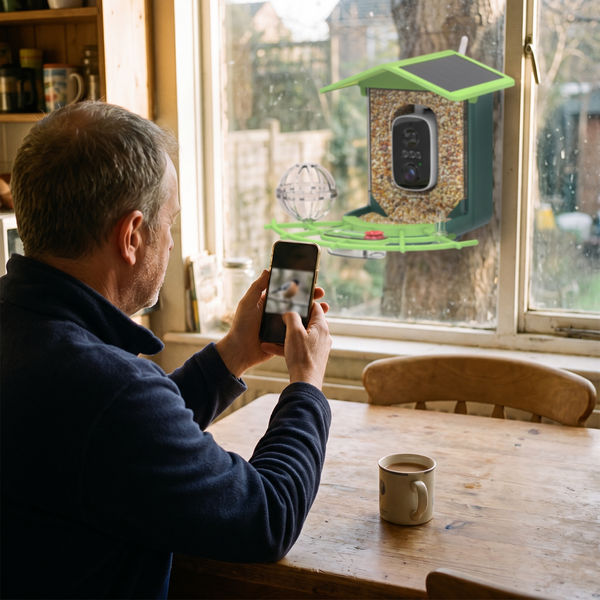
When a bird arrives, your phone tells you. You open it and there's a starling filling the screen — the iridescence on its neck, the way it bullies the sparrows. You have been feeding this bird for years and you have never once seen it do that.
Same garden. Same birds. Twenty centimetres instead of six metres.
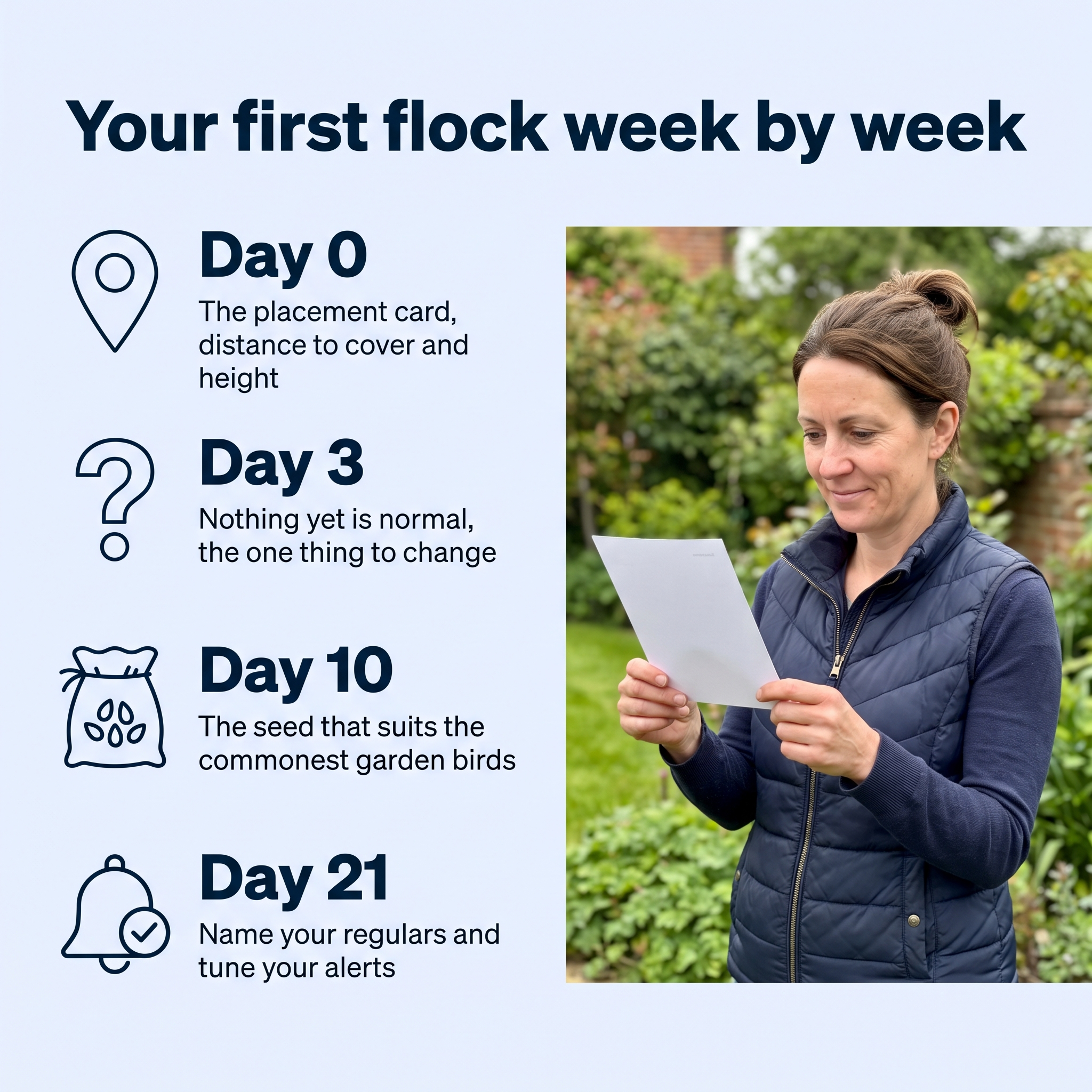
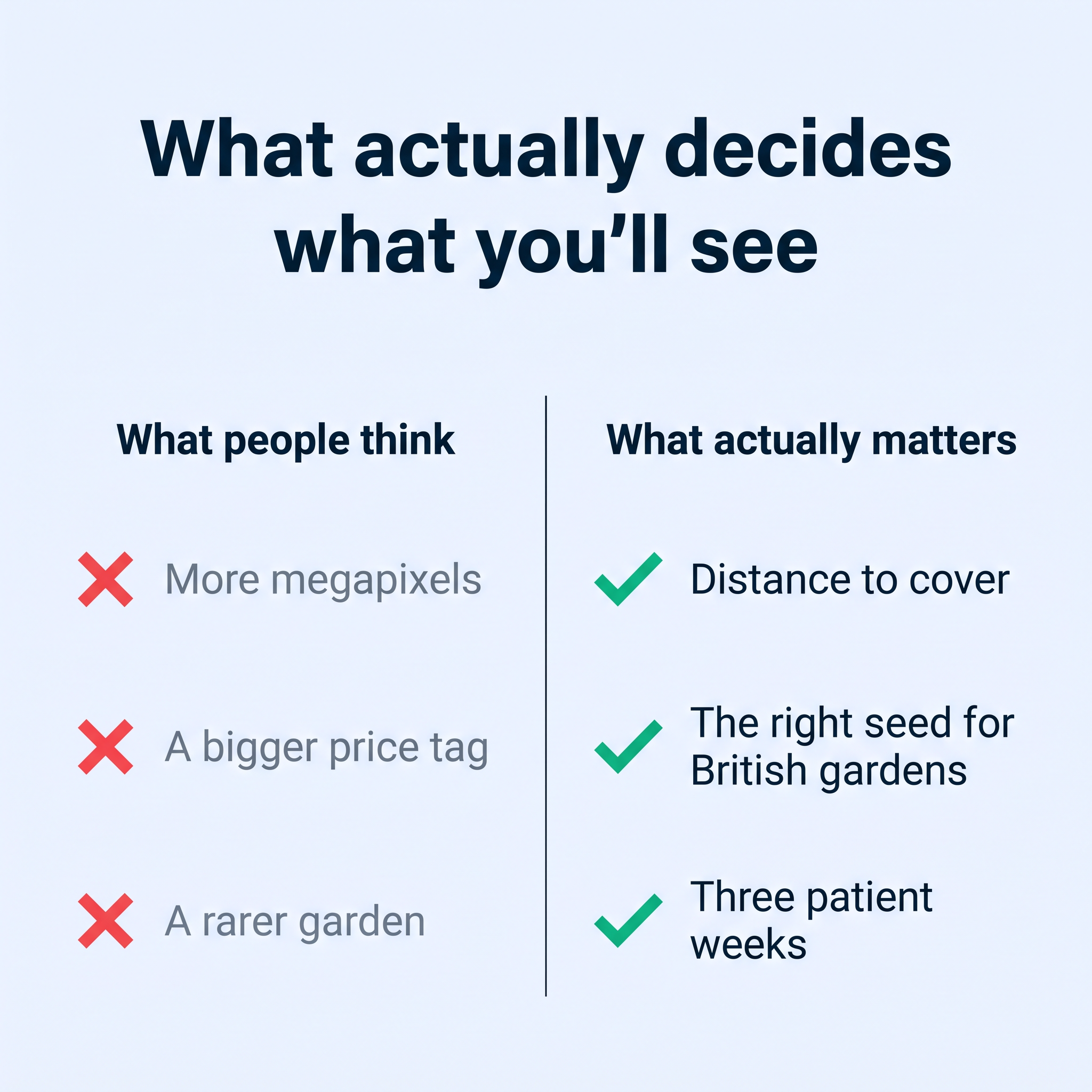
The camera isn't what decides what you'll see. The first three weeks are.
This is the part every other feeder camera leaves out, and it's the reason most of them get sent back. Wild birds are wary of new objects and follow feeding routes they've already learned. A brand-new feeder isn't “a feeder” to them yet — it's something that wasn't there yesterday. So a 4K sensor pointed at a feeder the birds are ignoring films an empty garden in very high definition.
Placement decides everything
The card in the box shows the distance from cover that works, the height, and which way to face the solar panel. Get this right and the rest mostly follows.
The quiet stretch
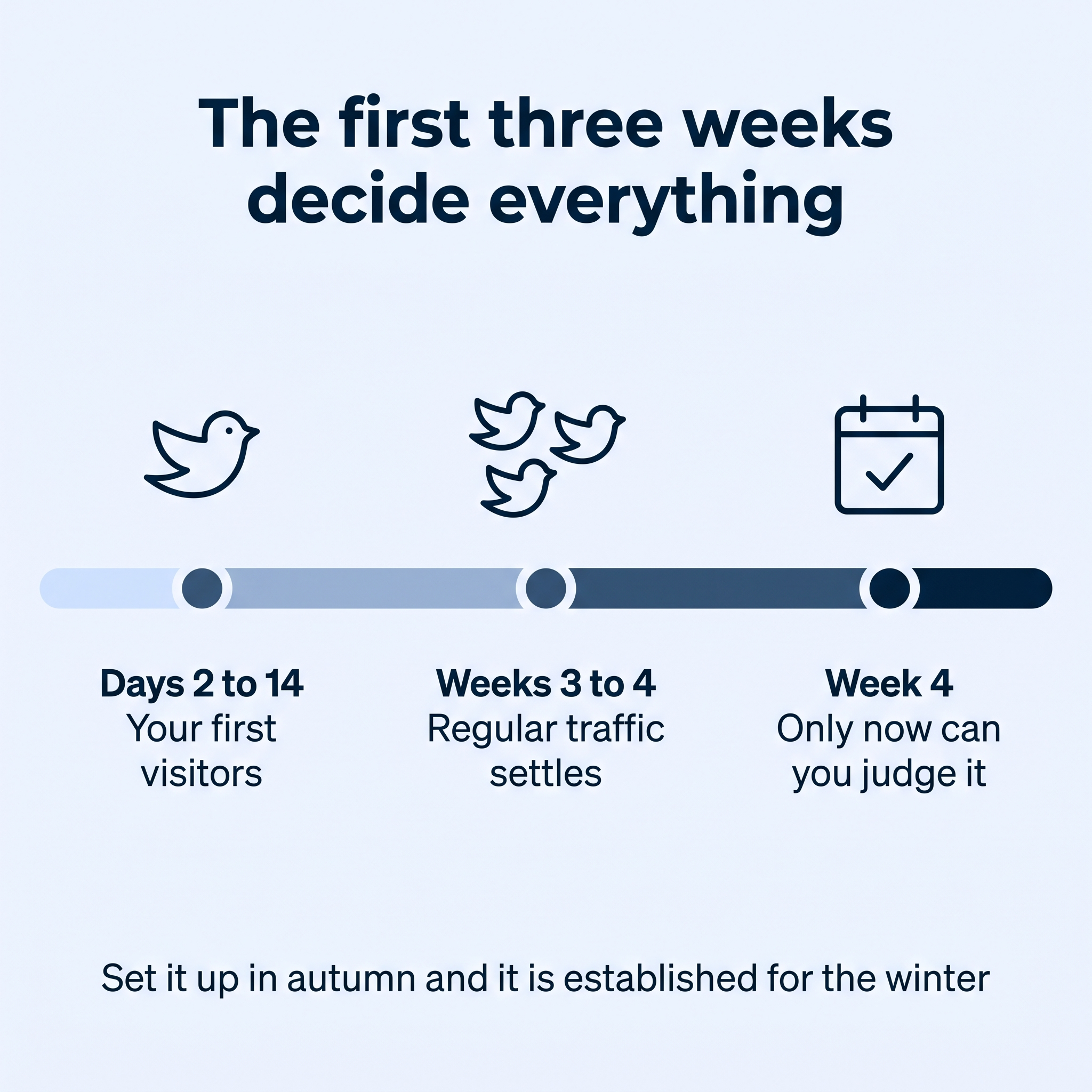
Most gardens get their first visitor somewhere in here. If yours is silent on day six, nothing is broken — we'll tell you the one thing worth changing.
Traffic settles
A routine forms: the same birds, at roughly the same hours. This is the point at which people stop checking the app and start leaving it open.
Turn the noise down
By now you want alerts for the arrivals that matter, not for every gust of wind. Two settings, one minute, and it's done.
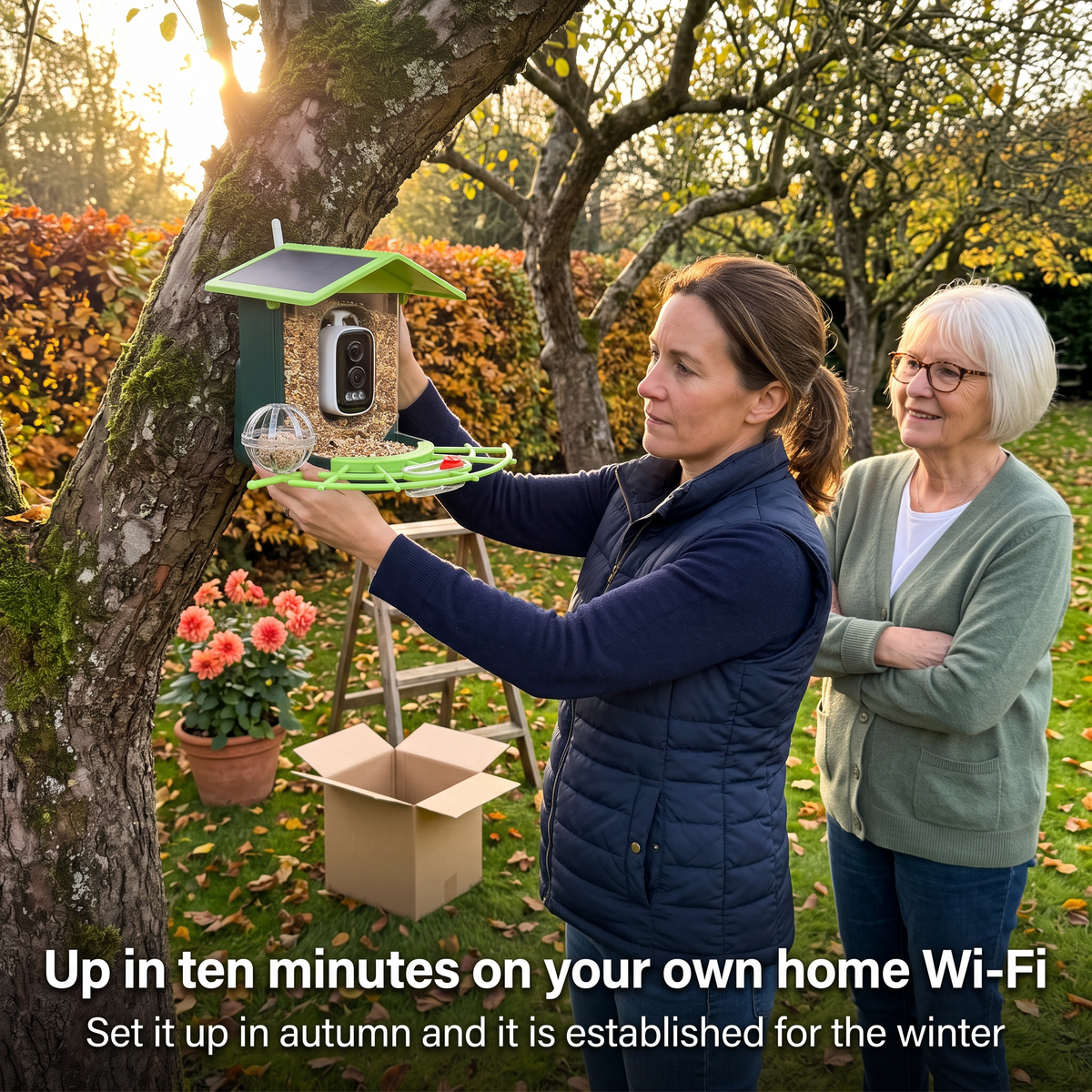
Up in ten minutes
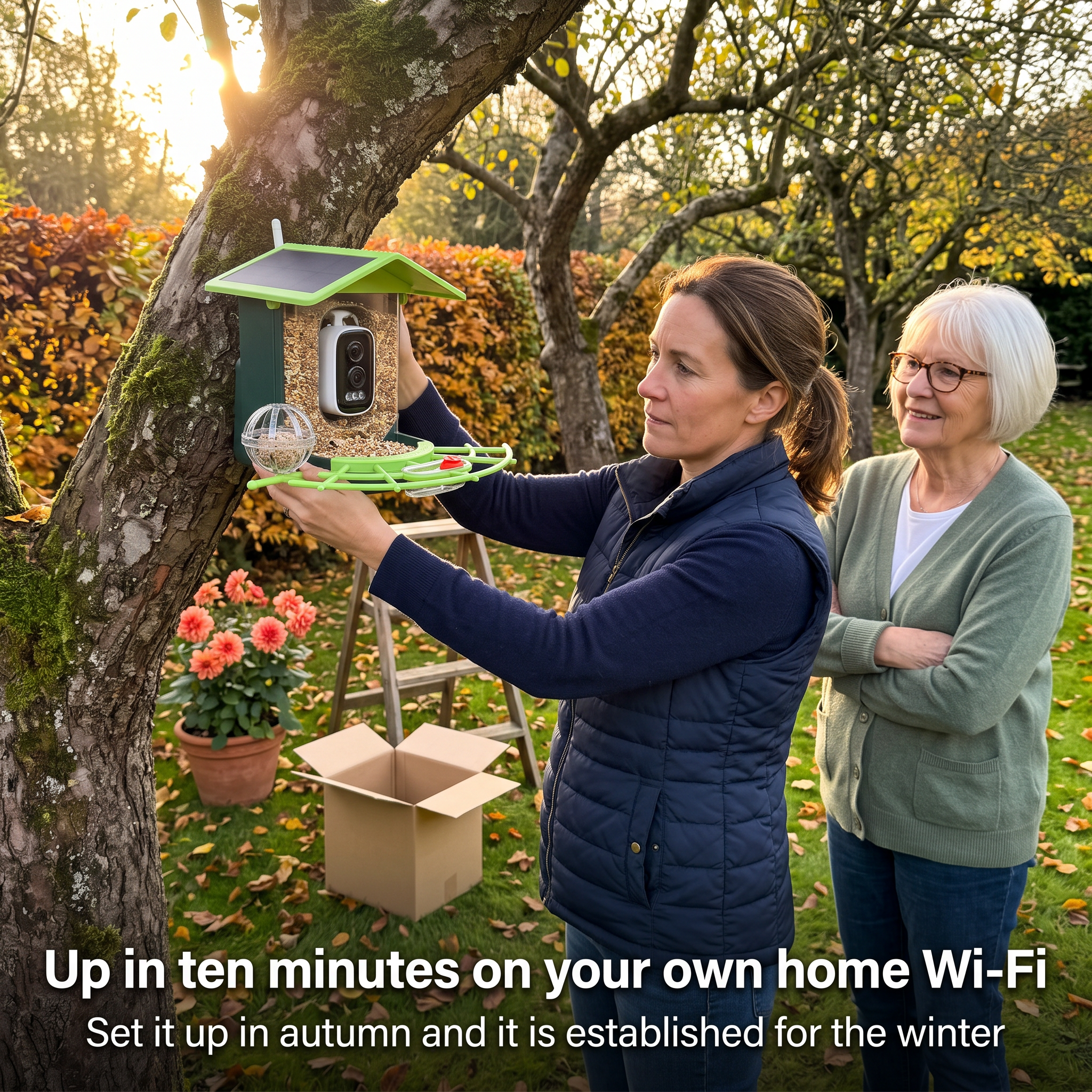
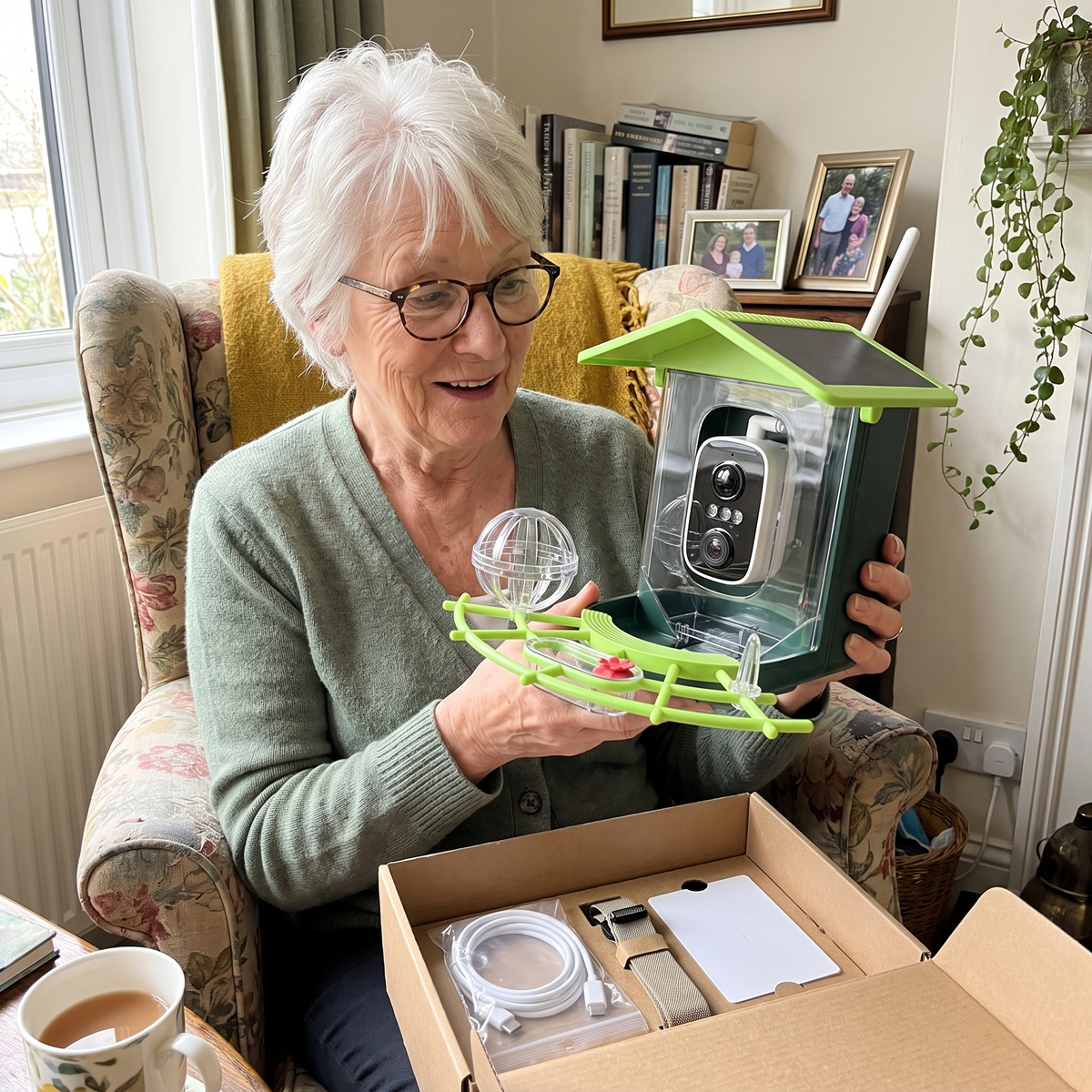
Charge it indoors with the USB-C cable, connect it to your home Wi-Fi through the app, then strap it to a tree, a fence post or a pole. There is no hub, no wiring and no account small print — if you can add a contact to your phone, you can do this.
The part that actually needs thought is where to put it, and that's what the placement card is for: the right distance from cover, the right height, and which way to face the solar panel.
Ten minutes of setting up. Three weeks of patience. Years of mornings.
They tried Birdly™
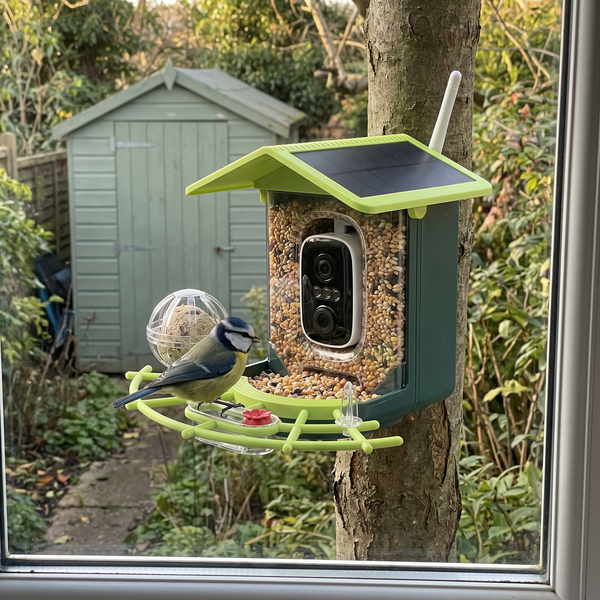
“Nine days of absolutely nothing, and I'd almost decided it was a dud. Then a blue tit. I've fed them since 1994 and I'd never once seen an eye.”
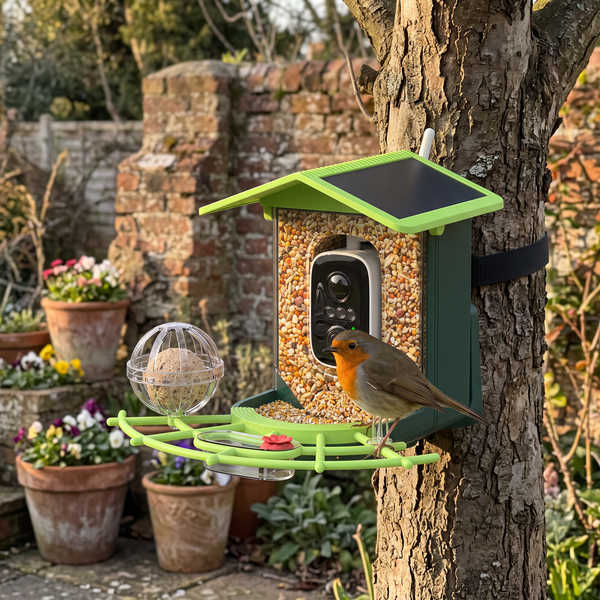
“Bought it for my mother, who is 78 and not a technology person. She rang me to say a robin had been at 7:40. She has never once rung me about a gadget.”
“The card in the box told me to move it closer to the hedge. That single change took it from nothing to about twenty visits a day.”
“I didn't take the identification option after the month was up and it honestly changed nothing — the alerts and the recordings carry on as before.”
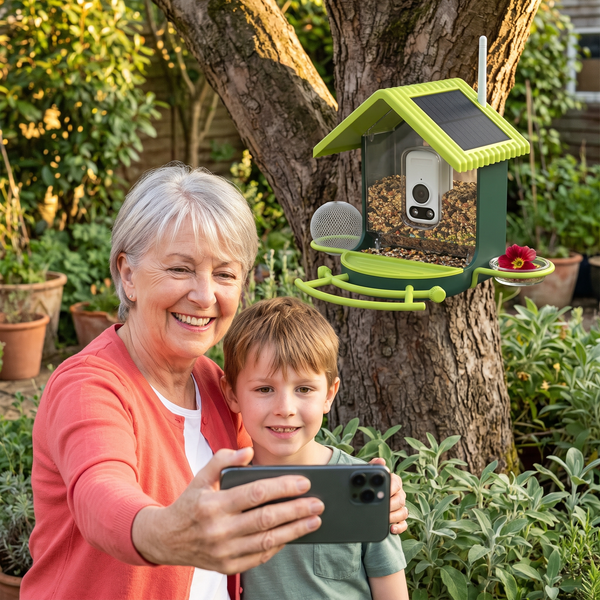
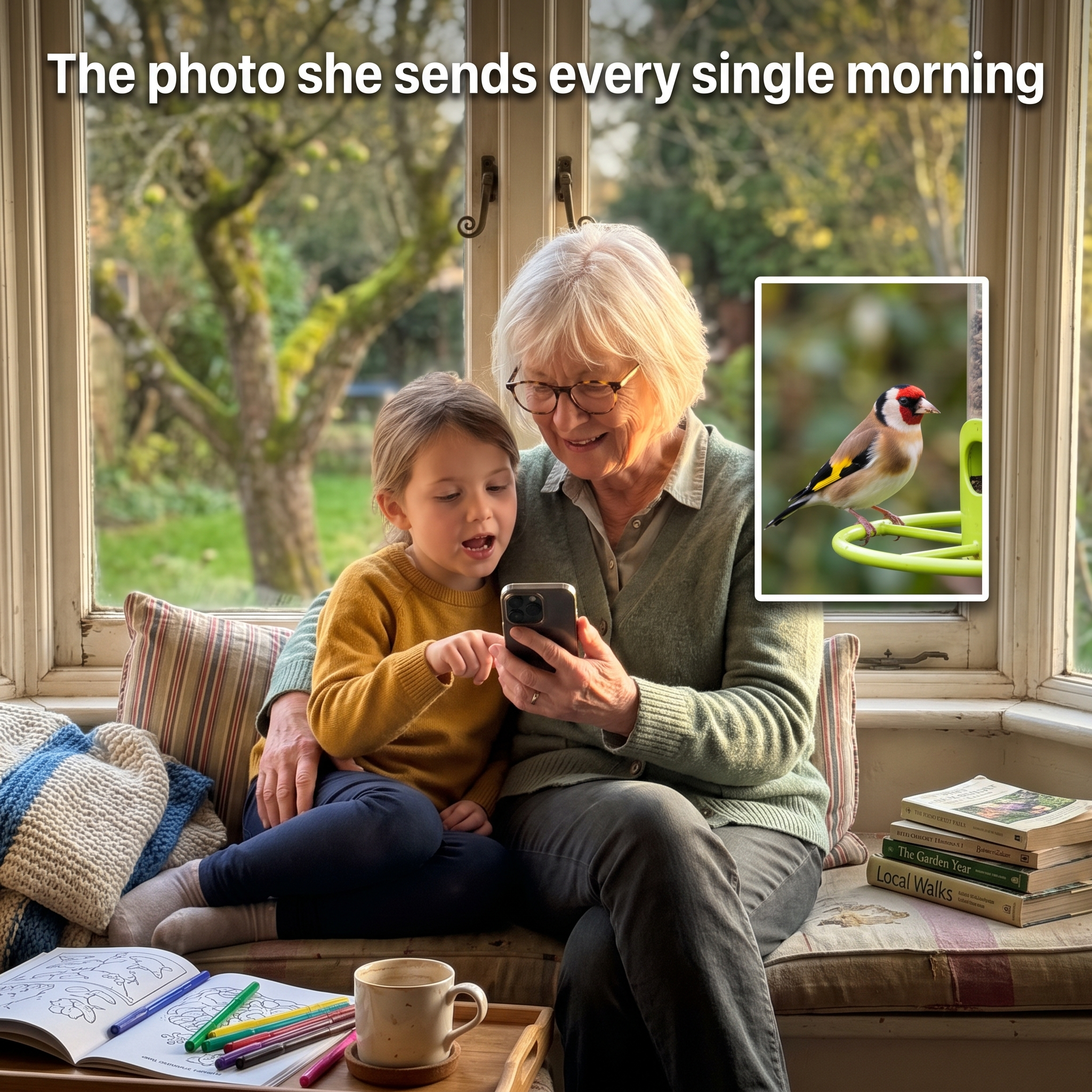
“Grandchildren ask what's been on the feeder before they ask anything else now. It has quietly become the thing we talk about.”
Why we're not £249
The best-known feeder camera in Britain sells for around two and a half times this. It's a good product with a lovely app. Here's the honest version of what the difference buys.
What you're not paying for: a brand you've seen in a Sunday supplement, and a community feed. What you are getting: the same close-up of the same blue tit, on a feeder that records to a card you own, with the one thing none of them include — a plan for the three weeks that actually decide the outcome.
Where they beat us, since you'll find out anyway: the £119.99 rival includes species identification free for life. Ours is included for 30 days and optional after that. If naming every bird automatically, for ever, at no cost is the single thing you care about, buy theirs — we'd rather say so here than argue about it in an email later.
It's usually a present
Most Birdlys aren't bought for the person who pays for them. They're bought by a daughter who lives three hours away, for a father who is on his own more than he says.
What makes it work as a present isn't the camera. It's that it gives him something to tell you about. A goldfinch on Tuesday. Two of them on Thursday. It turns the weekly phone call from “how are you” into an actual conversation, which is a harder thing to buy than it sounds.
Give it in autumn if you can — by Christmas the feeder is busy, and there's something to show people.
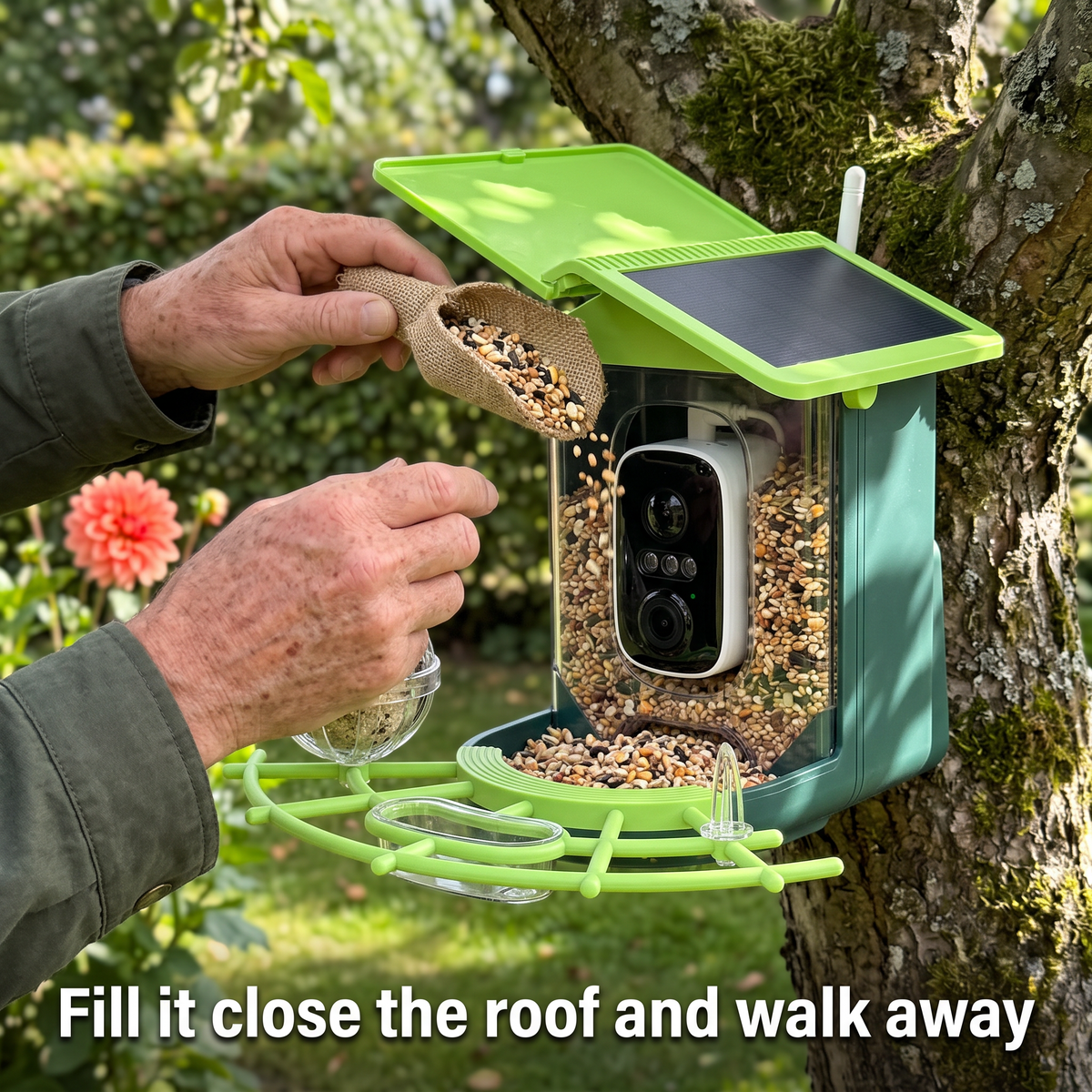
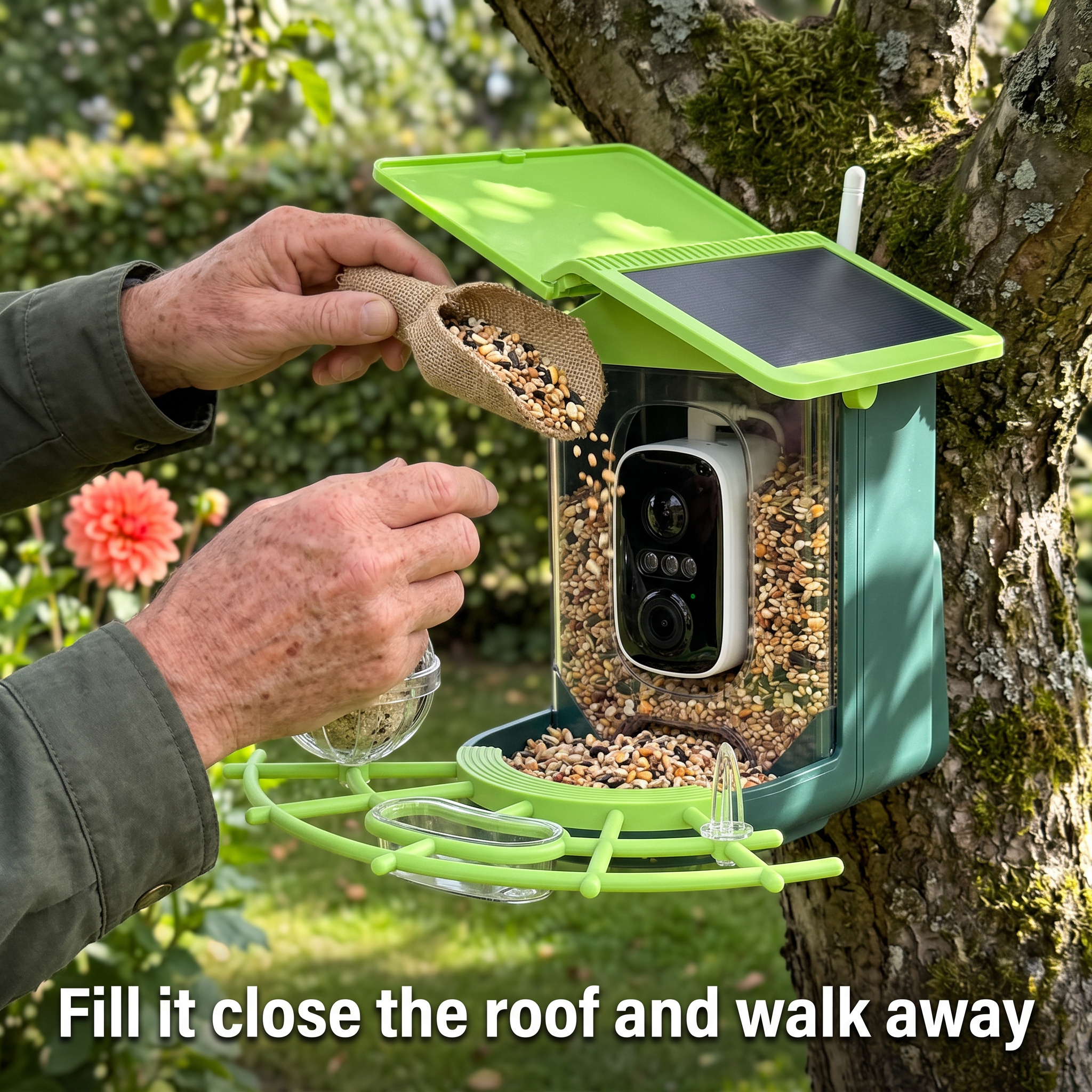
Fill it, close it, walk away
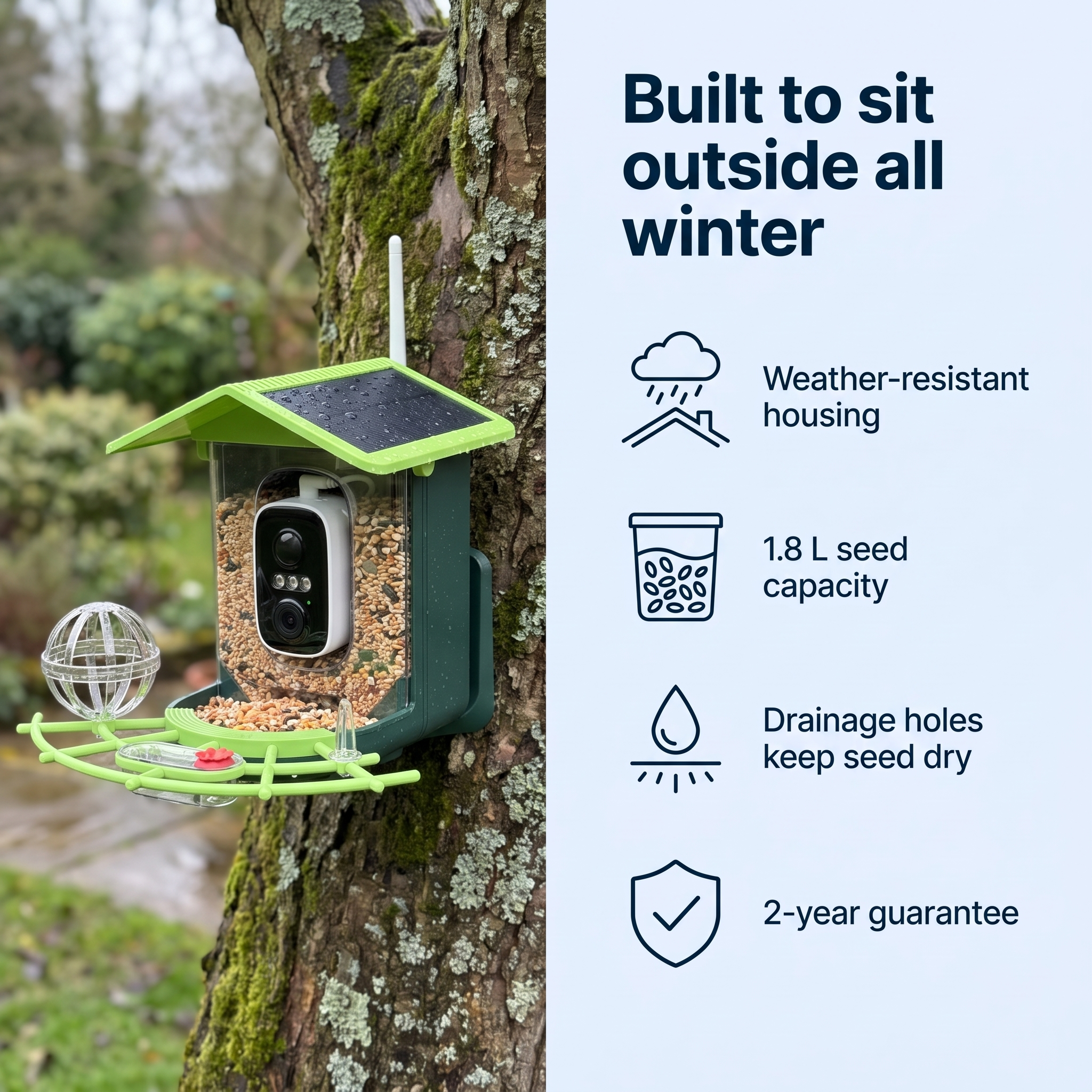
The hopper holds about 1.8 litres of seed — roughly a fortnight of normal traffic — and the clear walls show you the level from across the garden, so there's no opening it to check.
The solar panel in the roof tops the battery up in daylight. We won't promise you'll never charge it; through a dark, wet December with a busy feeder, you may need to. The rest of the year, it mostly looks after itself.
A feeder first, a camera second — and both get on with it without you.
The case for doing it now rather than in December
British garden feeders get busiest from autumn through late winter, when natural food runs short. That's the season worth watching — and a new feeder takes about three weeks to be adopted. Put it up in September and it's established for the busiest months. Put it up on Christmas morning and you'll be looking at an empty perch until mid-January.
Who you're most likely to meet first. According to the RSPB's Big Garden Birdwatch, these were the five most-recorded birds in UK gardens in 2026, counted by more than 650,000 people:
Questions people ask before buying
How long before birds actually turn up?
Usually between two days and two weeks, with a settled routine by week three or four. That's normal for any new feeder — wild birds are wary of new objects and stick to routes they've already learned. It's also why our returns window is 30 days rather than 14, and why the placement card is in the box.
Is there a subscription?
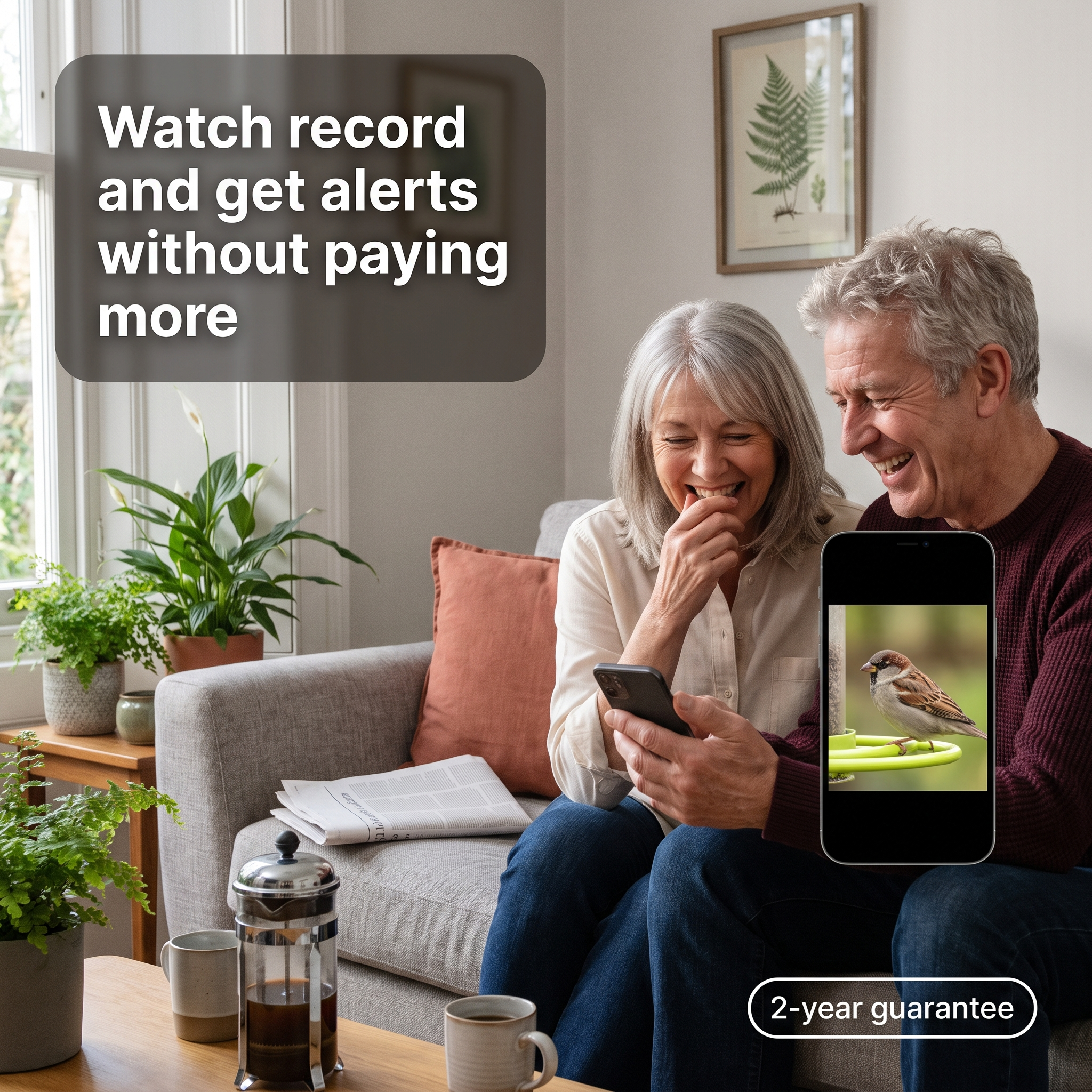
Not for using the camera. Live view, motion alerts, two-way audio and recording to your own microSD card are included free, for as long as you own it, with nothing to renew. The one paid extra is AI species identification — the feature that names the bird for you. That's included for 30 days and optional afterwards. Everything else carries on working whether you take it or not.
I'm not very good with technology. Is it complicated?
Three steps: charge it, connect it to your home Wi-Fi through the app, hang it up. There's no hub, no wiring and no network settings to change. If you can add a contact to your phone, you can set this up.
My garden doesn't get many birds. Will it be worth it?
Almost every garden in Britain gets more than its owner thinks — the five commonest garden birds are recorded in hundreds of thousands of ordinary gardens every January. When a feeder genuinely stays quiet, it's nearly always placement rather than the garden: too far from cover, too exposed, or the wrong seed. That's exactly what the First Flock card addresses.
Will it survive a British winter?
It's rated IP65 for rain and dust and runs on a sealed rechargeable battery topped up by the solar panel in the roof. It carries a 2-year warranty, and if something fails within that time you deal with us in the UK rather than with a factory.
Do I have to keep charging it?
The 2 W solar panel in the roof tops up the 5,200 mAh battery, so in a reasonably sunny spot you'll rarely think about it. We won't tell you that you'll never charge it again — through a dark, wet British December, with a busy feeder, you may need to top it up. Anyone promising otherwise hasn't wintered one here.
What about squirrels?
They're the honest weak point of every feeder camera on the market, ours included — they chew cables and gnaw housings, and no plastic feeder is truly squirrel-proof. Mounting on a smooth pole away from overhanging branches helps a great deal. Damage from wildlife isn't a manufacturing fault, but talk to us if it happens; we keep spares.
Is it a good present? And when should I give it?
It's the most common reason people buy one. One piece of advice: give it early rather than on the day. A feeder unwrapped on Christmas morning won't show much before mid-January, whereas one given in October is in full swing by the time everyone's round the table. If it has to be a Christmas present, wrap the placement card with it and set it up together.