




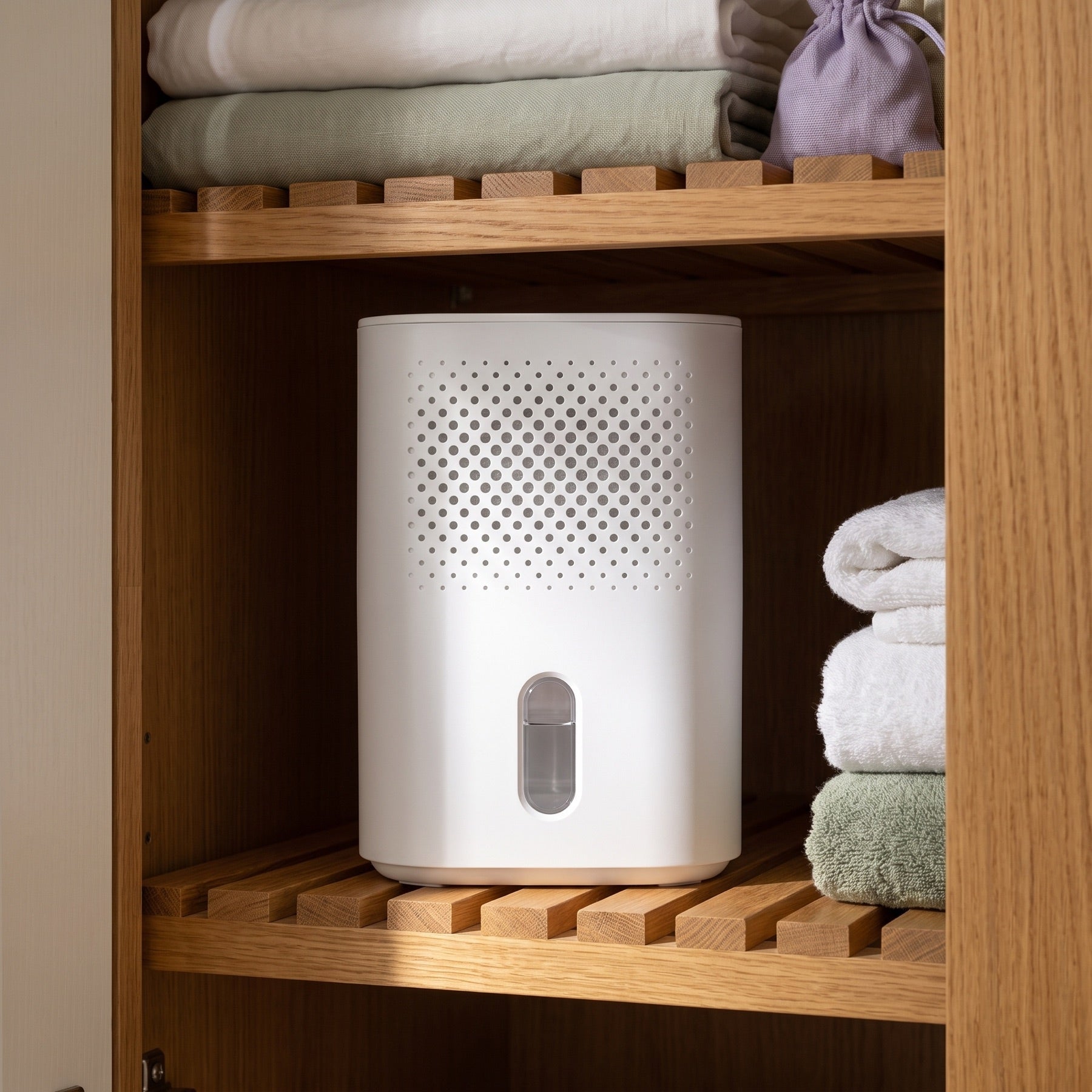

I’d written these off — I’d tried two and decided they were a con. Turns out I’d been standing them in the middle of the bedroom. One inside the wardrobe, door shut, and the musty smell was gone in a fortnight.
Absorbly™ — Sealed-Space Moisture Absorber for Wardrobes, Cupboards & Caravans
🚪 For closed volumes — wardrobes, cupboards, under the sink, caravans. Not open rooms
🛡️ Rigid case, not a bag — it can’t burst or seep onto the coat above it
👁️ Viewing window and rear spout — see it work, empty it without touching it
It isn’t about how clean your house is.
Your home makes the same water it always did. It just can’t get out any more.
The chimney was the ventilation
A permanent draw on every room, day and night, for free. Then we blocked them up.
Then we sealed the rest
Double glazing, draught excluders, insulation, the heating on lower. Same water, no exit.
It lands on the coldest spot
The back of a fitted wardrobe on an outside wall. That’s why the clothes go before the walls.
We didn’t make our homes damp. We made them airtight.
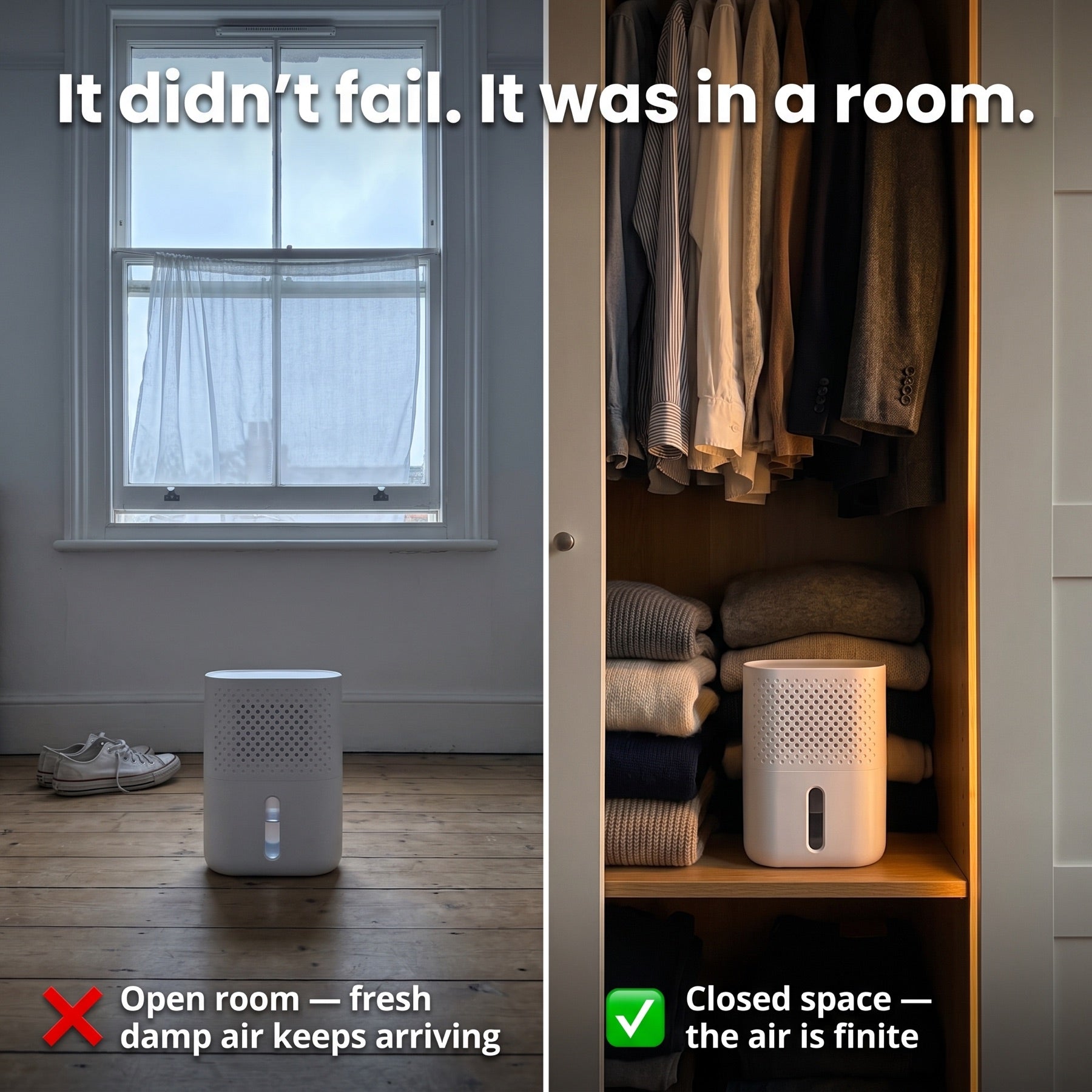
Your moisture absorber didn’t fail. You put it in a room.
In a ventilated room, every gram of water it removes is replaced within minutes by air from outside. You’re filling a bucket that drains from the bottom.
A caravan owner tested it properly: one van with one trap, one with six. Identical result — every trap half full, both vans just as damp. It was never the salt. It was the ventilation. His words: like catching Niagara Falls in a thimble.
Shut that same thimble inside a teacup and it empties it. Same product, winnable volume.
You didn’t choose badly. Nobody told you where to put it.
It rains inside shipping containers.
Calcium chloride has protected cargo at sea for decades. The supermarket version borrowed the chemistry and left the instruction off the box.
Container rain
Warm, humid air sealed in at the port. At sea the steel roof cools at night, and it rains on the cargo.
Six blocks per container
Hung along the walls — ten times what silica gel holds. The cargo crosses the equator dry.
Because the box is closed
The air inside is finite, so the salt finishes the job instead of chasing it. Nobody has ever dried a dock.
Nobody dries the ocean. They dry the box.
The salt is a commodity. The box isn’t.
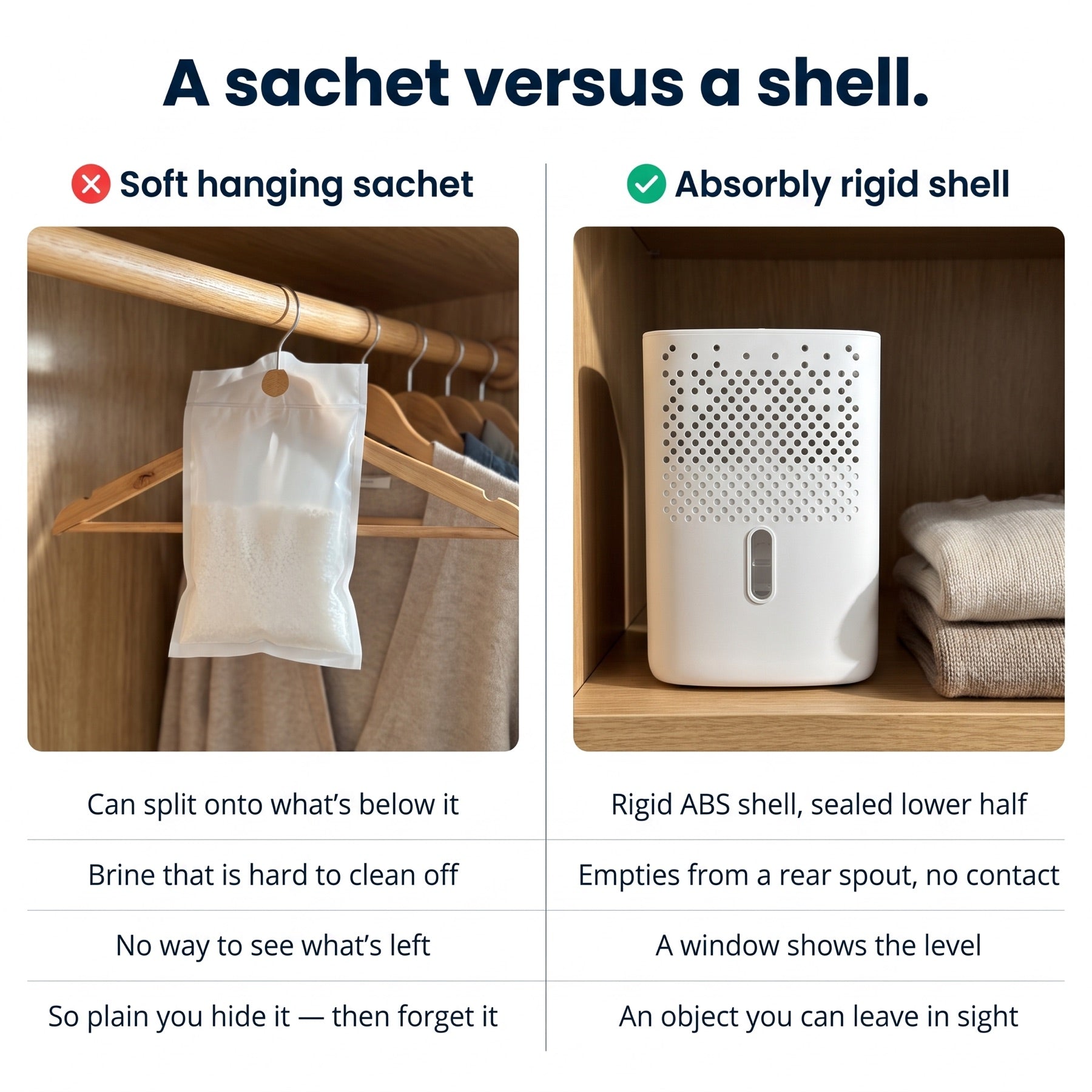
Every absorber uses the same calcium chloride. What fails is never the chemistry — it’s what holds it.
🛡️ Sachets split. Brine goes over a coat, and because it keeps pulling water from the air, it spreads instead of drying. A rigid shell has no seam to burst.
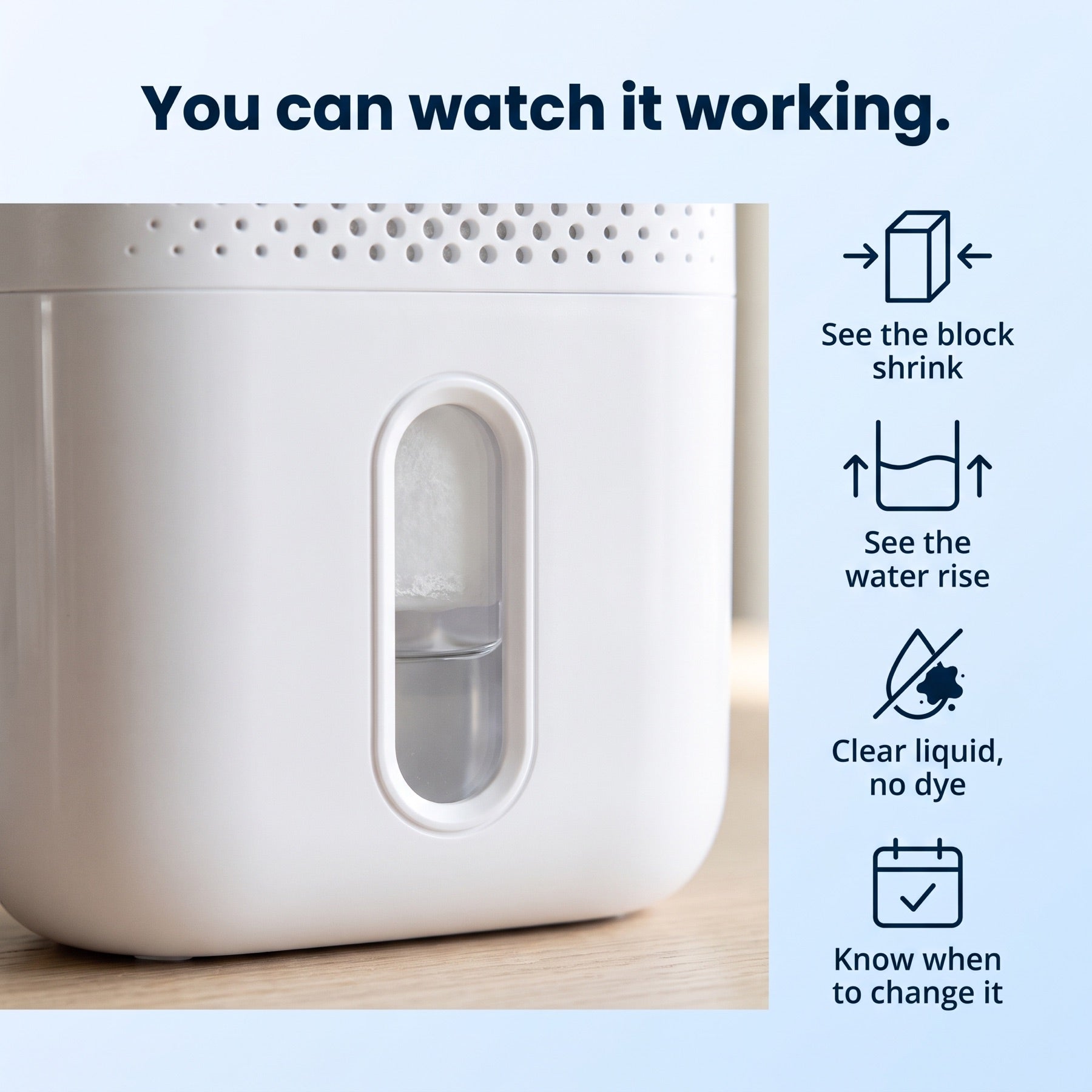
👁️ You can’t tell if it’s working. The window turns guesswork into a glance — and tells you when to change it.
💧 Emptying means touching it. The rear spout pours straight down the sink.
Reviewers call this whole category unattractive. An object you hide is an object you forget.


They tried Absorbly™
They loved it

I’d written these off — I’d tried two and thought they were a con. Turns out I’d been standing them in the middle of the bedroom. One inside the wardrobe and the smell was gone in a fortnight.

Three went into the caravan when we laid her up in October. Opened her in March and it smelled of nothing at all. After twenty years of that first-morning smell, that’s worth it.

A bag split over a coat two winters ago and I never got the mark out. The hard case is the only reason I tried again. I empty it from the spout without touching a thing.

Four stars because I tried it in the spare room first, where it did very little — then I read the page properly. In the fitted cupboard it’s a different product. My fault, but worth saying.

Bought one for the cupboard under the stairs with the coats in. Seeing the level through the window is the bit I didn’t know I wanted — no guessing, no shaking it.
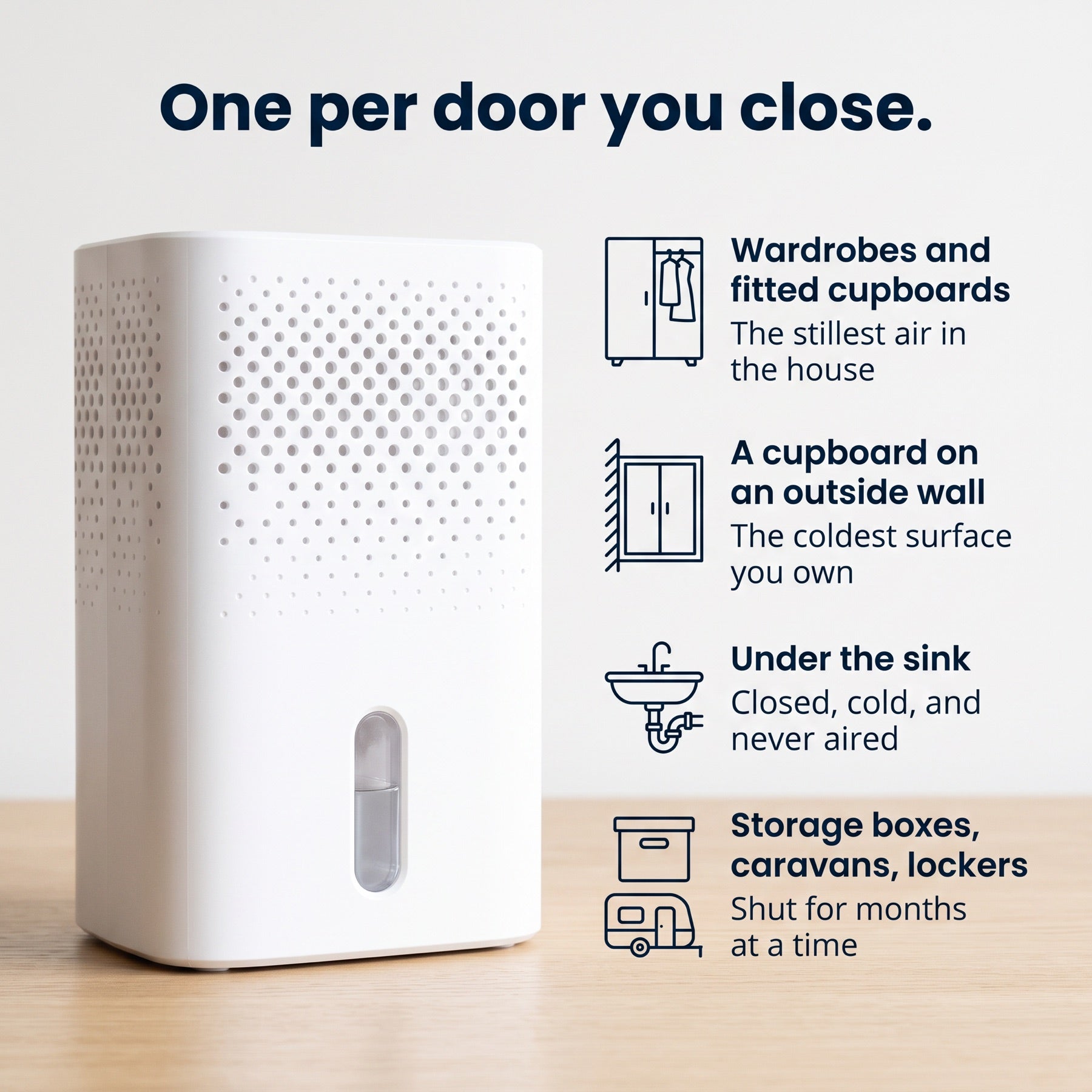
One per door you keep closed.
An absorber defends the volume it’s shut inside — and does nothing for the cupboard next door. So the question isn’t how many to buy. It’s how many doors you close.
The wardrobe
Where the smell you mind about lives. Floor, at the back, door shut.
The fitted cupboard
On an outside wall — the one you can’t pull away from it.
Under the sink
Closed cabinet, warm pipes, no airflow. Easiest win in the house.
Caravan or storage
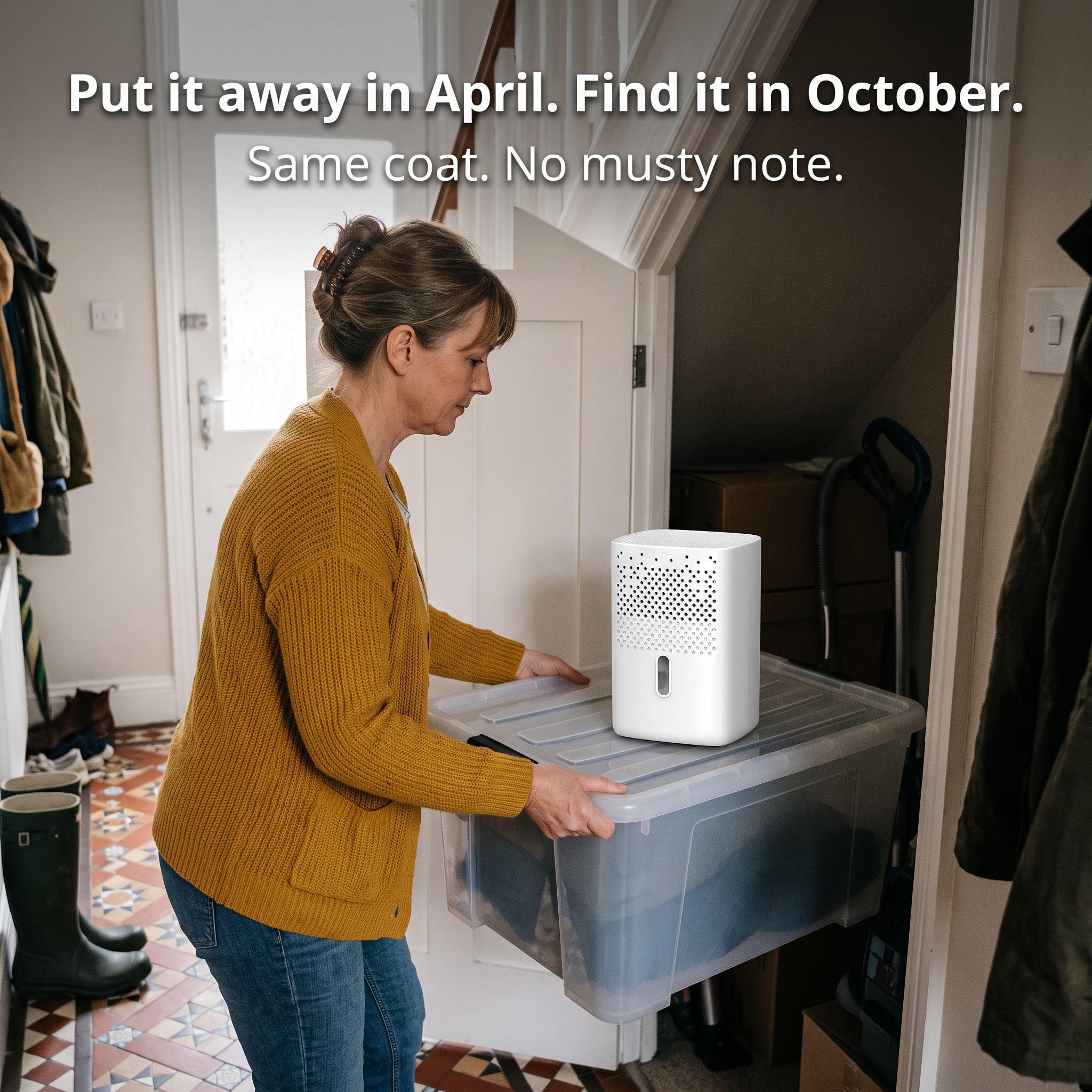
Shut October to March, no socket. Your nearest thing to a container.
Buy one for the space that’s actually bothering you. Most people come back within a month for the cupboard they walked past.
Where it works — and where it won’t
You’ve probably tried one of these already and been let down. So here’s the list we’d give you on the phone, including where we’d tell you not to bother.
✅ Where it earns its keep
- Wardrobes and fitted cupboards, especially on an outside wall
- Under the sink, airing cupboards, utility cabinets
- Caravans, campervans, boats and garages over winter
- Storage boxes, trunks, lofts and self-storage units
- Safes, instrument cases and camera bags
❌ Where we’d tell you not to
- An open room. Air comes in as fast as water goes out
- Anywhere with a window open, a trickle vent or an extractor — those are working correctly
- A whole house. No number of these dries a house
- Rising damp, penetrating damp or a leak — that’s a builder’s job
- Drying laundry. Use a dehumidifier; that’s the right tool
It defends a perimeter. It doesn’t fix a house. In a room, a dehumidifier beats it — but a dehumidifier can’t be shut inside a wardrobe, and there’s no socket in a caravan in January. That gap is the whole reason this exists.
The liquid it collects is a salt brine.
Calcium chloride solution, classified as causing serious eye irritation (H319). Two of the three things we built into this case exist because of it.
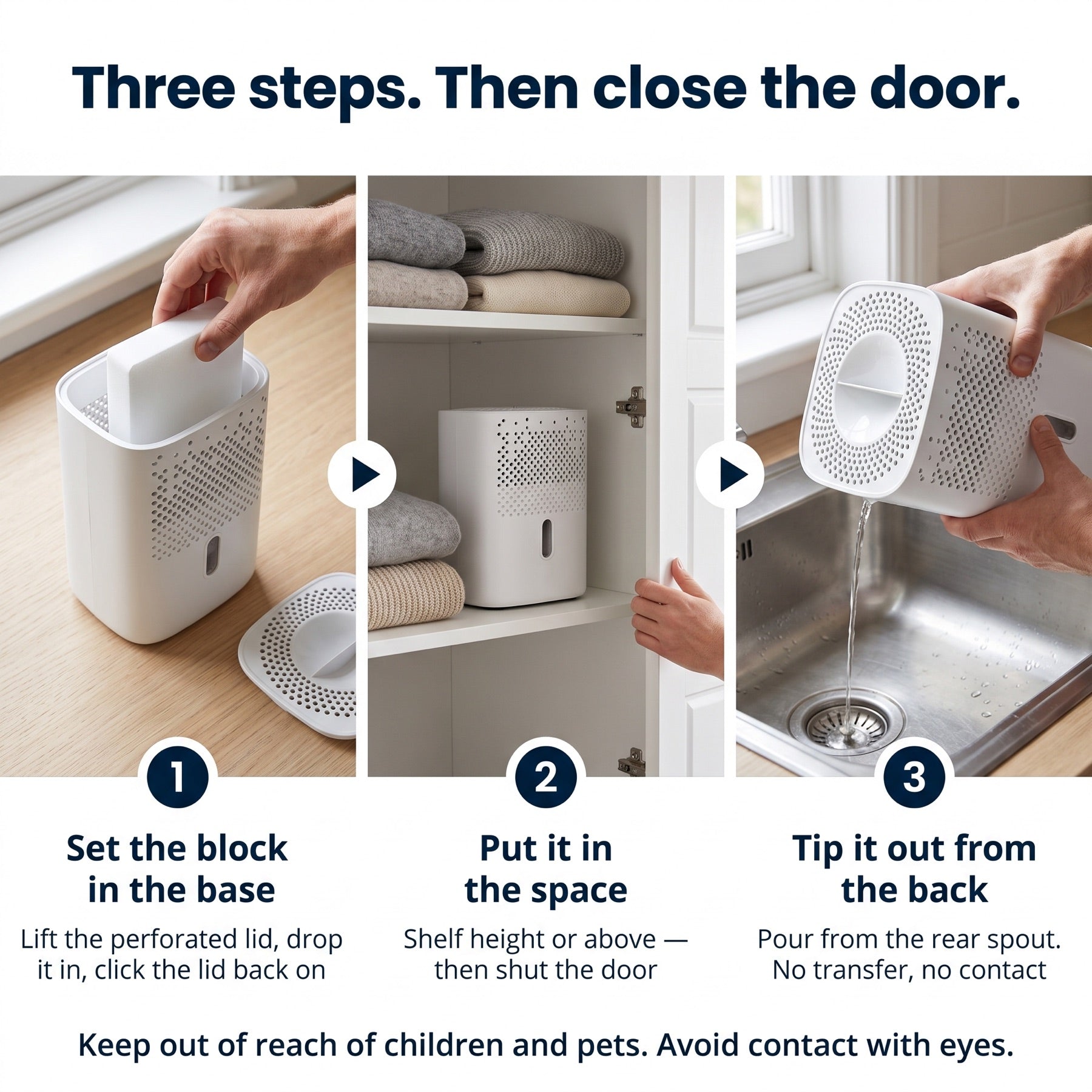
👦 Keep out of reach of children and pets
A shelf, or the back of a closed cupboard — where it works best anyway.
👁 Avoid contact with eyes
Don’t decant or splash it. Wash your hands after emptying.
💧 If in eyes, rinse cautiously with water for several minutes
Remove contact lenses if easy to do. If irritation persists, get medical advice.
That’s why the shell is sealed and the spout is at the back. The horror stories here are all split sachets — and spilt brine spreads instead of drying. You empty this down the sink without touching it.
What you’re actually paying for
Not the salt — that’s the same in every product here, ours included. You’re paying for the container.
No countdown, no invented was-price. And if you only need one, buy one.
Frequently Asked Questions
I’ve tried these before and they did nothing.
Because of where it went, not what’s in it. In a room, fresh air replaces the moisture as fast as the salt removes it. Shut in a wardrobe, the air is finite and it finishes the job. If you’ll stand this in the middle of a room, don’t buy it.
How long does a block last?
It depends on the space and how damp it is — any brand quoting one number is quoting an average that isn’t yours. That’s what the window is for: you watch the block go down and the liquid rise, and change it when it’s actually done.
Will it leak on my clothes?
That’s the failure this case was built around. The leak stories are all soft sachets splitting at a seam, and spilt brine spreads rather than dries. This is a sealed rigid shell — no seam, no fabric. Empty it through the rear spout.
Is it safe around children and pets?
Treat it like any cleaning product. The liquid is a calcium chloride brine, classified as causing serious eye irritation (H319): keep out of reach of children and pets and avoid contact with eyes. If in eyes, rinse cautiously with water for several minutes; seek medical advice if irritation persists.
Can I leave it in a caravan all winter?
That’s close to the ideal use — a caravan shut from October to March is the nearest thing you own to a sealed container, and there’s no socket for a dehumidifier anyway. Owners usually use several: the main space, plus lockers that stay shut.
Wouldn’t an electric dehumidifier be better?
For a room, yes, and we’d rather say so. But it can’t be shut inside a wardrobe and there’s no socket in a caravan in January. They aren’t rivals — a dehumidifier handles rooms, this handles the spaces you close.