
Dawnly™ — The Linen Sunrise Alarm Clock
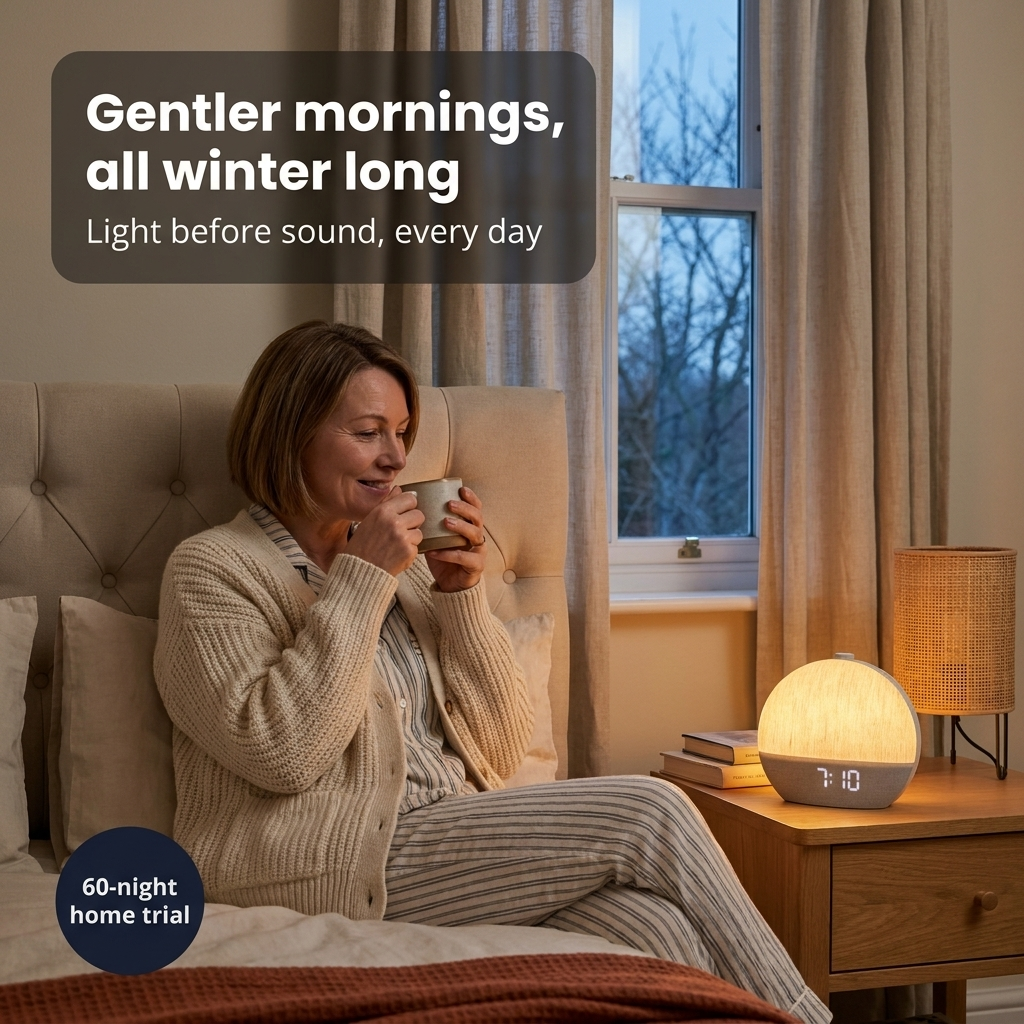
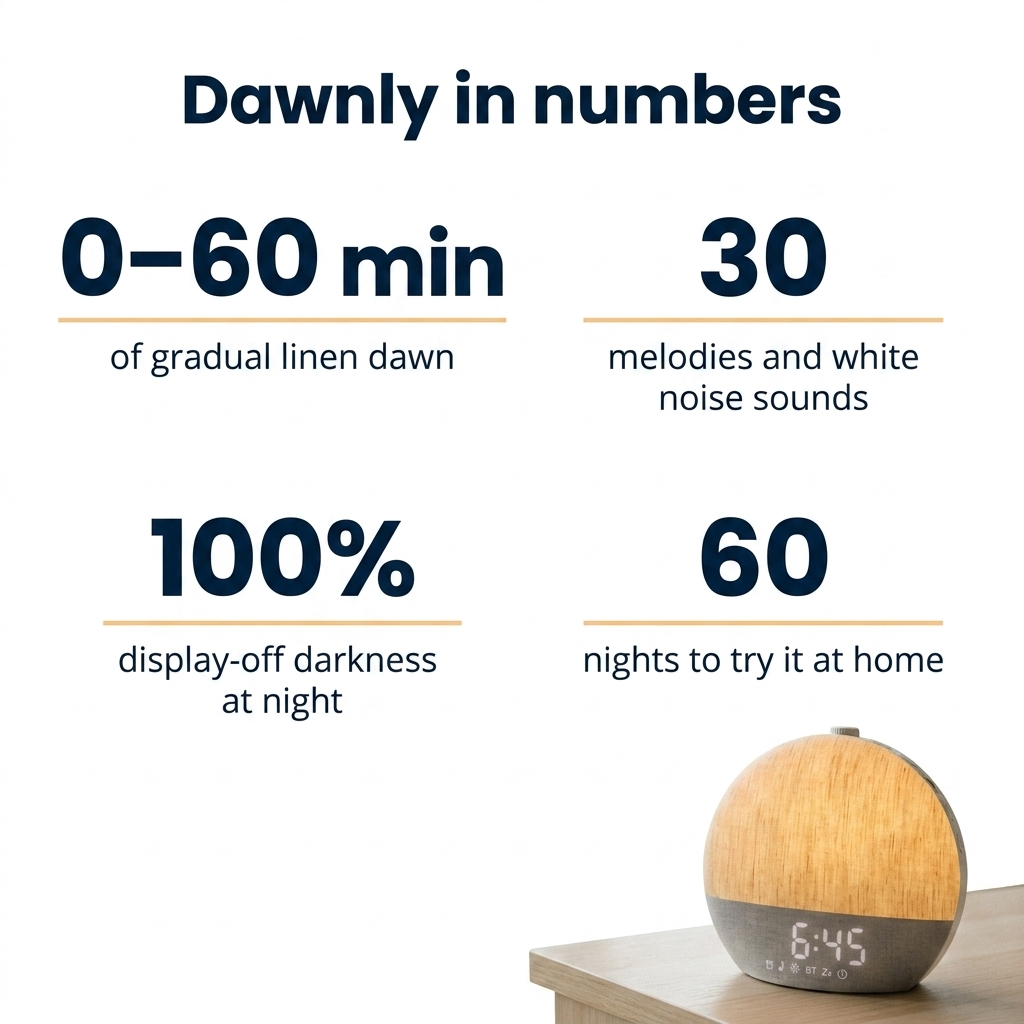
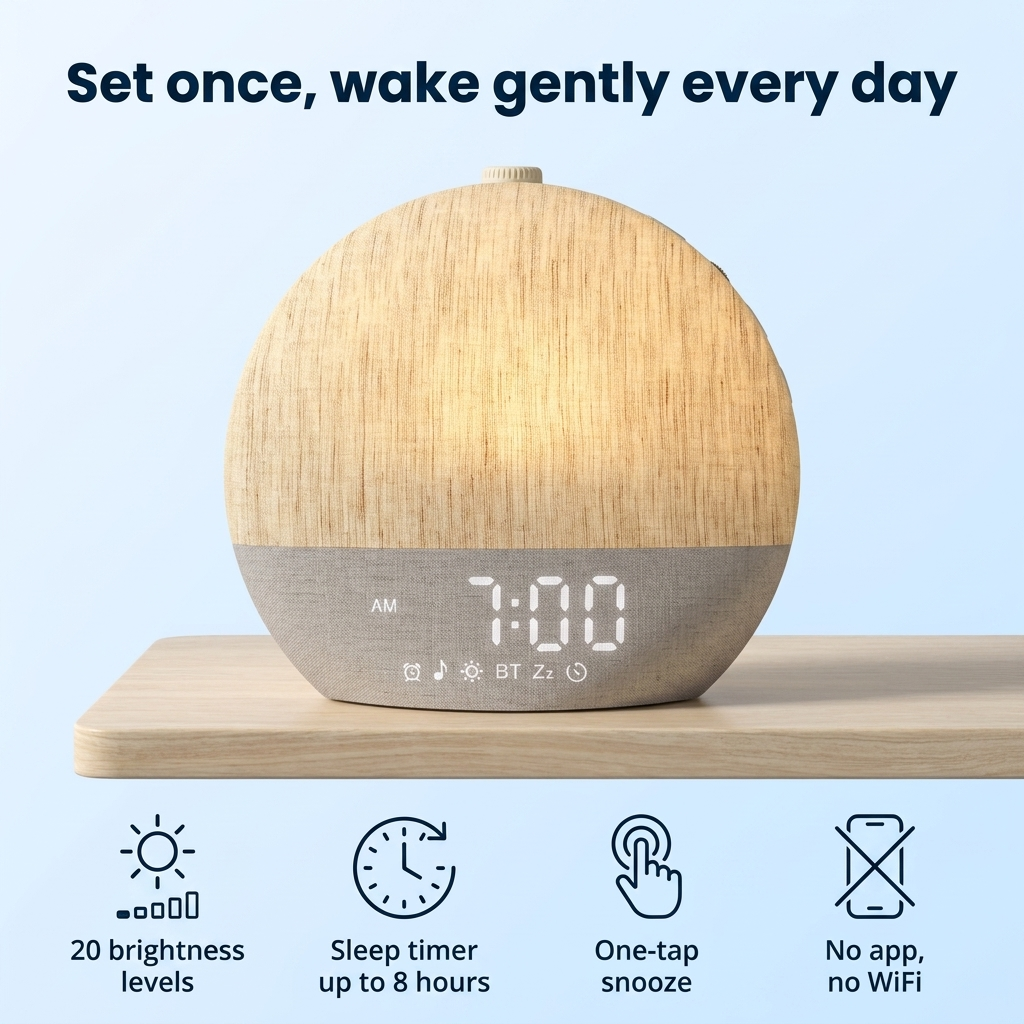
🌅 Linen-diffused dawn rises up to 60 min before your alarm — light wakes you, sound just finishes
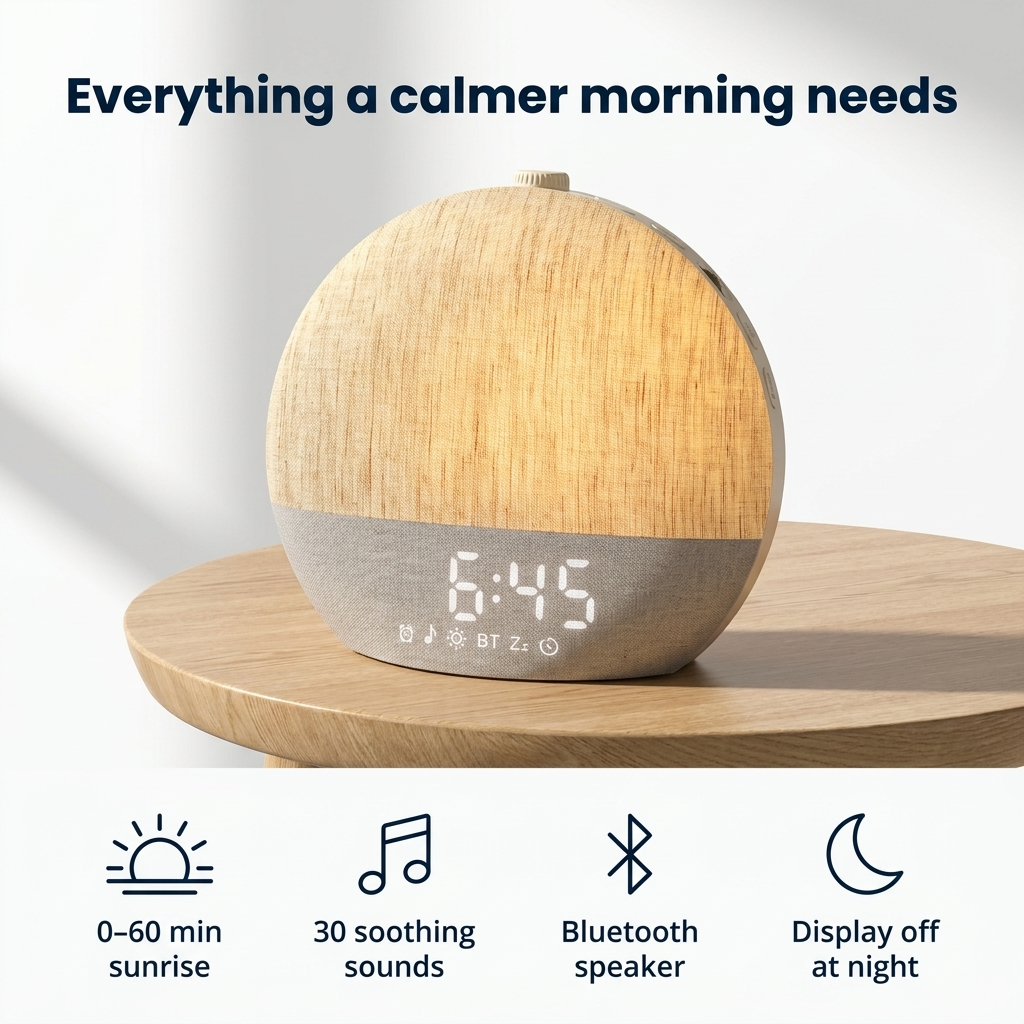
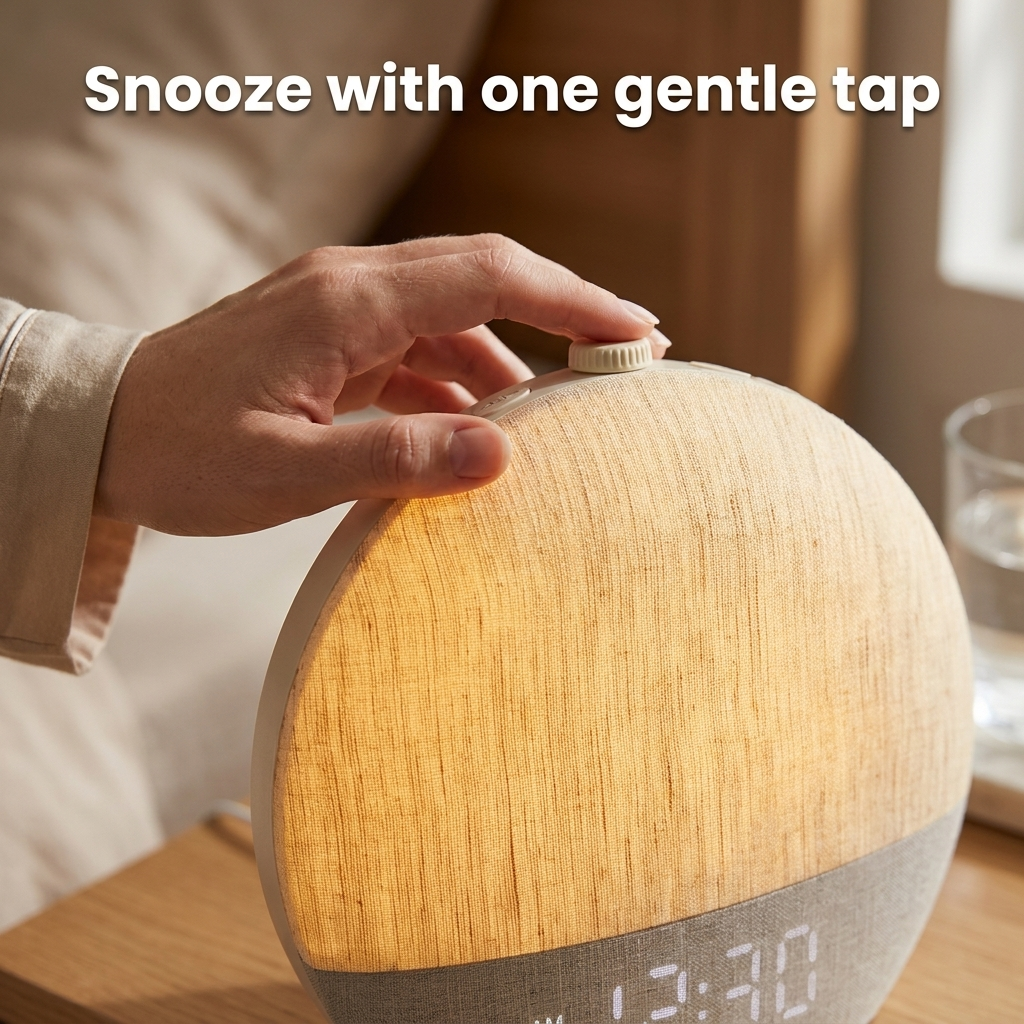
🎵 30 gentle sounds (20 melodies + 10 white noise), 32 volume levels — one-tap snooze
🌙 Display off = truly dark room · sunset fade + sleep timer · Bluetooth speaker for podcasts
You’re not bad at mornings. Your bedroom is.
From late October to March, most UK alarms go off before sunrise. Add blackout curtains and a phone alarm, and you’re waking mid-deep-sleep, in a pitch-black room, to a sound your brain files under “threat”. That’s not a character flaw — it’s an environment. Here’s what your bedroom does to you every winter morning:
The 6:45 jolt
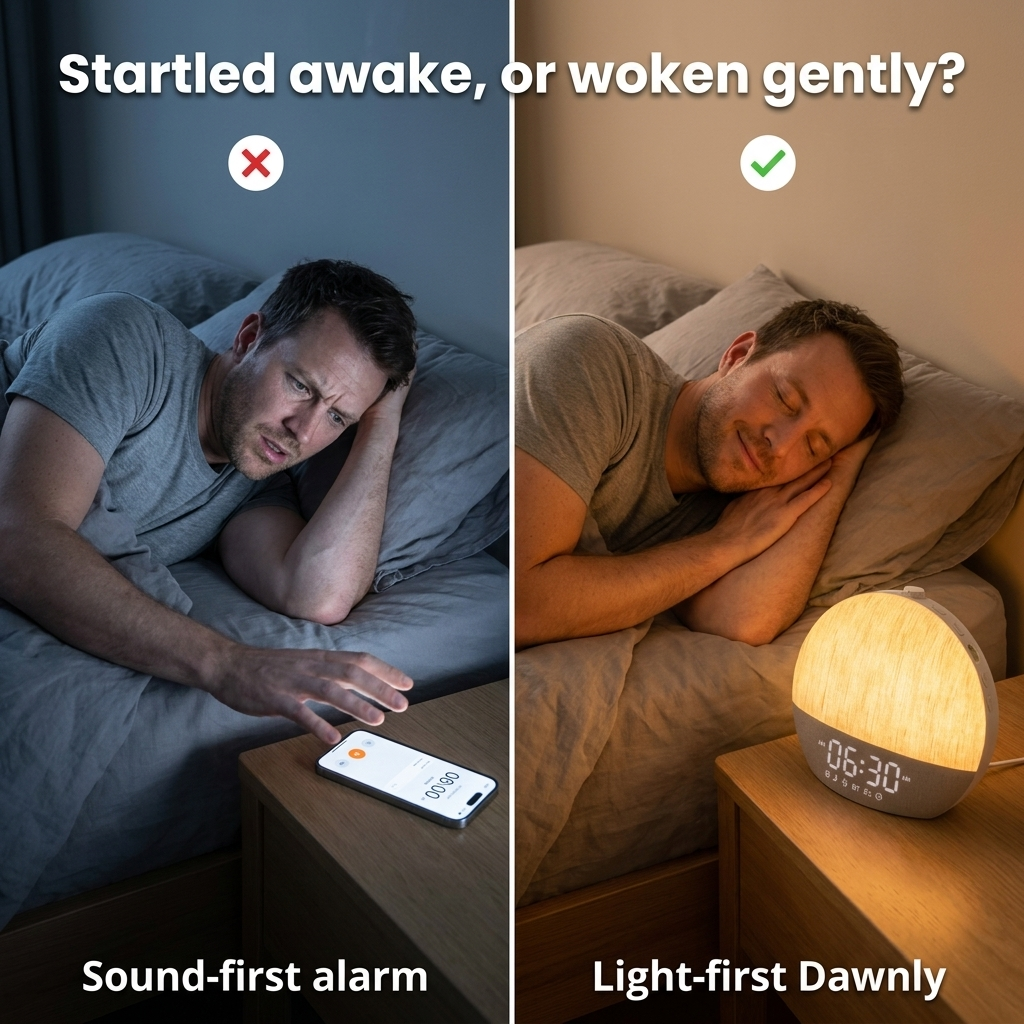
When the alarm fires before dawn, your melatonin is still at full night level — your body is chemically asleep. Sound drags you out through the fight-or-flight circuit: racing heart, disorientation, instant dread. One reviewer put it plainly: the standard iPhone alarm “sends me into a mild panic”.
The blackout cave
The curtains you need for June mornings and street lights seal every trace of dawn out in November. Your body clock never sees morning coming — you’re asking yourself to boot up in a cave, five months a year.
The snooze spiral
Groggy start, snooze ×4, rushed shower, out the door late and cross. Two-thirds of UK workers say winter drains their productivity and energy. You’ve been calling it “not being a morning person”. It never was.

Campers wake up fine without alarms
In 2013, researchers at the University of Colorado sent volunteers camping for a week — no torches, no screens, just natural light. Their body clocks shifted almost two hours earlier, and they woke with the dawn, refreshed, without a single alarm. Even one weekend under canvas moved melatonin onset by 1.4 hours.
The conclusion is disarmingly simple: people who see the dawn don’t have a wake-up problem. Modern bedrooms deleted the dawn — blackout curtains, winter latitudes, and a panic-alarm 30 cm from your head.
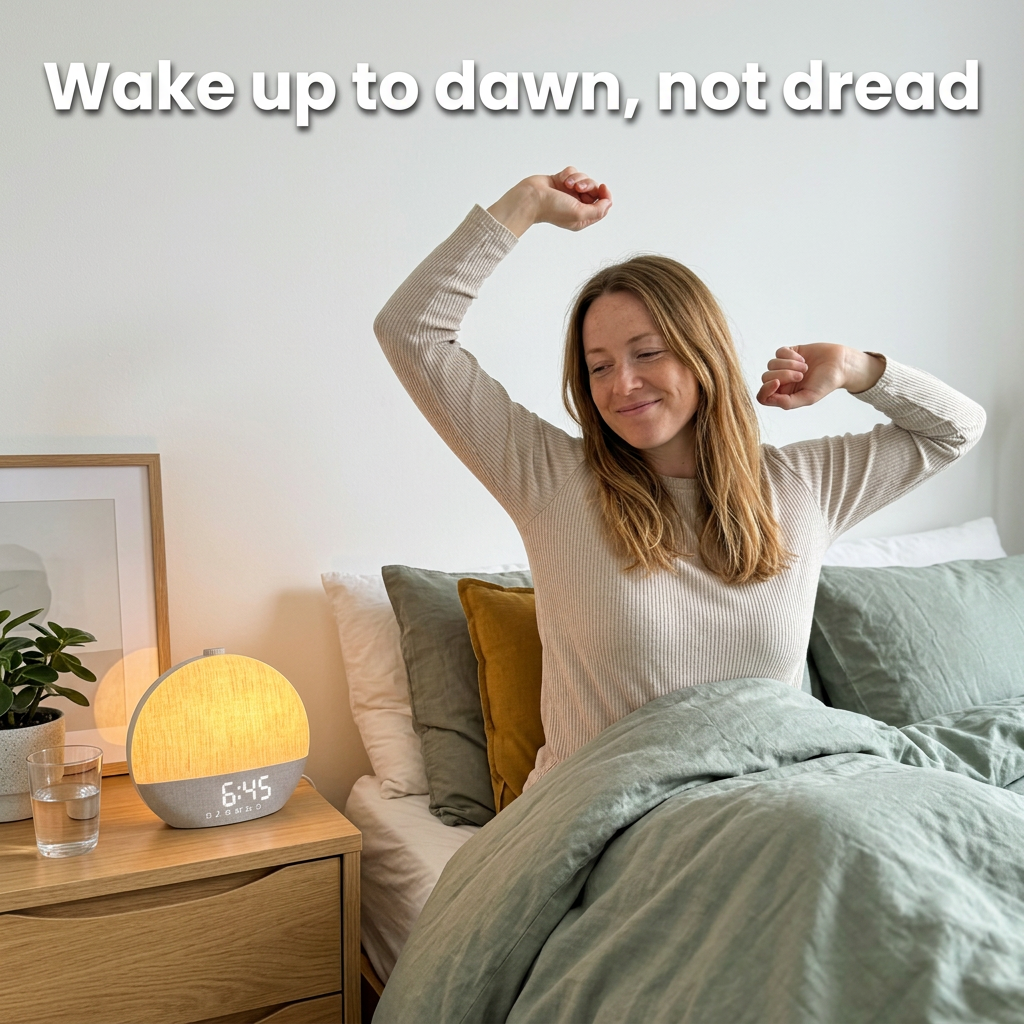
Dawnly puts the dawn back — on your bedside table.
Light before sound — a wake-up in the right order
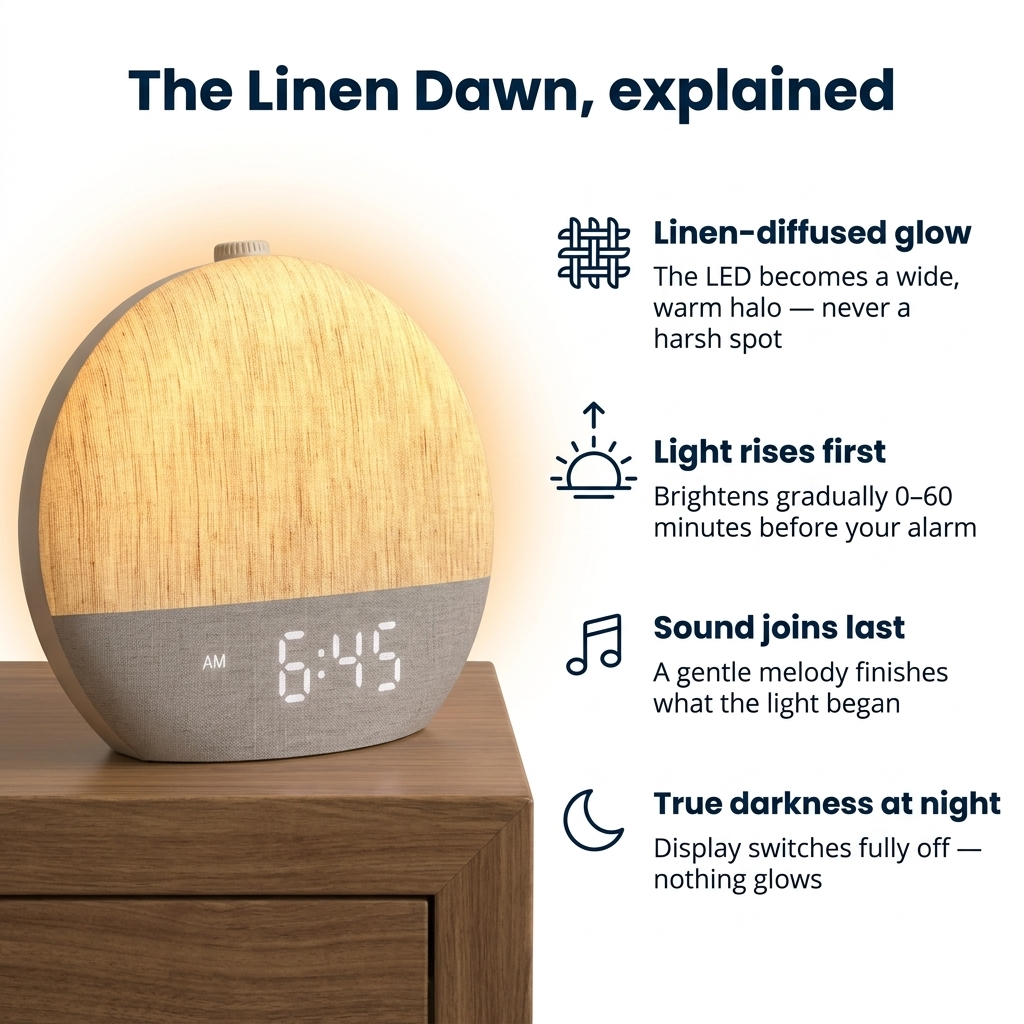
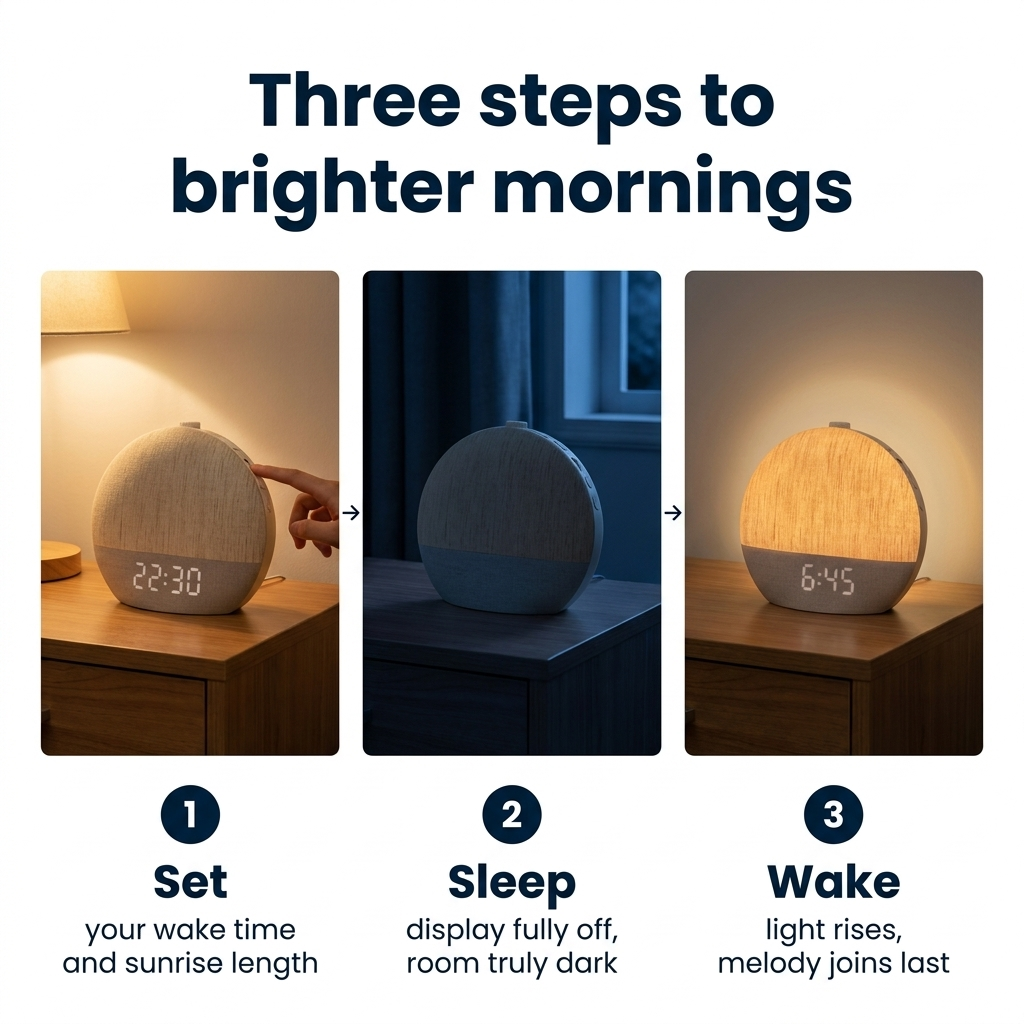
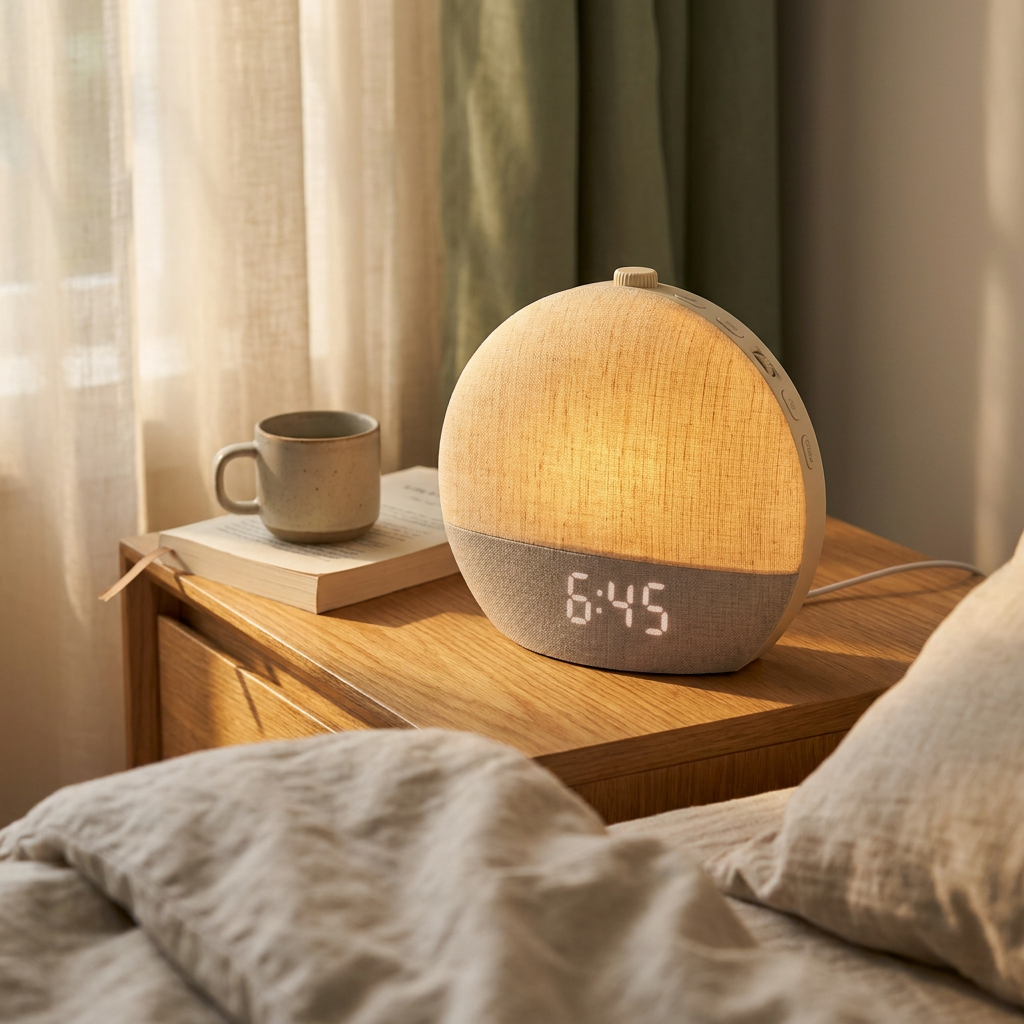
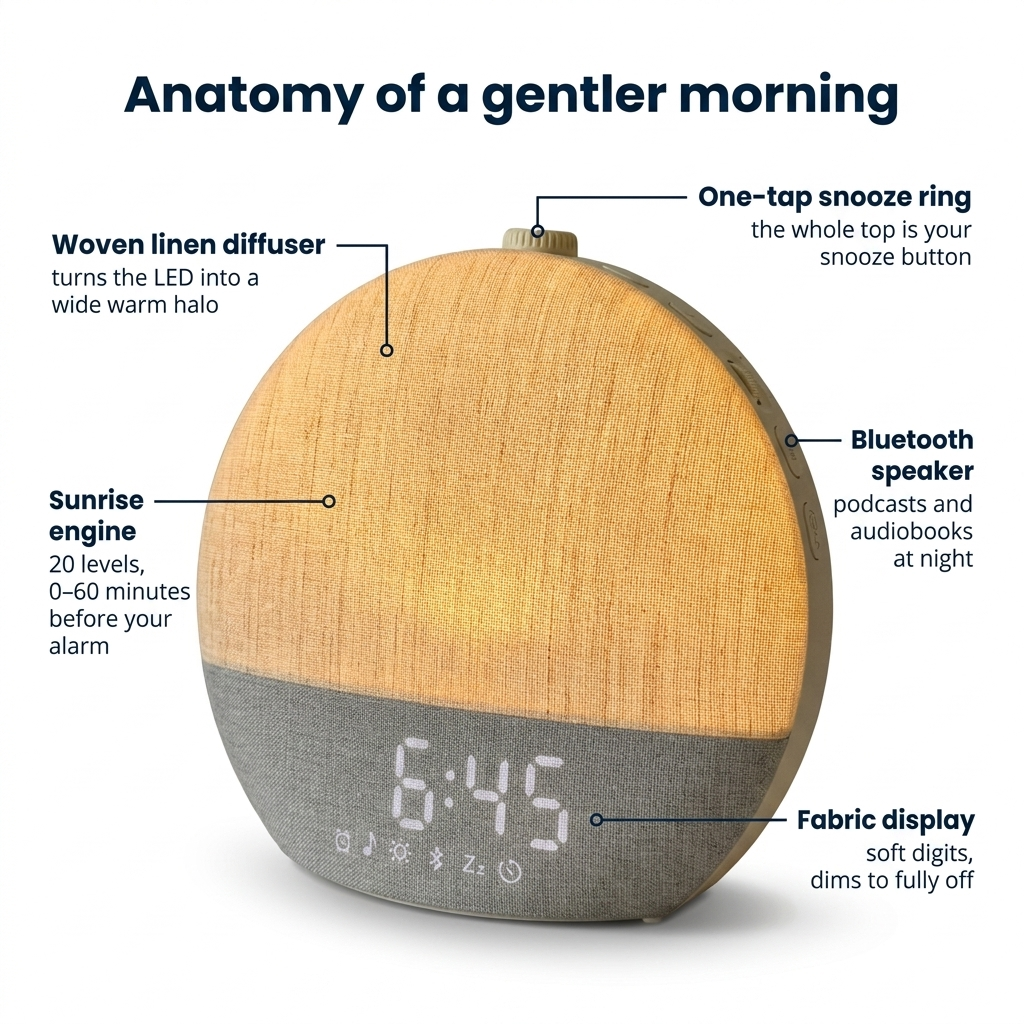
Set your alarm and Dawnly works backwards from it. Up to 60 minutes before, a warm glow starts rising through the linen face in 20 gentle steps — melatonin winds down while you’re still asleep. By the time the melody plays, most of the waking is already done.
A dawn, not a spotlight
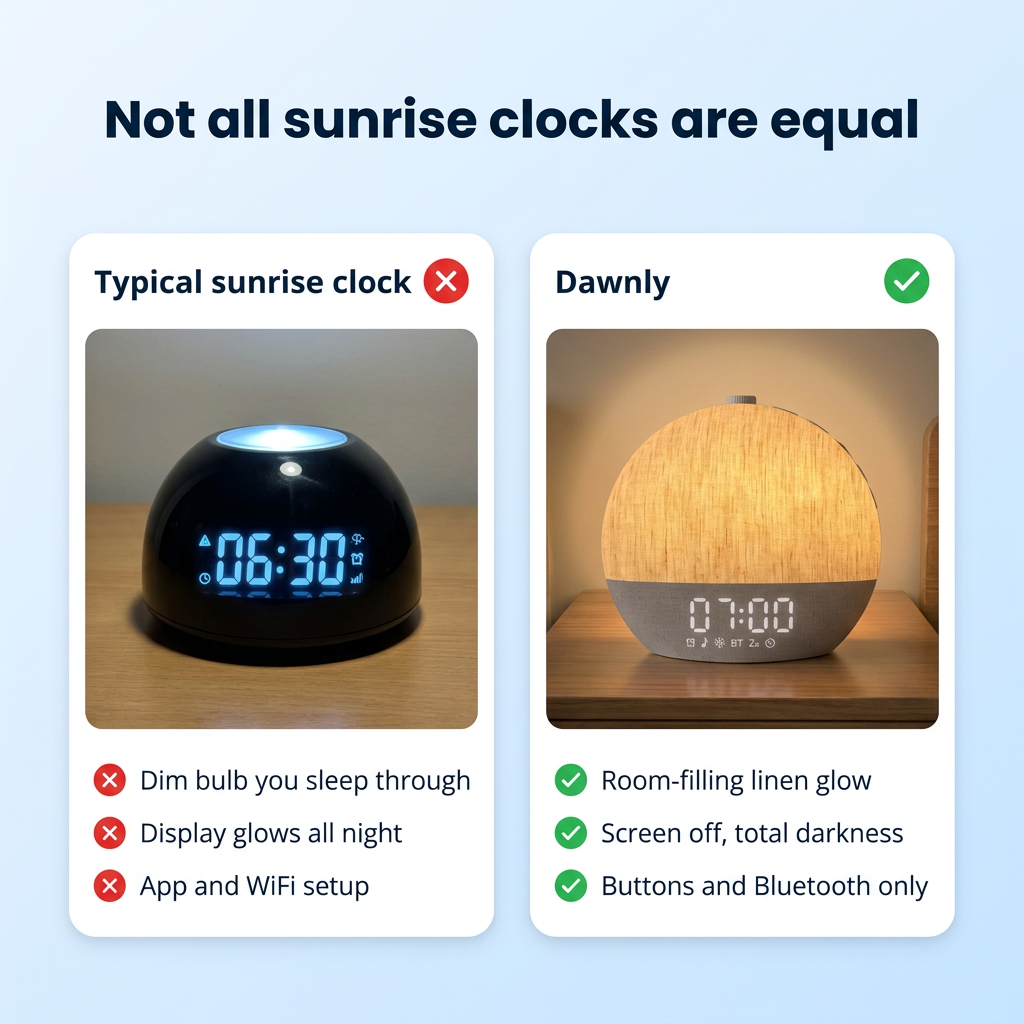
The LED never points at you. Diffused through woven linen, it becomes a wide, warm halo that fills the room the way sunrise fills a tent — ambient light, not a beam in your face.
Sound arrives last
A soft melody handles the final stretch: 20 nature melodies and 10 white-noise options, 32 volume levels. Snooze is one tap on the top ring — no buttons to fumble for in the dark.
Your night stays black
The display dims through 5 levels to completely off — no glowing digits at 3am. Sunset mode runs the dawn in reverse, with a 10–480 minute timer fading light and sound as you drift off.
The gap between £30 and £150, finally filled
Wake-up lights aren’t new — a British brand invented them in 1992, and thirty years of results prove the idea works. What never existed was the honest middle: warm, simple, fairly priced.
Dawnly skips the medical-device registration, the app team and the subscription department — and charges you for none of them. You pay for the alarm clock, not the ecosystem.
Built like furniture, not like a gadget
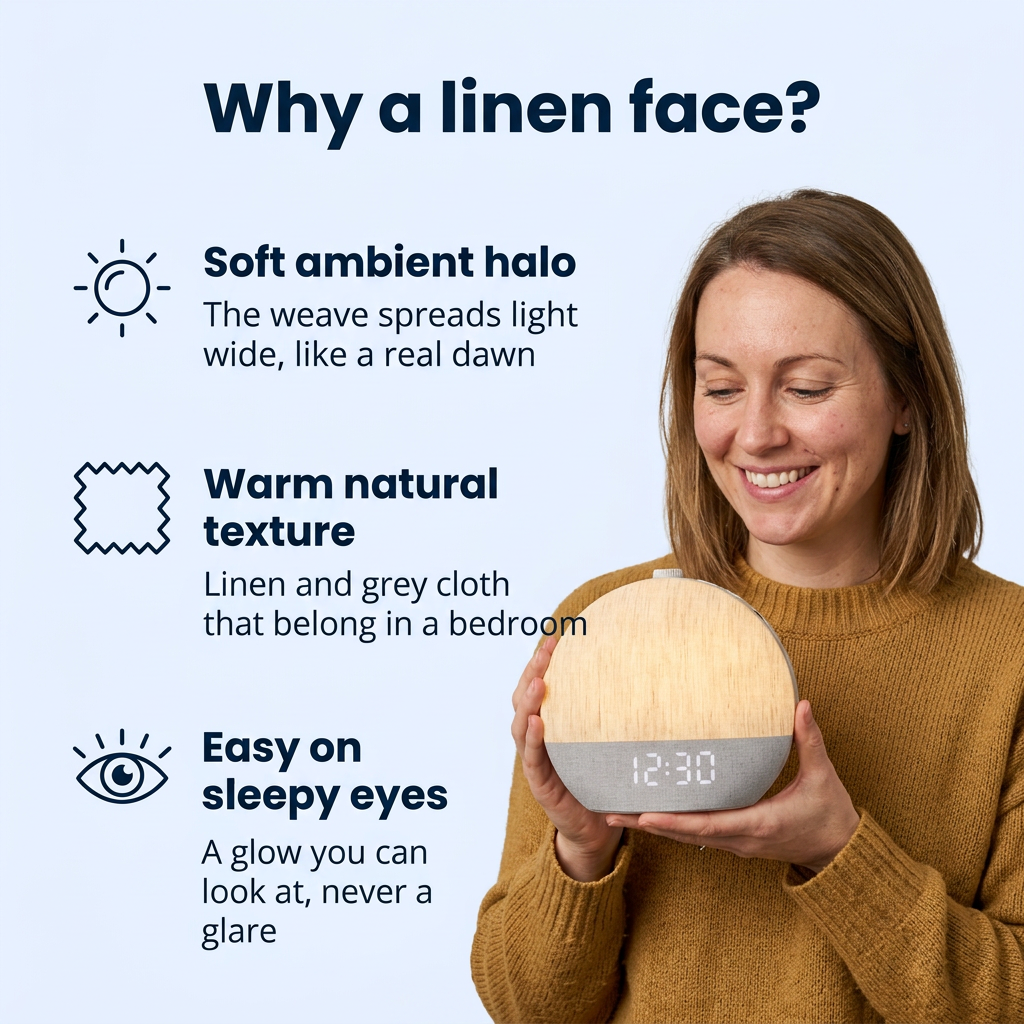
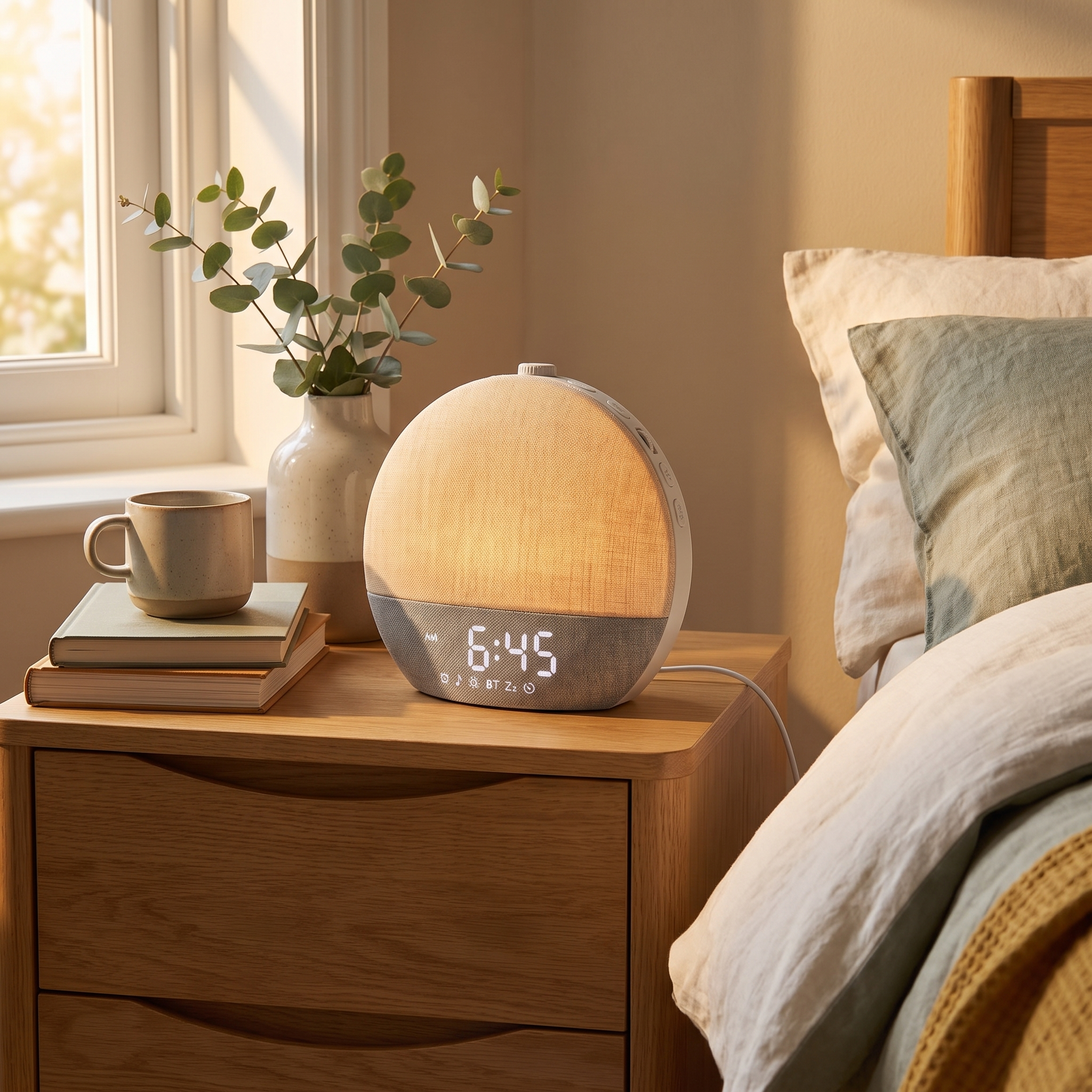
Dawnly lives on the most personal shelf in your house, so it’s dressed for it: a woven linen face on a soft fabric body — a warm ember glow when it’s working, a quiet ornament when it’s not. No glossy black plastic, no LED digits staring at you all night.
It earns the bedside spot around the clock: 17 light modes (8 fixed + 9 dynamic) turn it into a reading and mood lamp, and the built-in Bluetooth speaker plays your evening podcast or audiobook.
USB-powered, about 18 cm across, at home in any bedroom.
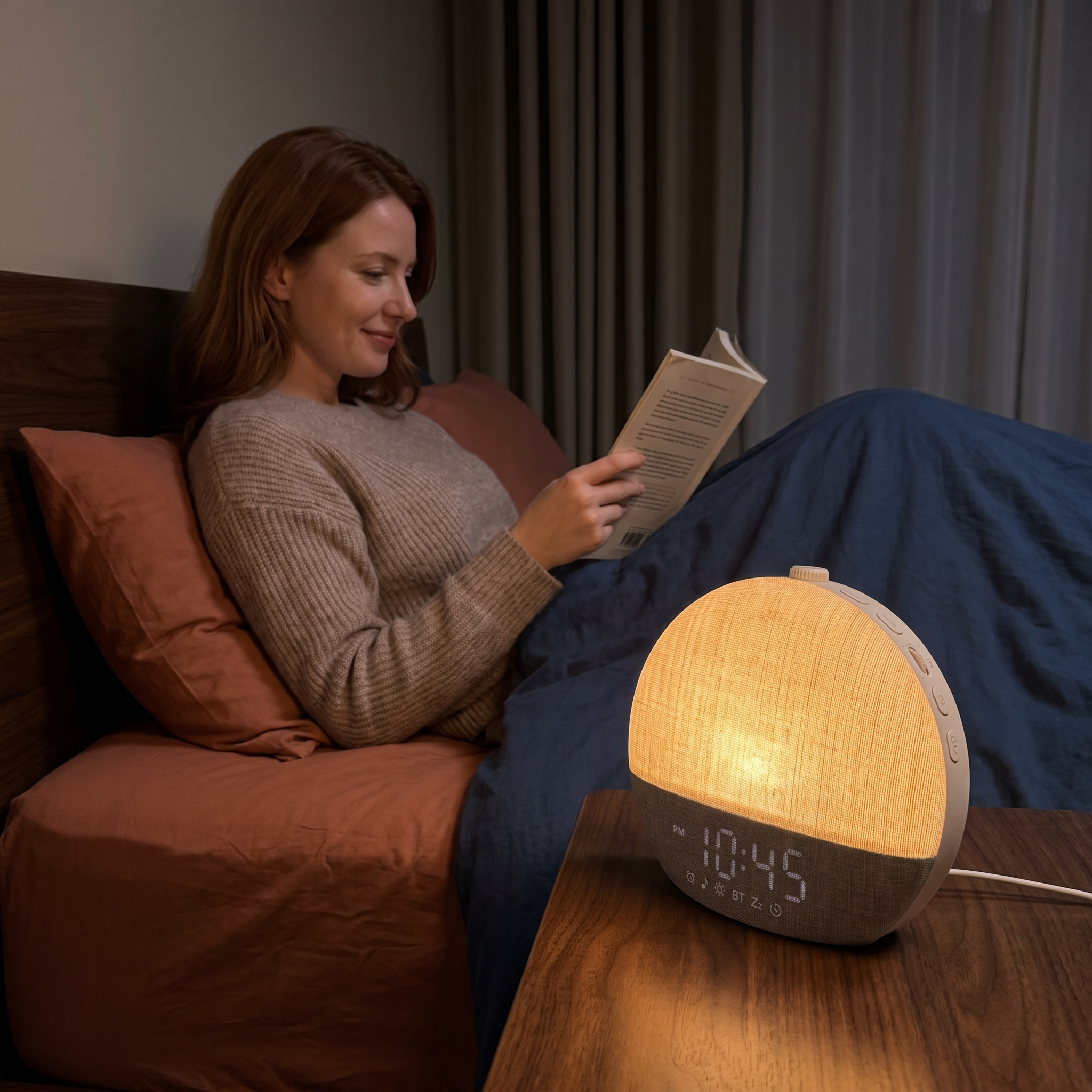
The other half of the trick: evenings
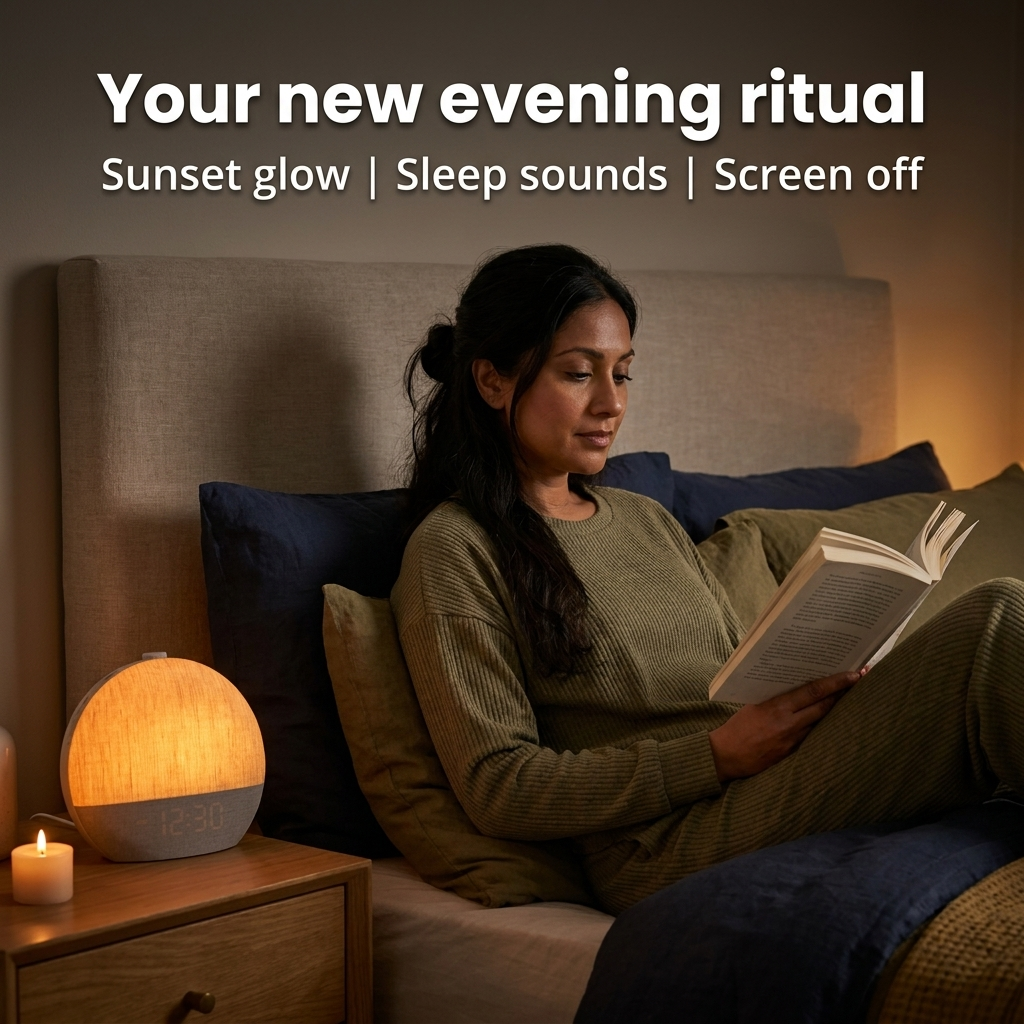
Falling asleep is a light problem too. Sunset mode runs the dawn in reverse — the linen glow fades over anything from 10 minutes to 8 hours while you read or drift.
Pair your phone once, leave it charging in the kitchen, and let the speaker finish your audiobook — the sleep timer fades the sound out, and the display switches fully off. Your room ends the evening darker than it’s ever been — and the next light you see will be your dawn.
Wind down with sunset. Wake with sunrise. The phone stays in the kitchen.
What Dawnly does — and what it honestly doesn’t
Sleep gadgets attract inflated promises. Here’s where we stand, in writing:
✅ What it does
- Wakes you with a linen-diffused dawn up to 60 minutes before a gentle melody — light first, sound last
- Gives you truly dark nights: display fully off, sunset fade, 10–480 min sleep timer
- Doubles as a bedside lamp (17 modes) and a Bluetooth speaker for podcasts and audiobooks
- Works out of the box: buttons on the unit, time syncs itself over Bluetooth — no app, no WiFi, no account
- Backed by the 60-Night Brighter Mornings Trial and a 12-month warranty
❌ What it doesn’t
- It’s not a medical device and not a light-therapy product — it doesn’t diagnose or treat anything, and we won’t pretend otherwise
- It won’t knock a heavy sleeper out of bed on day one — keep the melody volume up at first; the light takes over more of the job as your body learns the pattern
- It won’t fix a 1am scrolling habit by itself — it removes the phone’s last excuse to sleep in your bedroom; the rest is yours
- There’s no app — deliberately. If you want sleep graphs and firmware updates, Dawnly isn’t that product
If a bedside light promises to treat your winter, that’s a medical claim — walk away. Dawnly makes a smaller promise it can keep: your room gets its dawn back, your alarm stops being a threat, and you have 60 nights to judge the difference — or a full refund.


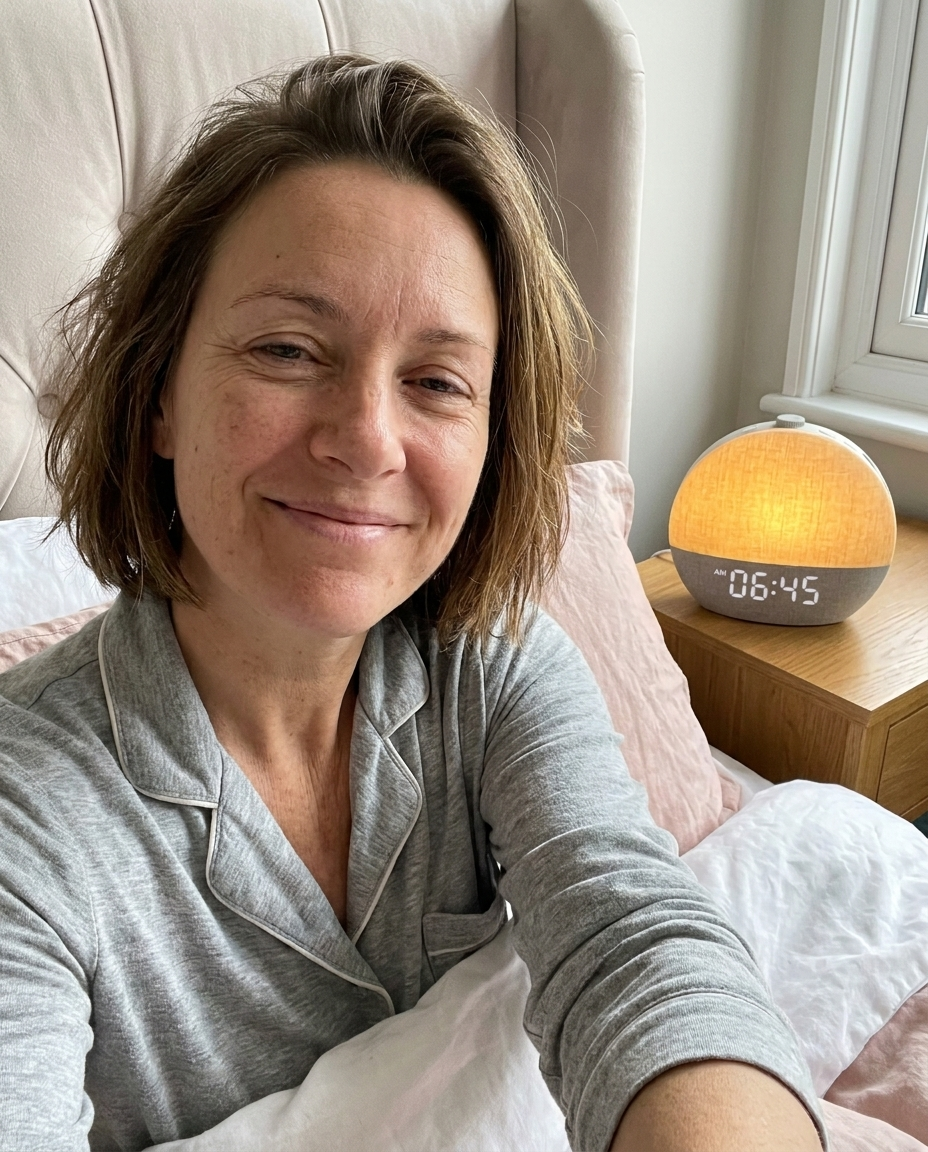
They tried Dawnly™
They loved it


Frequently Asked Questions
Will a light really wake me? I’m a deep sleeper.
The light isn’t meant to startle you awake — it works while you’re still asleep. Over 30–60 minutes, brightness rising through your eyelids winds melatonin down, so you surface into lighter sleep before the melody plays. The sound then finishes the job — 32 volume levels, as gentle or as firm as you need. Most people notice they’re waking before the melody within the first couple of weeks. And if your mornings genuinely don’t change, that’s what the 60 nights are for.
Won’t it wake my partner too?
A bedside dawn is far dimmer than a summer window. The glow rises gradually on your side of the bed, and most partners either sleep through it or drift straight back off — it’s a soft halo, not a ceiling light. If you wake at very different times, the Duo set exists for exactly that: one Dawnly per side, each with its own alarm.
Do I need an app or WiFi?
No — and that’s deliberate. Everything is set with the buttons on the unit, and the clock even sets its own time when it pairs over Bluetooth. Bluetooth is there for the speaker and time sync, nothing else. No account, no firmware anxiety, no subscription. Ever.
Won’t the light bother me when I’m falling asleep?
The opposite — Dawnly usually makes bedrooms darker. The display dims through 5 levels to completely off (no glowing digits), and sunset mode fades the light down over a timer you choose. Compare that with a standard LED alarm clock shining all night — or a phone screen at midnight.
What can I actually adjust?
Dawn length up to 60 minutes with 20 brightness steps; 30 sounds (20 melodies, 10 white noise) at 32 volumes; 17 lamp modes (8 fixed colours, 9 dynamic); sunset & sleep timer from 10 to 480 minutes; display brightness in 5 steps down to off; one-tap snooze on the top ring. It runs on USB — cable included, any standard USB plug or laptop port works.
What if it doesn’t work for my mornings?
You get the 60-Night Brighter Mornings Trial: use it every morning, ideally across a clock change, and if you’re not waking calmer, send it back for a full refund. On top of that, every Dawnly carries a 12-month warranty and UK-based support.