
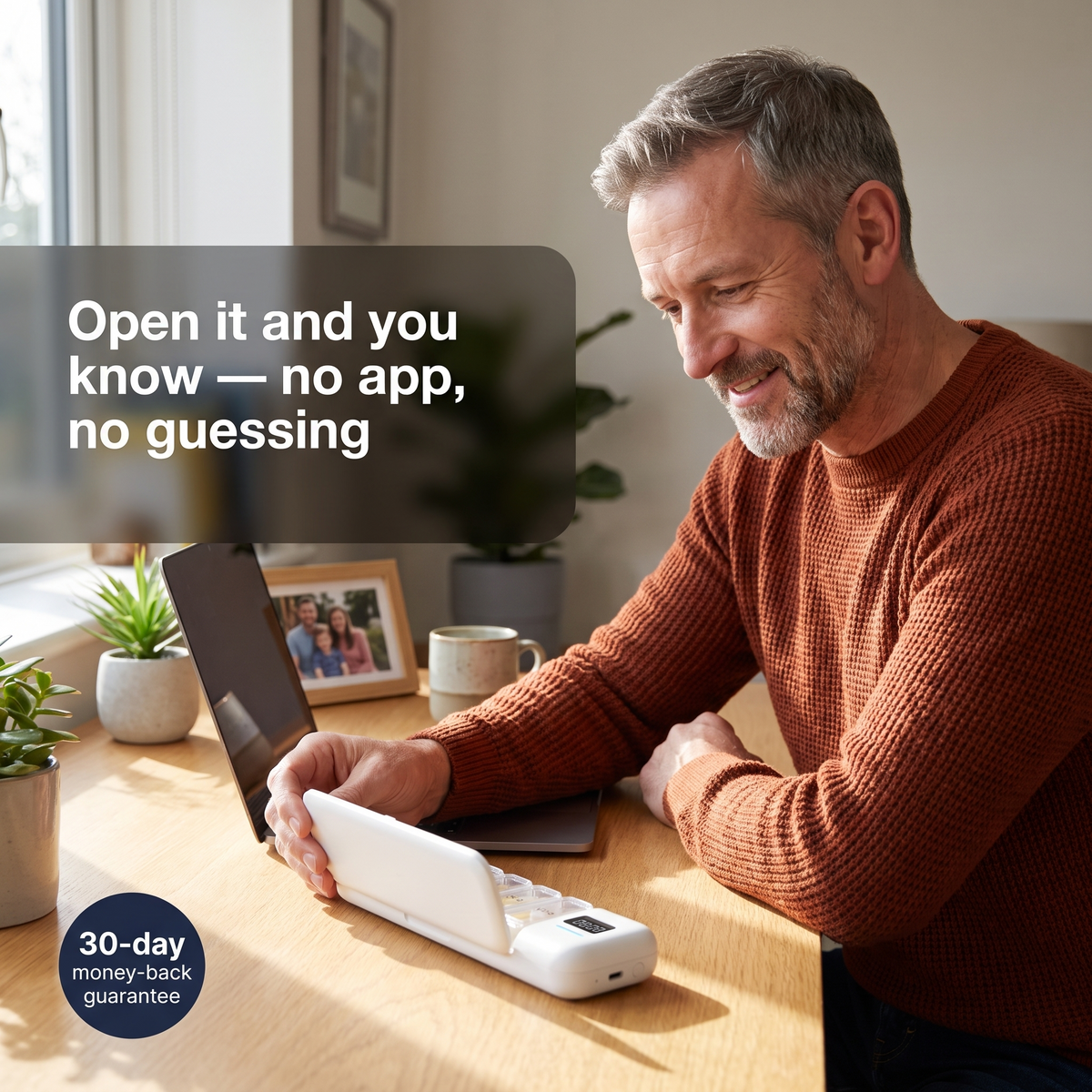
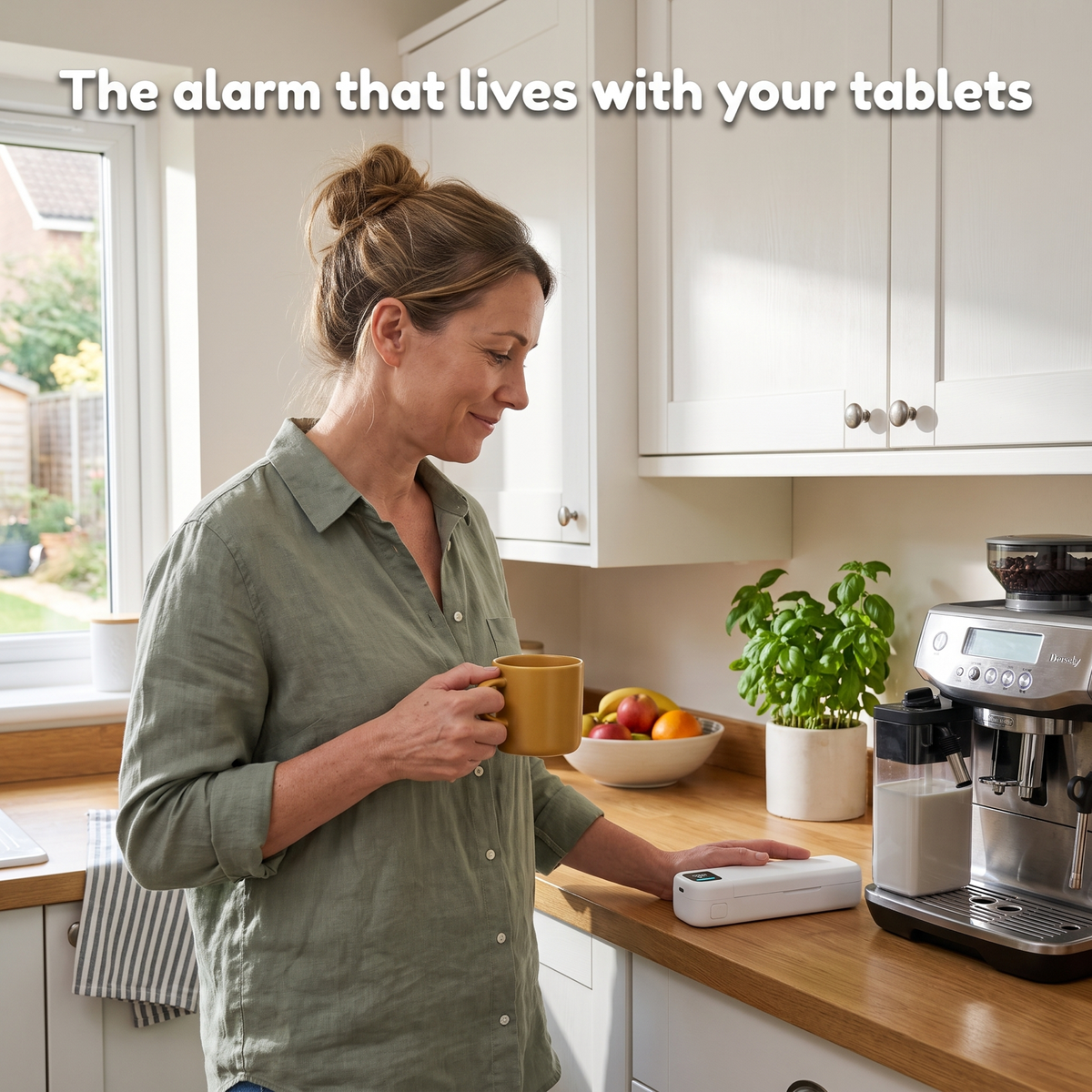

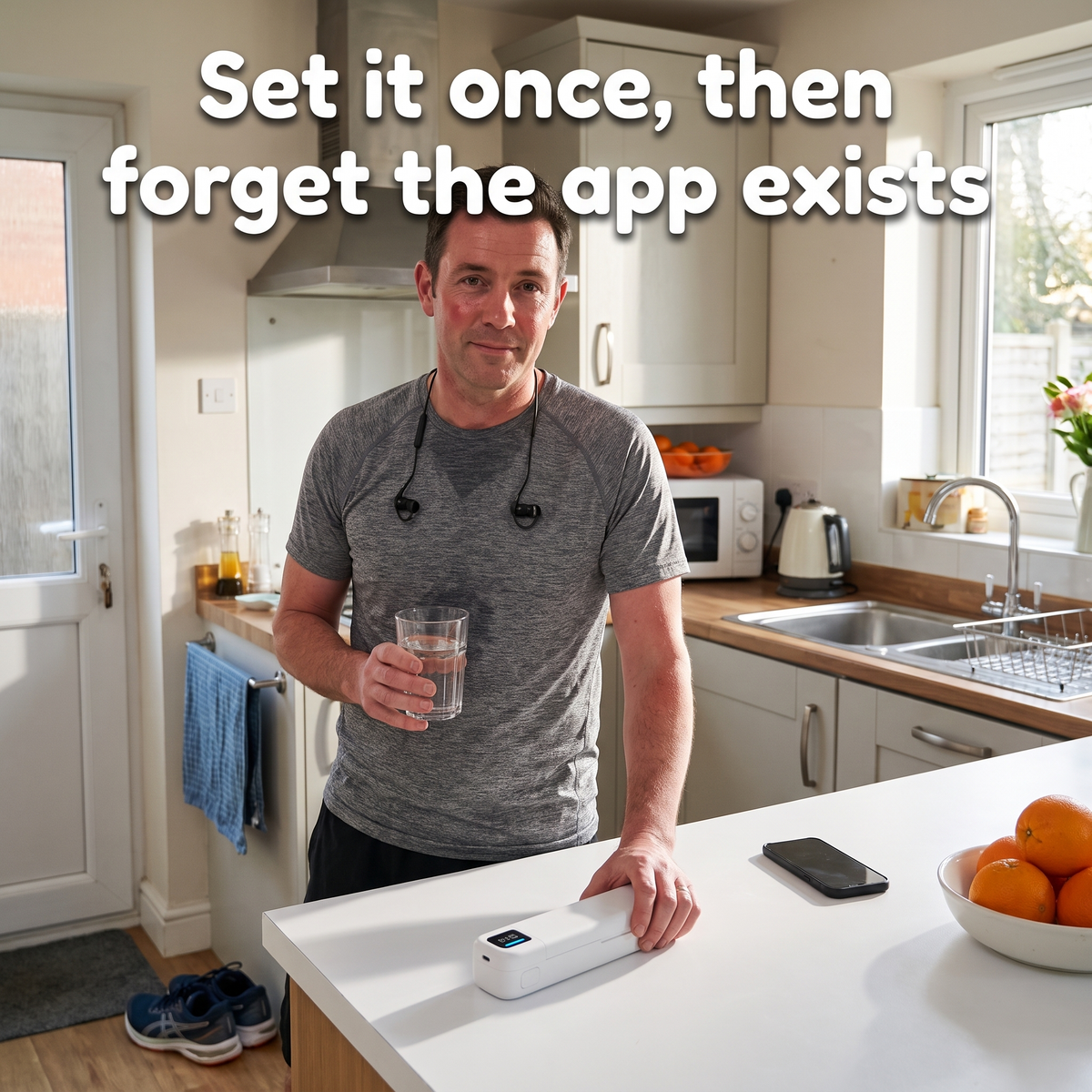
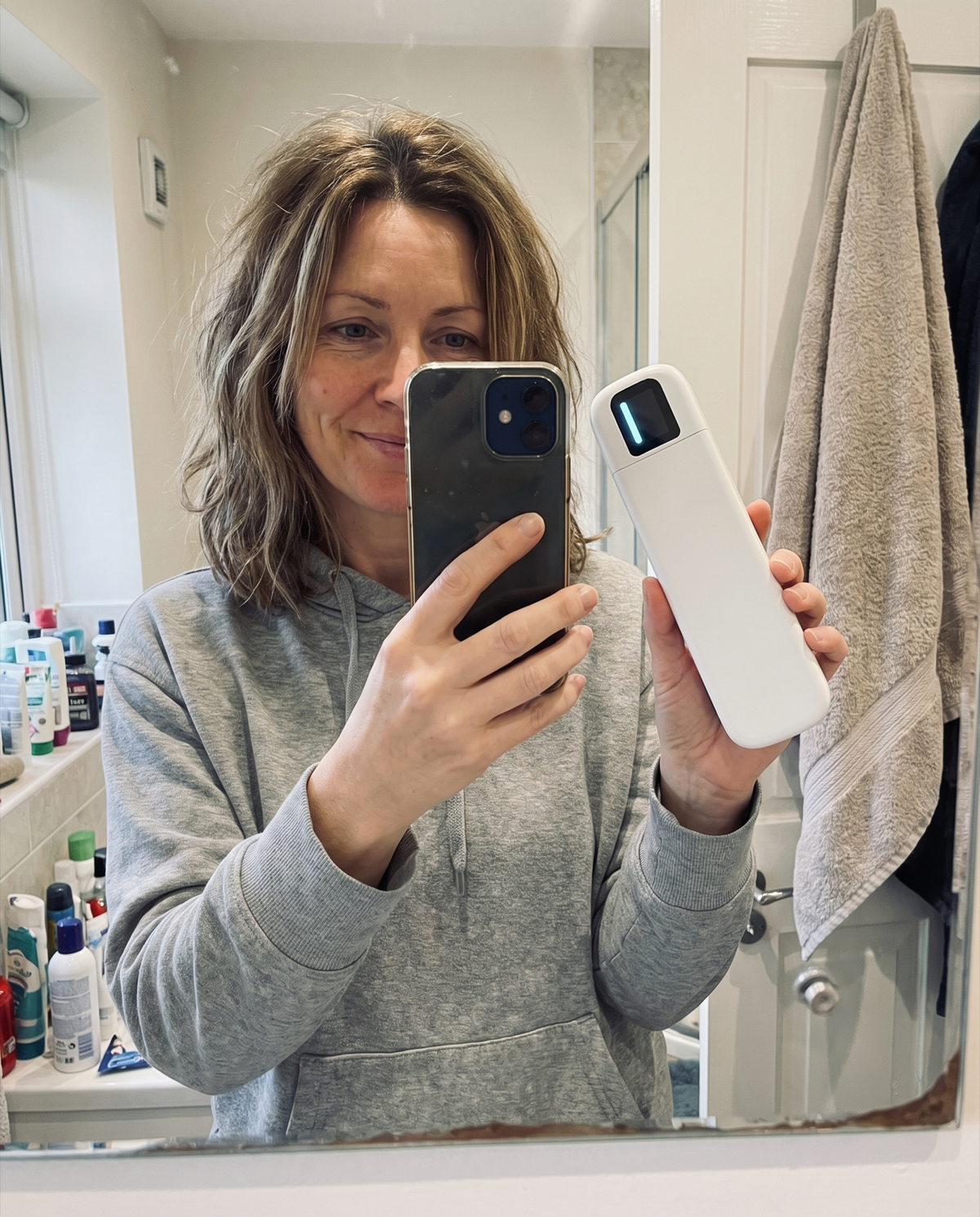
I have swiped away every alarm my phone has ever made. This one I can’t swipe — it’s the box, and it’s next to the kettle. Open it, take them, done.
Dosely™ 7-Day Pill Box With A Built-In Alarm
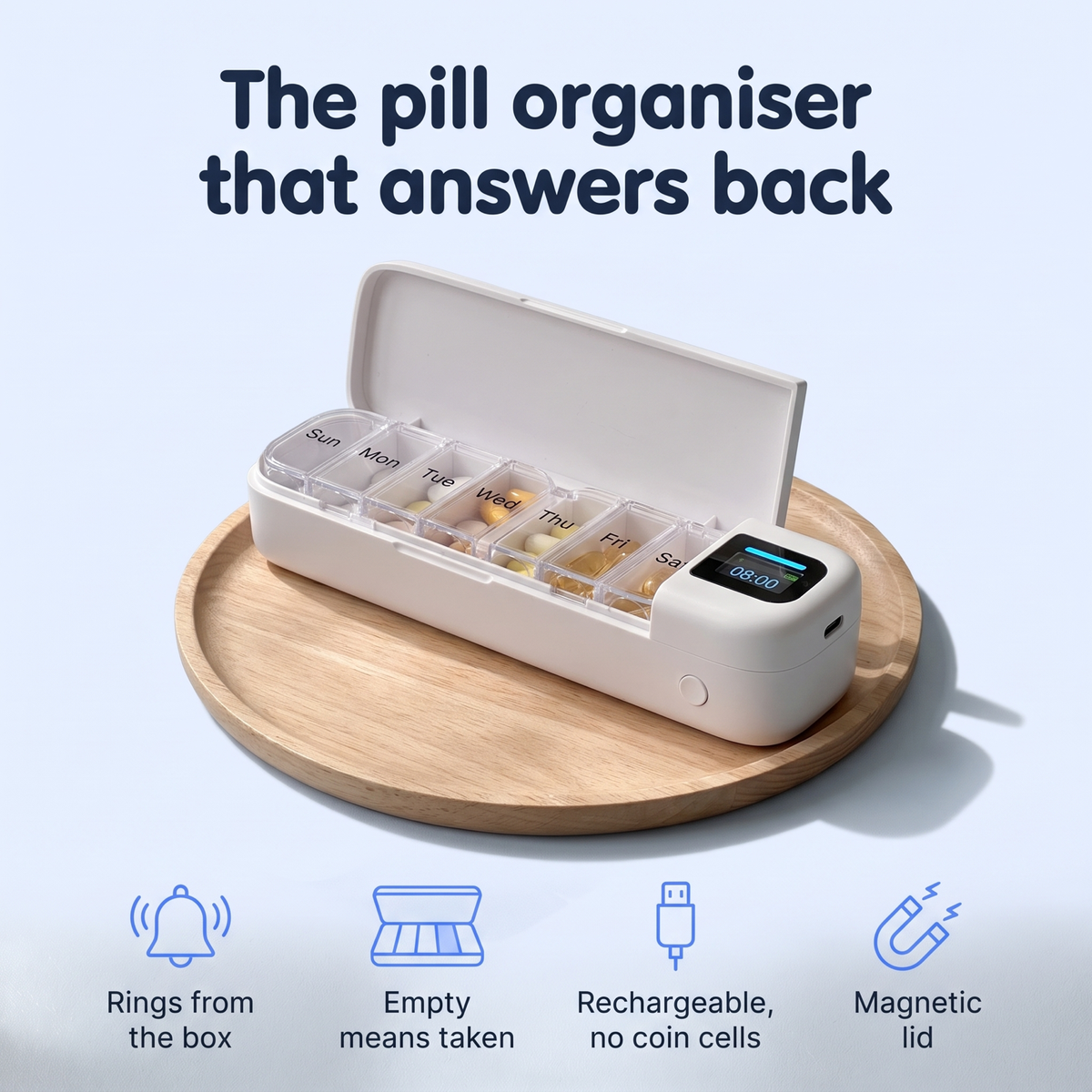
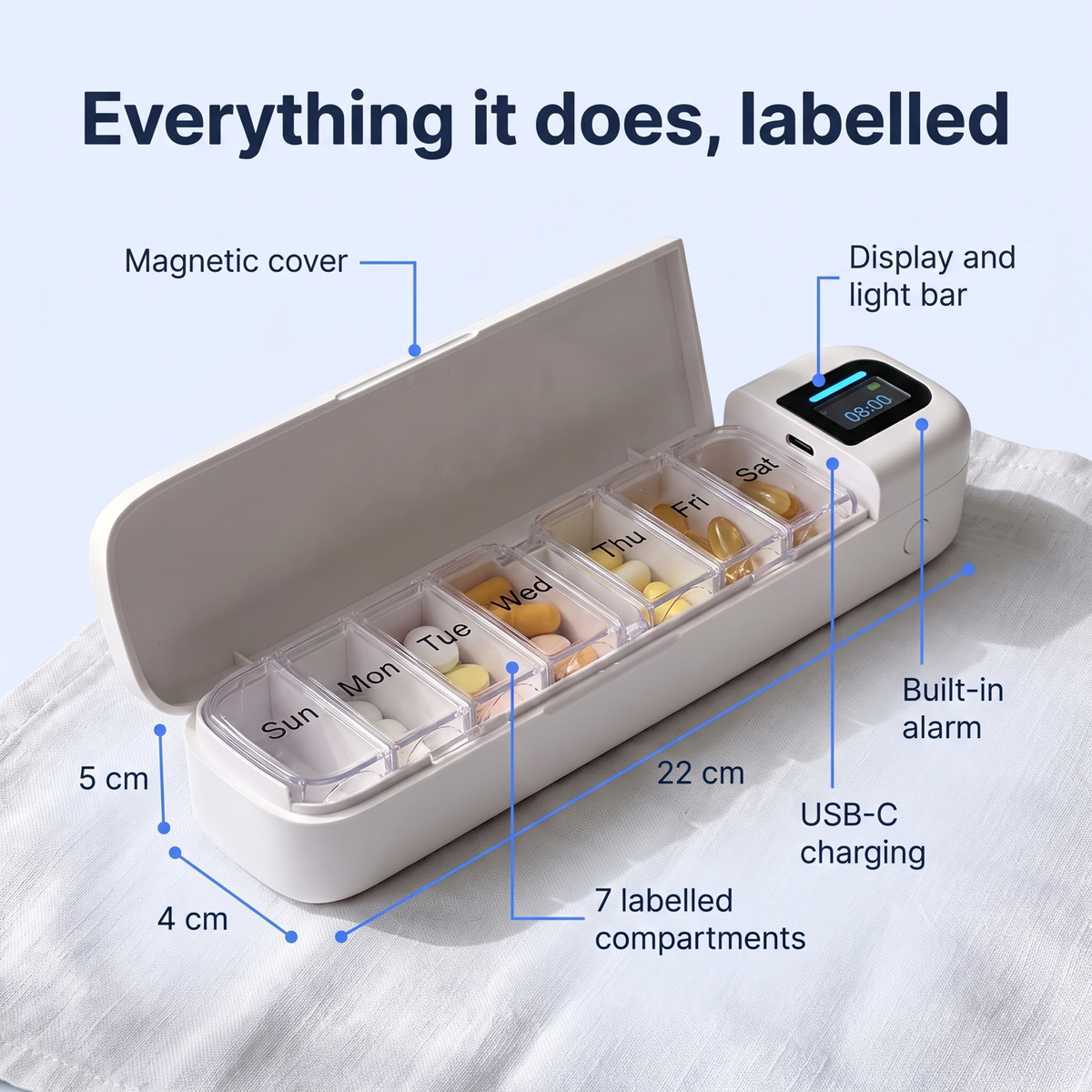
🔔 The alarm is in the box, not in your phone — it sounds where the tablets are. Set the times once in the app, then forget the app exists
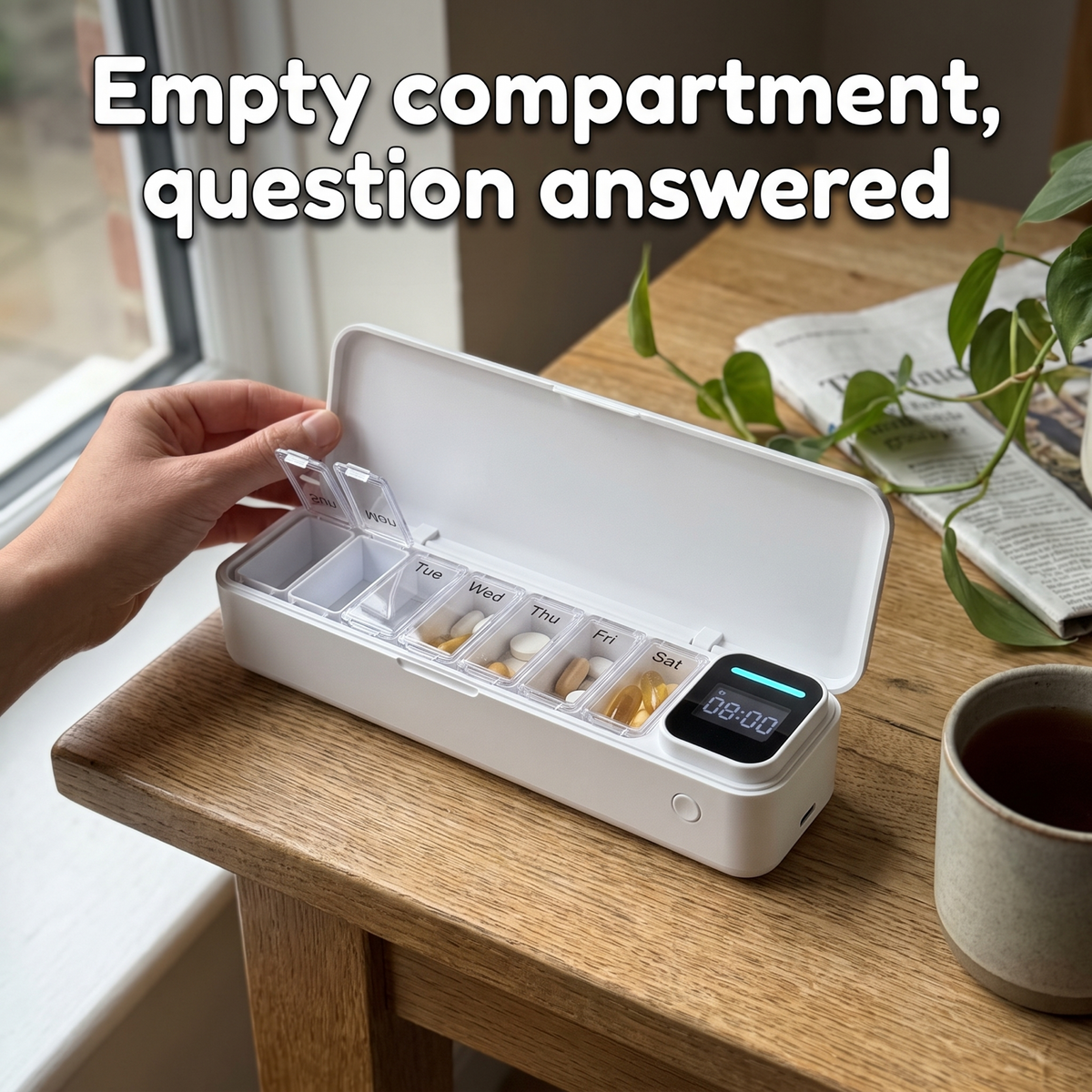
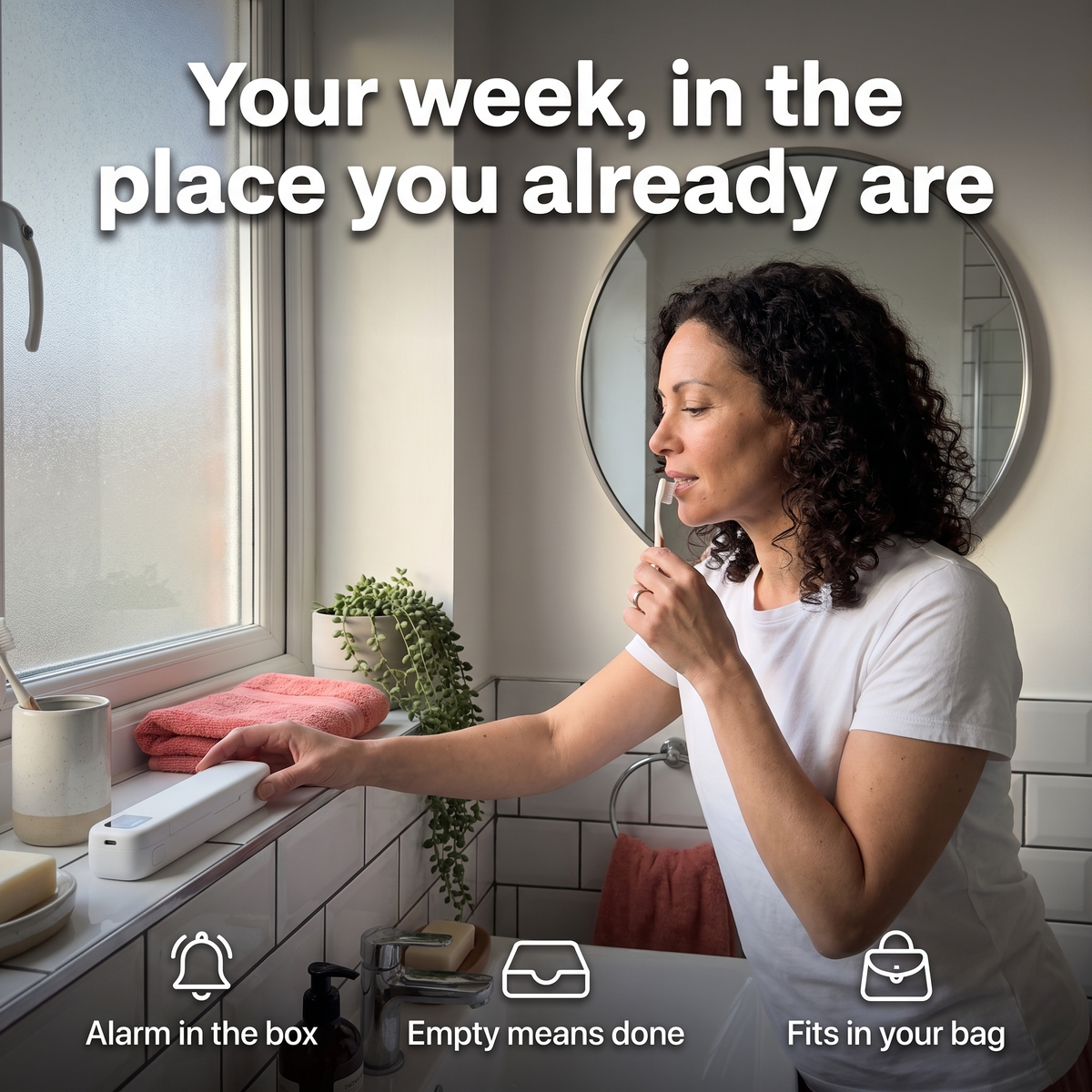
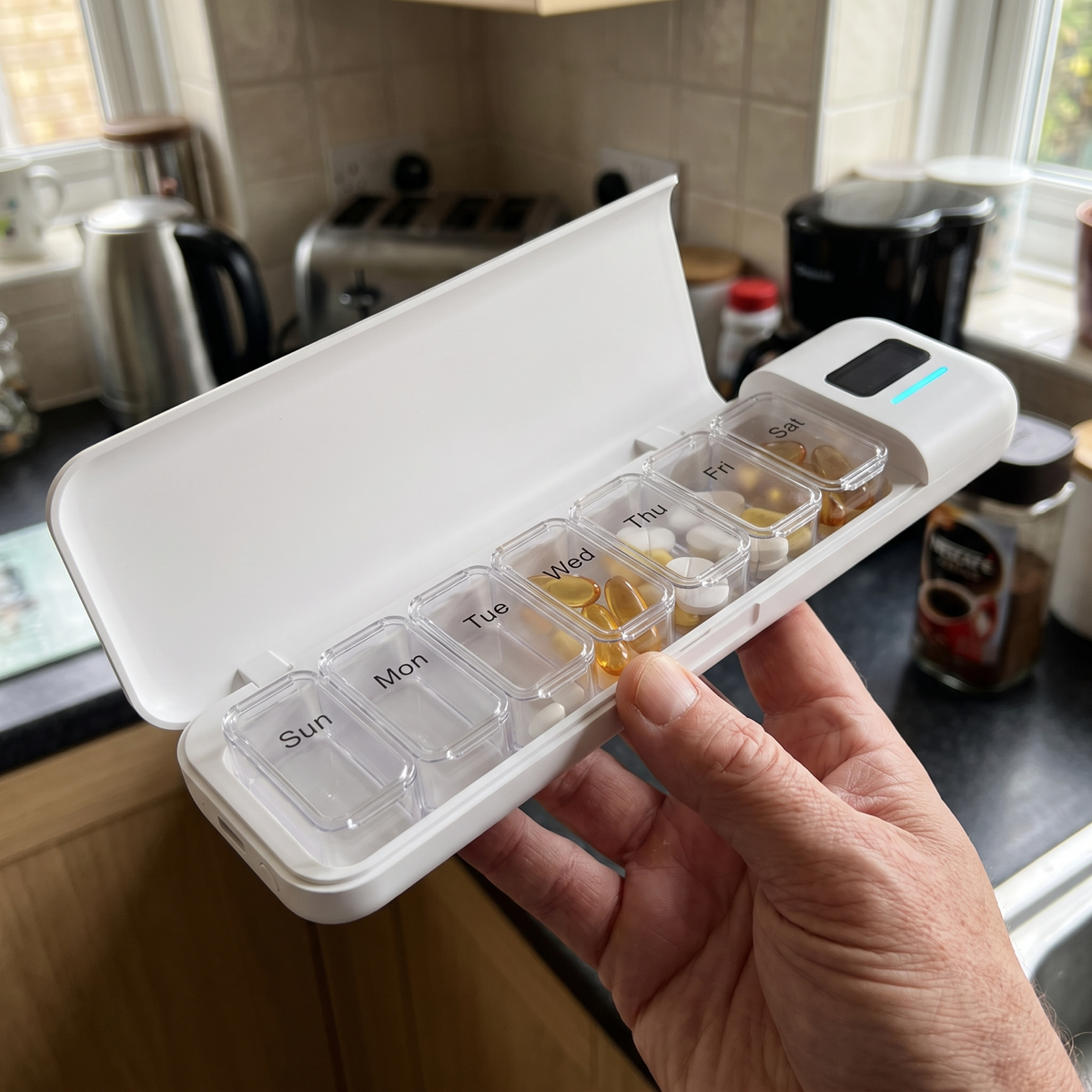
👁️ Seven compartments, one per day, one glance — the empty compartment answers “did I take it?” with no app, no history and no guessing
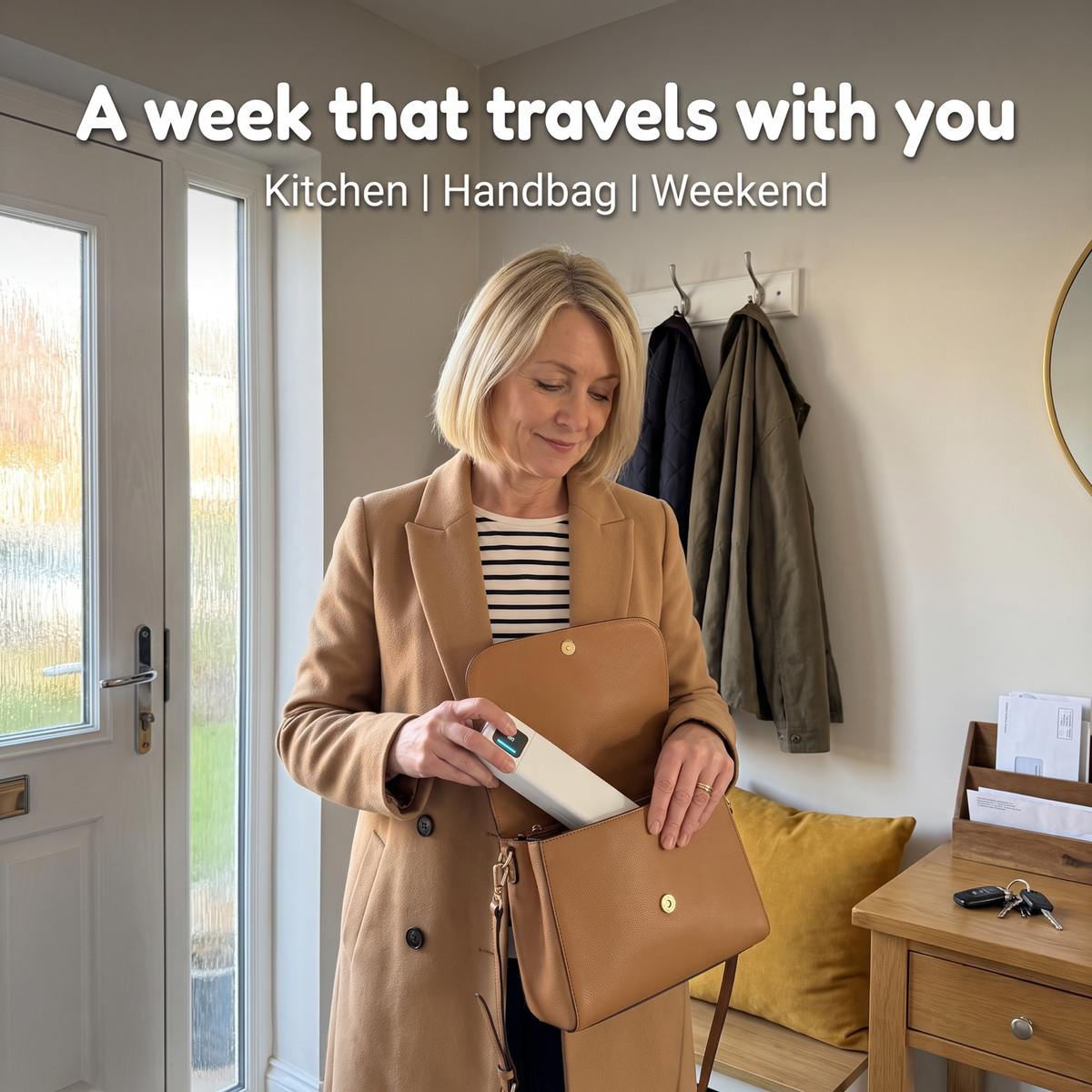
🧲 Pocket-sized, magnetic lid, USB rechargeable — goes from the kitchen to your bag without opening itself, and no button cells to hunt for
You’ve tried both halves. Neither one works on its own.
Most people who take something every day already own a pill box and already have an alarm on their phone. And they still find Tuesday’s compartment full on a Thursday. That isn’t carelessness. It’s two tools, each doing half the job, three metres apart.
The pill box
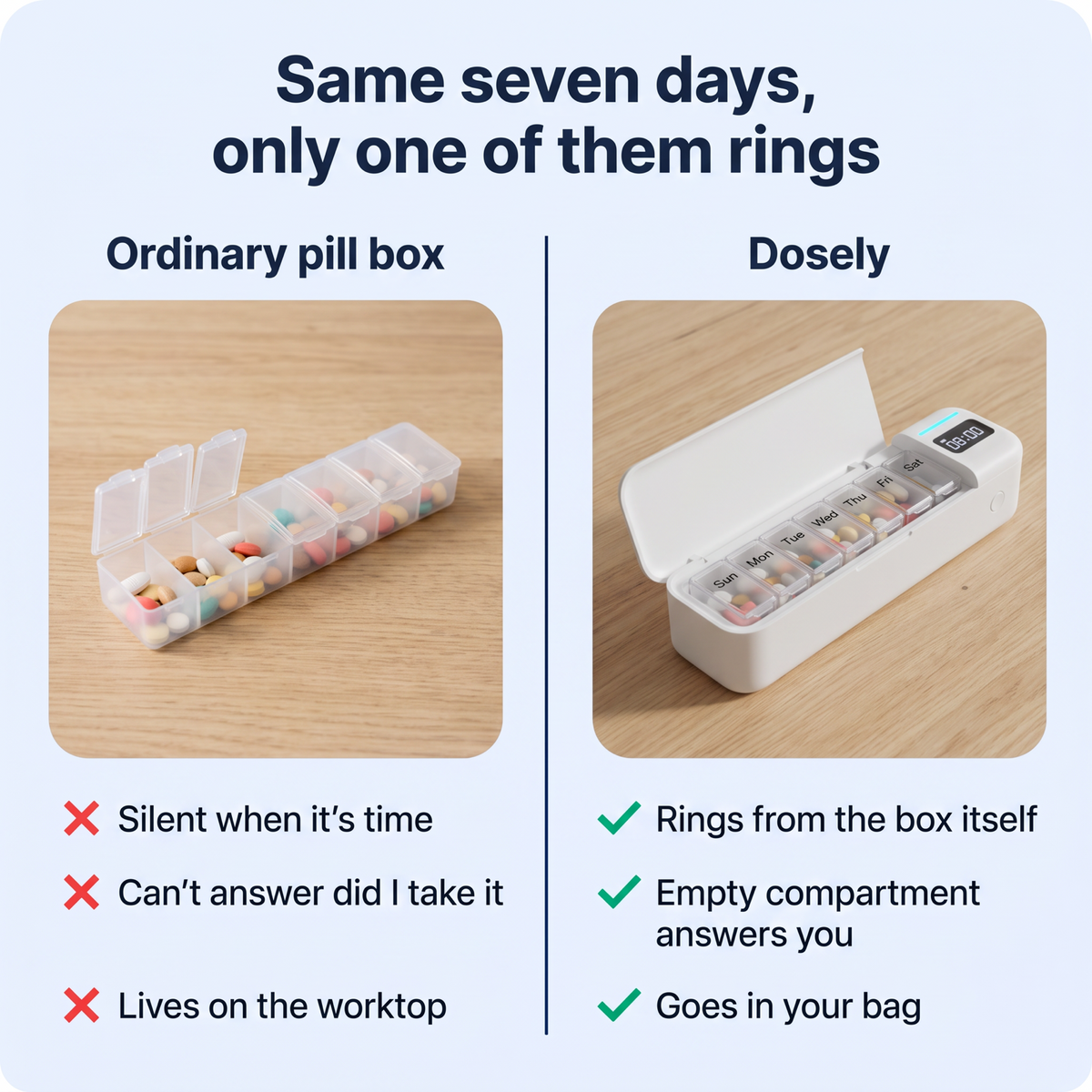
It organises. It doesn’t remind. Seven neat compartments, sitting in a drawer, saying nothing at eight in the morning. It answers “did I?” — but only if you remember to look.
The phone alarm
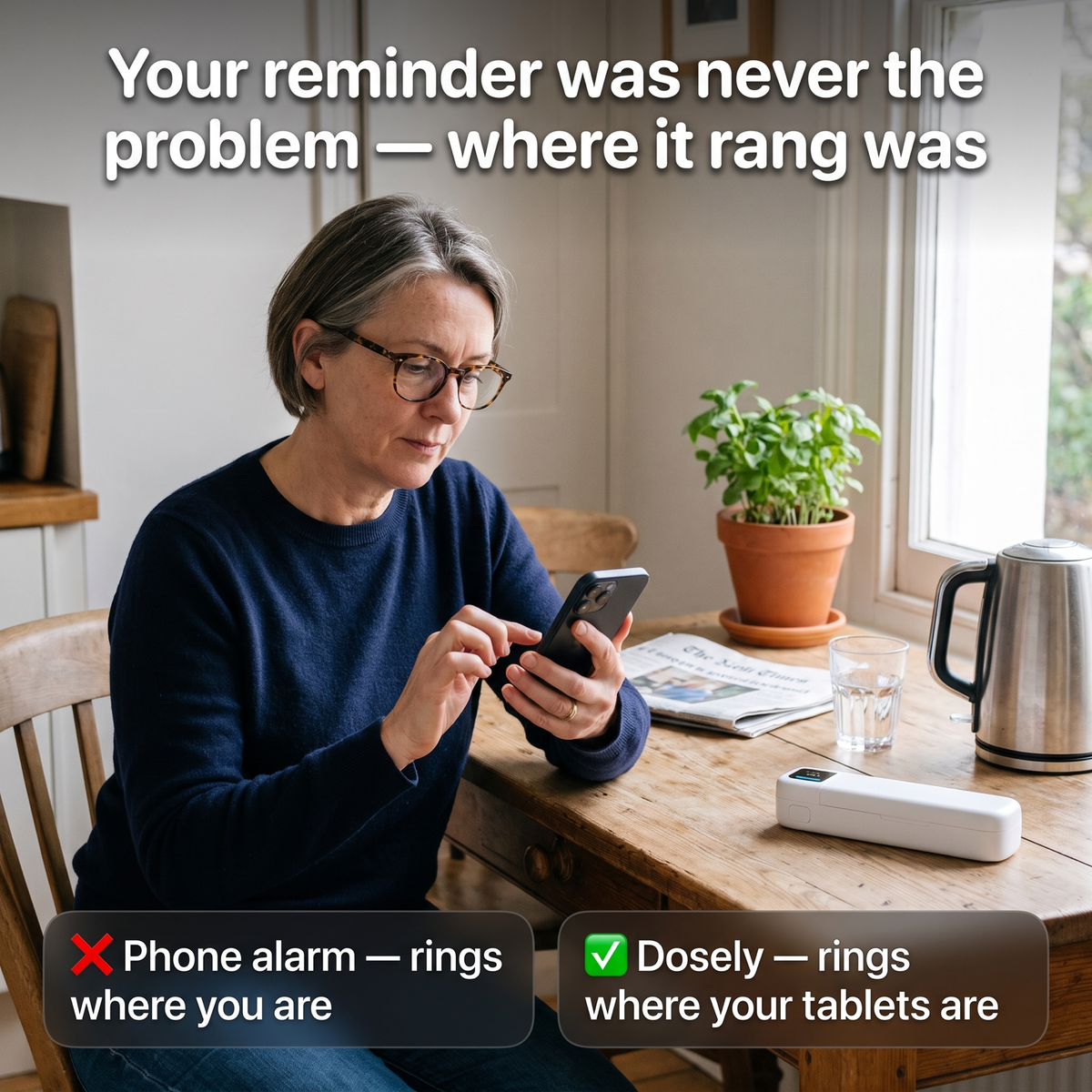
It reminds. It doesn’t organise — and it rings wherever you are, not where the tablets are. Brushing your teeth, in the car, in a meeting. One swipe, “in a minute”, and it’s gone.
The “smart” box
Most connected pill boxes just send a notification… to your phone. Which puts you right back at square one. As one reviewer put it: “it’s purely reliant on your phone notification, which defeats the purpose.”
The reminder and the tablets have never been in the same place. That’s the whole problem.
It isn’t your memory. It’s the distance.
Eight-twelve in the morning. Coat on, keys in hand, and the question arrives on schedule: did I take it? You genuinely don’t know. Yesterday’s felt exactly like today’s.
So you do the maths. Skip it and risk a missed day, or take it and risk doubling. Neither feels right, so the question follows you to work and sits there until lunch.
None of that is a memory problem. The people who never forget aren’t more disciplined than you. They keep their tablets next to the coffee, or on the fridge door — somewhere the day can’t start without passing them. They didn’t fix their memory. They fixed the distance.
What rings must be what holds.
That’s the only rule Dosely is built on. Every connected pill box lists Bluetooth, an app and an alarm as three boxes to tick. We treat them as one hierarchy — and the order matters.
1. The alarm is in the box
The buzzer and the battery are inside the pill box itself. When it’s time, the thing that holds the tablets is the thing making the noise, in the room where you left it. You can’t swipe it. You open it.
2. The empty slot is the answer
Seven compartments, one for each day of the week. When the 8:12 question arrives, you don’t open an app or scroll a history. You look. Empty means done. It’s the “lid left open” habit thousands of people invented on their own, built in.
3. The app is for Sunday, not for Monday
Bluetooth is there so you can set the reminder time from your phone once — the time you actually take them. Then you close the app and the box carries on without it. The app sets. The box reminds.
The doorbell is inside the door. When it rings, your hand is already on the handle.
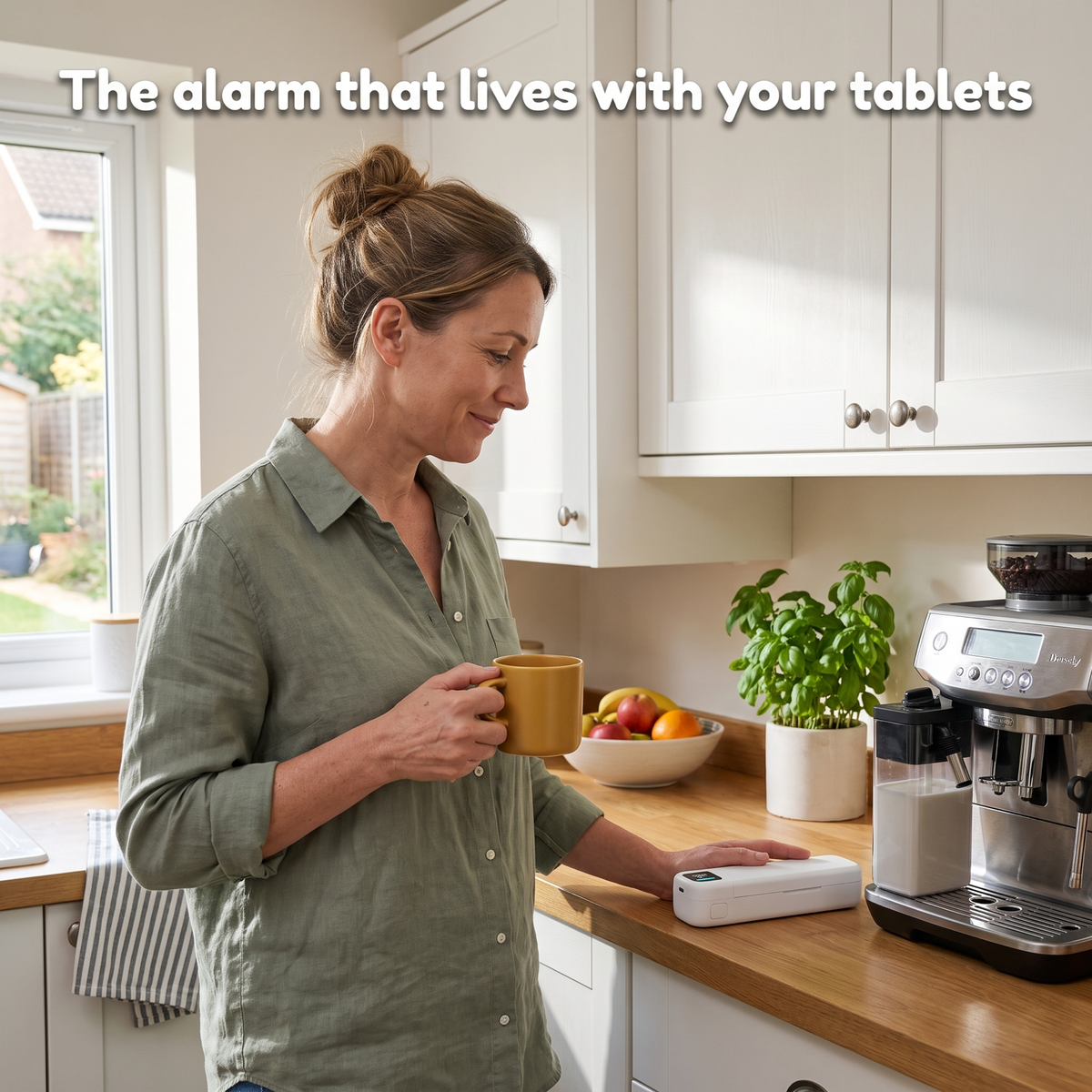
People who never forget don’t rely on memory. They rely on where.
Read enough reviews of pill boxes and the same three habits keep turning up: the box by the coffee pot, the box on the fridge door, the lid left open until the tablets are taken. Nobody taught these people. They worked out, on their own, that a routine survives on where, not on when.
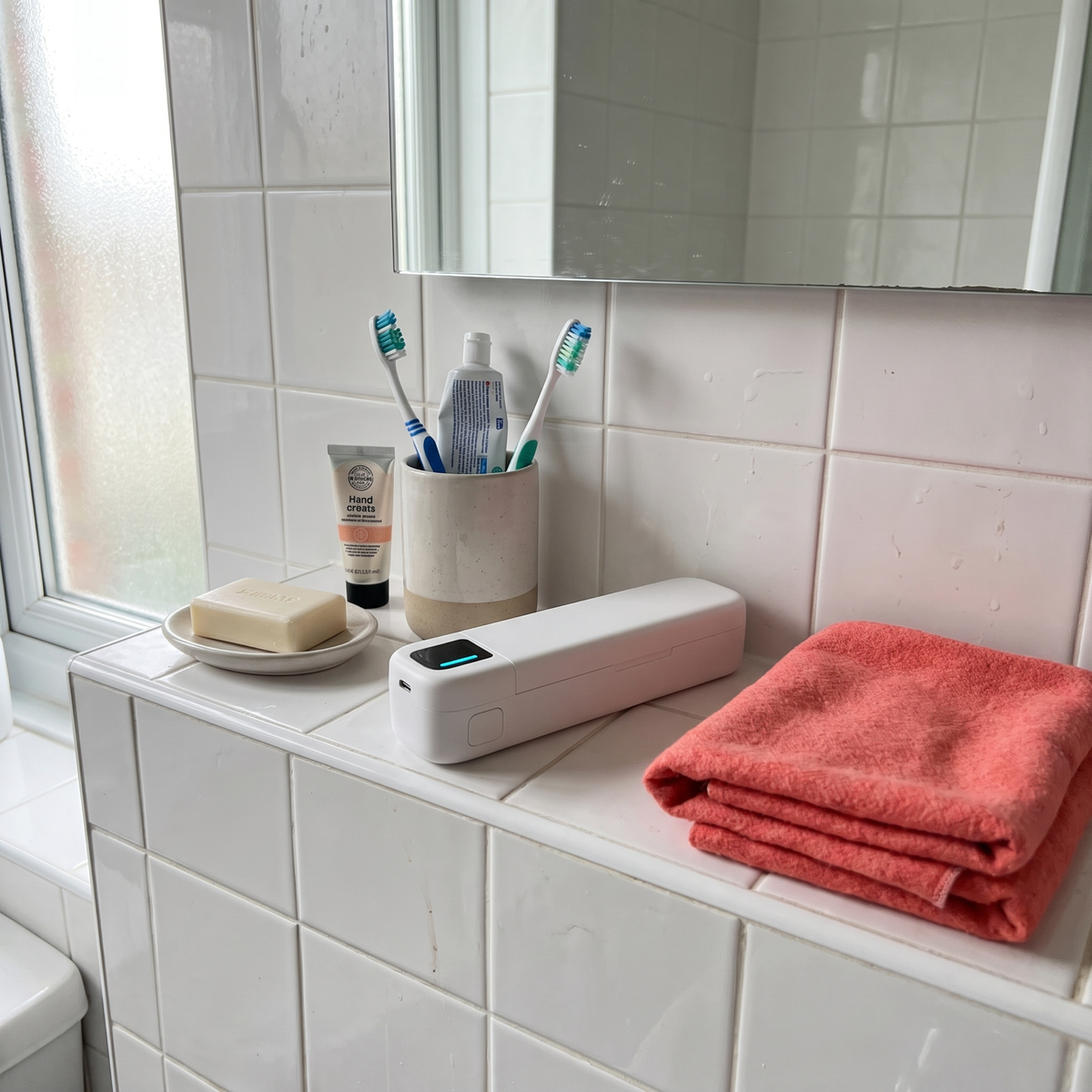
So Dosely is built to sit in the place your morning already goes through — next to the kettle, by the toothbrush, on the desk. Small enough not to look like a piece of equipment, and it rings there, not in your pocket in the car.
That’s also why most people buy two. One lives in the kitchen and never moves. The other lives in the bag, so the box that rings is the one that’s with you — at work, at the gym, or at your mum’s. Not a discount. A layout.


They tried Dosely™
They loved it
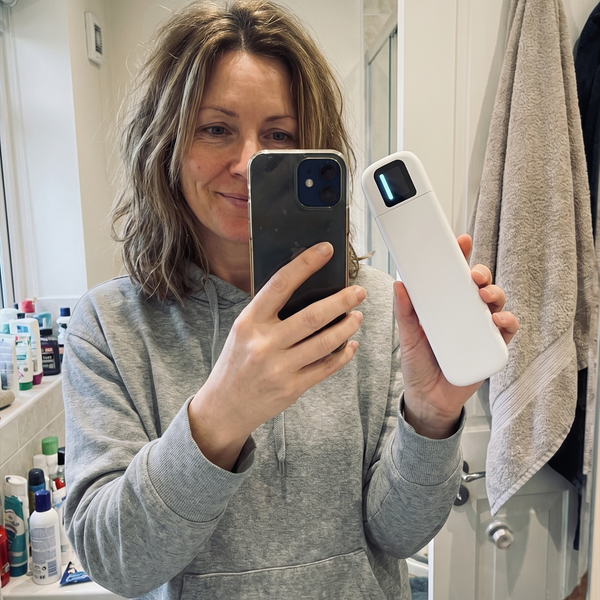
I ignore every alarm my phone makes. I cannot ignore this — it’s sat by the kettle and it goes until I open it. Three weeks in and I haven’t had one “did I?” morning.

Bought it for my dad. He hates being reminded by anyone, me included. He doesn’t mind the box. Set his times up in ten minutes on my phone, handed it over, and I’ve stopped ringing him at nine every morning.
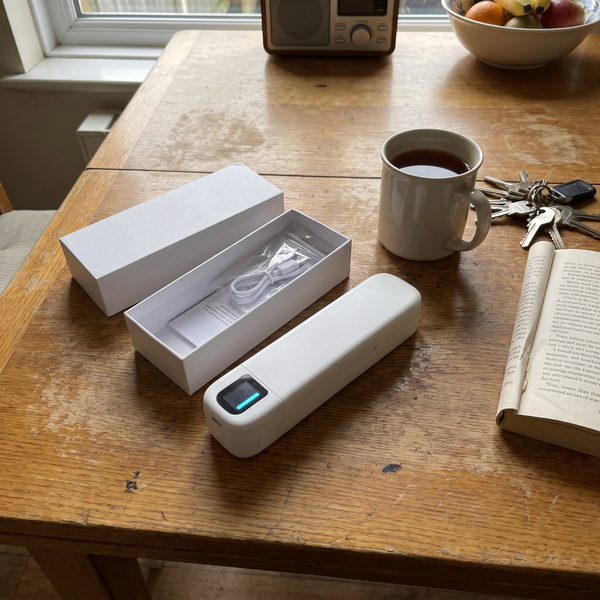
Thyroid tablet, iron, vitamin D, plus the kids’ stuff to think about. This just lives on the windowsill and buzzes. It looks like a nice little case, not something from a chemist, which honestly mattered to me.
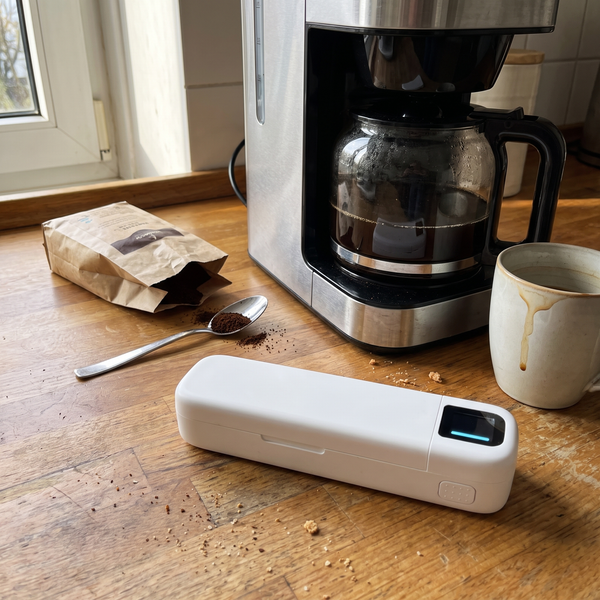
Away for work two weeks a month and that’s when I’d lose the thread. It goes in the laptop bag, the lid doesn’t pop open, and it rings in the hotel room at seven. One at home, one in the bag. Sorted.
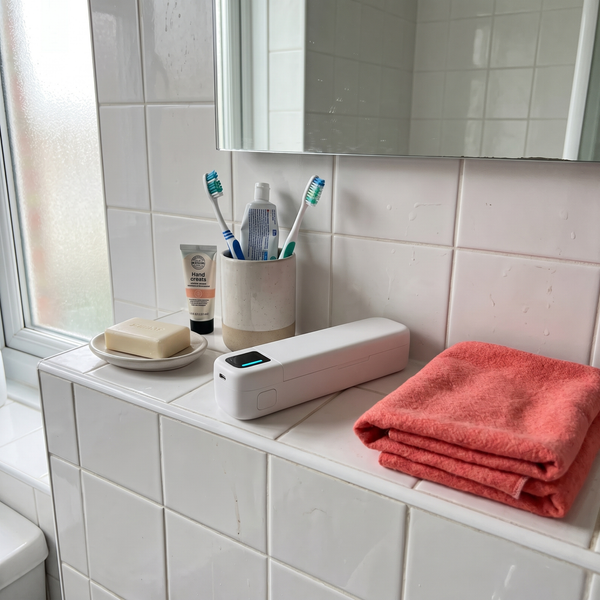
Be aware you do need the app once to set the times — my son did it for me. After that I haven’t touched my phone for it. The compartments take my bigger evening ones fine. Wish I’d had this years ago.
The week doesn’t break at home. It breaks in a hotel.
The week doesn’t break on a Tuesday at home. It breaks on the Friday you stay at a friend’s, the weekend away, the three days in a hotel for work. The box on the fridge stays on the fridge. A sandwich bag of loose tablets is where good routines go to die.
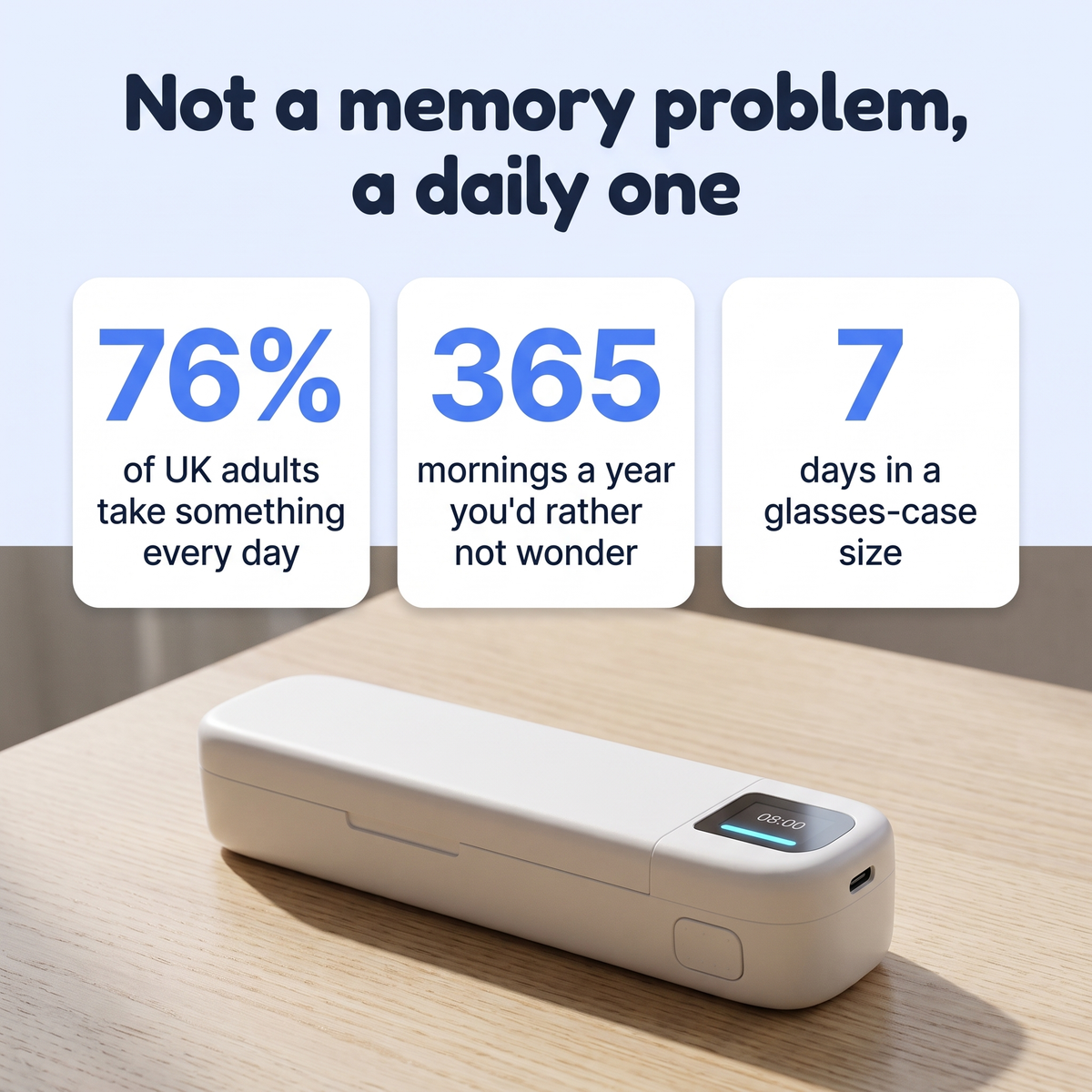
Dosely is about the size of a glasses case. The lid is magnetic, so it doesn’t spring open at the bottom of a bag, and it charges by USB — the same cable as everything else you pack. No button cells to find in a foreign chemist.
And because the alarm is in the box, the reminder travels with the tablets. Seven in the morning in a hotel room sounds exactly like seven in the morning at home.
“It’ll pack up after three weeks.”
That’s the number-one one-star review in this whole category, and you’re right to expect it. Here’s what usually breaks on a £20 reminder box, and what we did about each one.
Buying it for someone? Then you know about the nine o’clock phone call.
Most people who buy this for someone else have the same job: the nine o’clock phone call. “Have you taken them?” Every day. It works, and it slowly turns you into the person who nags and them into the person who gets nagged.
A pill box that rings changes who does the reminding. The box asks. You get to just be their son, their daughter, their partner again.
It also doesn’t look like it came from a hospital, which matters more than people admit. Nobody wants a piece of equipment on the kitchen counter. This looks like a small case. You set the times from your phone in ten minutes, hand it over, and you’re done. Two in the pack is often one for them, one for you.
Frequently Asked Questions
Does it work without my phone nearby?
Yes — that is the entire point. The alarm, the buzzer and the battery are inside the box. Your phone is used once, over Bluetooth, to set the reminder times. After that you can leave the phone in another room, at work, or switched off: the box rings on its own, where it sits. Most connected pill boxes do this the other way round — the box is silent and the phone gets a notification — and that’s the design we set out to avoid.
Do I need an app, and do I need to make an account?
You need the app once, to set the time you take them. It takes a few minutes and a relative can do it for you. After that you don’t need to open it again unless your time changes. There is no subscription. There’s nothing to renew, and the box doesn’t stop working if you delete the app.
£30 for a pill box? I’ve seen them for £5.
So have we, and they’re fine at organising. They’re just silent. If a £5 box and a phone alarm were enough, you wouldn’t be reading this page. What you’re paying for is the one thing neither of those can do: make a noise in the same place as the tablets. If that doesn’t change your mornings inside 30 days, send it back and we refund you.
Will it stop working after a few weeks like the cheap ones?
That fear is fair — it’s the most common one-star review in this category. The usual culprits are button cells and snap latches, so Dosely has neither: a sealed rechargeable battery and a magnetic lid. It carries a 12-month warranty with a UK team on the other end of the email. If it stops ringing, we replace it. We’d rather say that plainly than promise it’s indestructible.
How loud is it? Will it go off in a meeting?
It’s loud enough to be heard from the next room at home — that’s what makes it work. Which also means yes, if it’s in your bag at 1pm in a meeting, you’ll hear it. Set the reminder for a time you’re usually at home or at your desk, and treat it as the nudge it’s meant to be. We don’t quote a decibel figure because we haven’t measured the final unit, and we won’t invent one.
How often do I charge it?
It charges by USB, like your earbuds. Competing pages print figures from “a couple of weeks” to “a month”, often for the same hardware. We haven’t tested ours long enough to print a number we’d stand behind, so we won’t. The simple habit: plug it in while you refill it on a Sunday. Done that way, you never think about it.
How big are the compartments? I take large ones.
Seven compartments, one per day, each sized for the everyday handful — a few tablets or capsules, not a fistful. The whole box is about the size of a glasses case, which is the trade-off: small enough to go in a bag, so the compartments are compact. If you take a large number of big capsules at one time, tell us what you take before you buy and we’ll be honest about whether it fits.
Is this a medical thing? I’m buying it for my mum.
No. Dosely is a pill organiser with an alarm inside it — a reminder, not a nurse. It doesn’t dispense, doesn’t check what’s been taken, and isn’t a substitute for advice from a pharmacist or GP about what to take and when. What it does is ring where the tablets are, so the reminding stops being your job. If you set the times on your phone before you hand it over, there’s nothing for her to set up.