



Dryft™ — The Right-Sized Dehumidifier
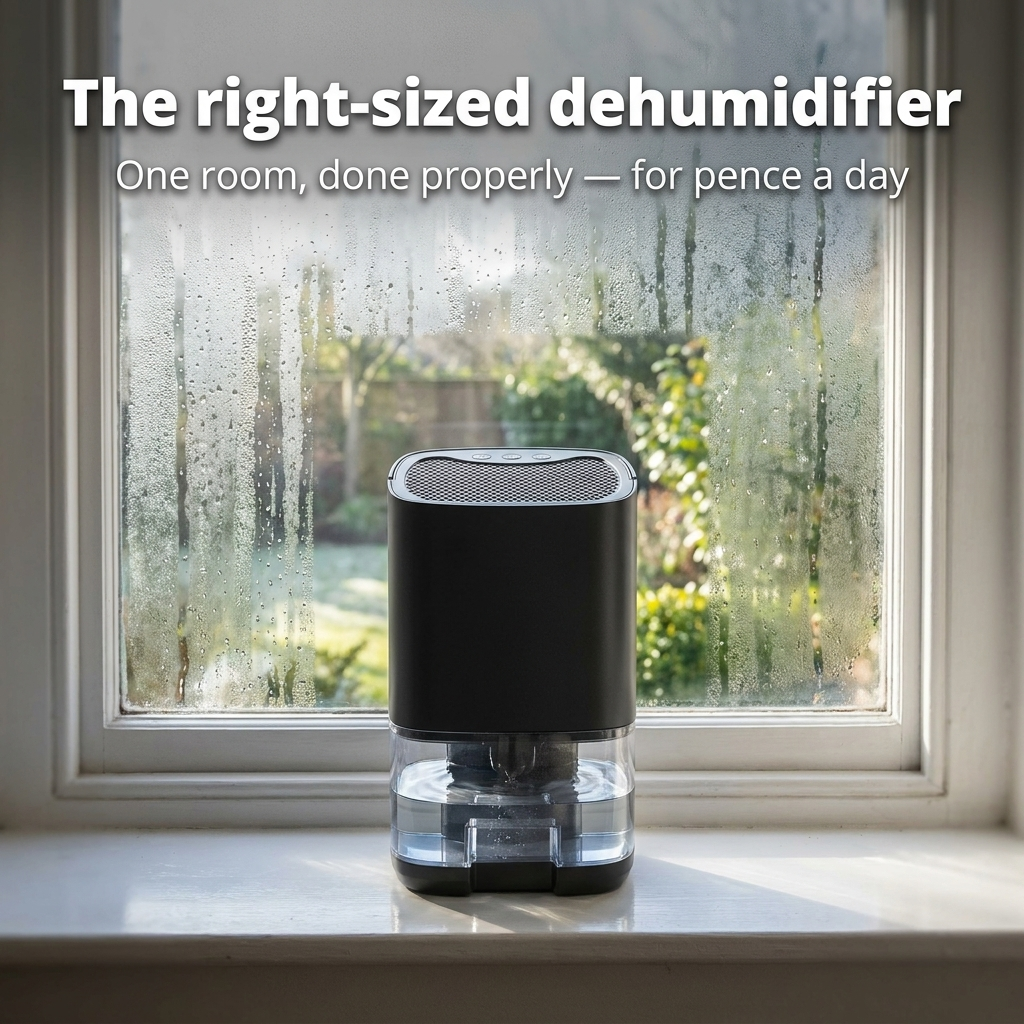
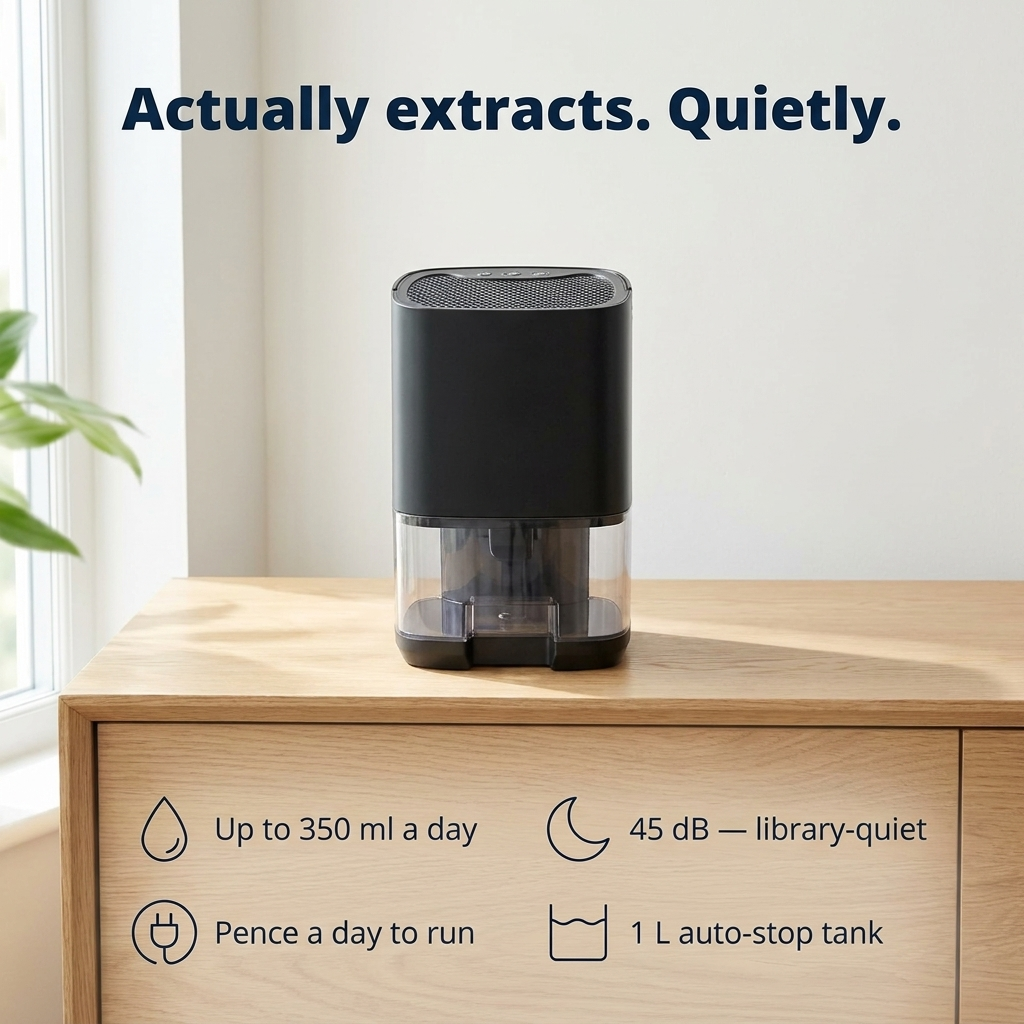
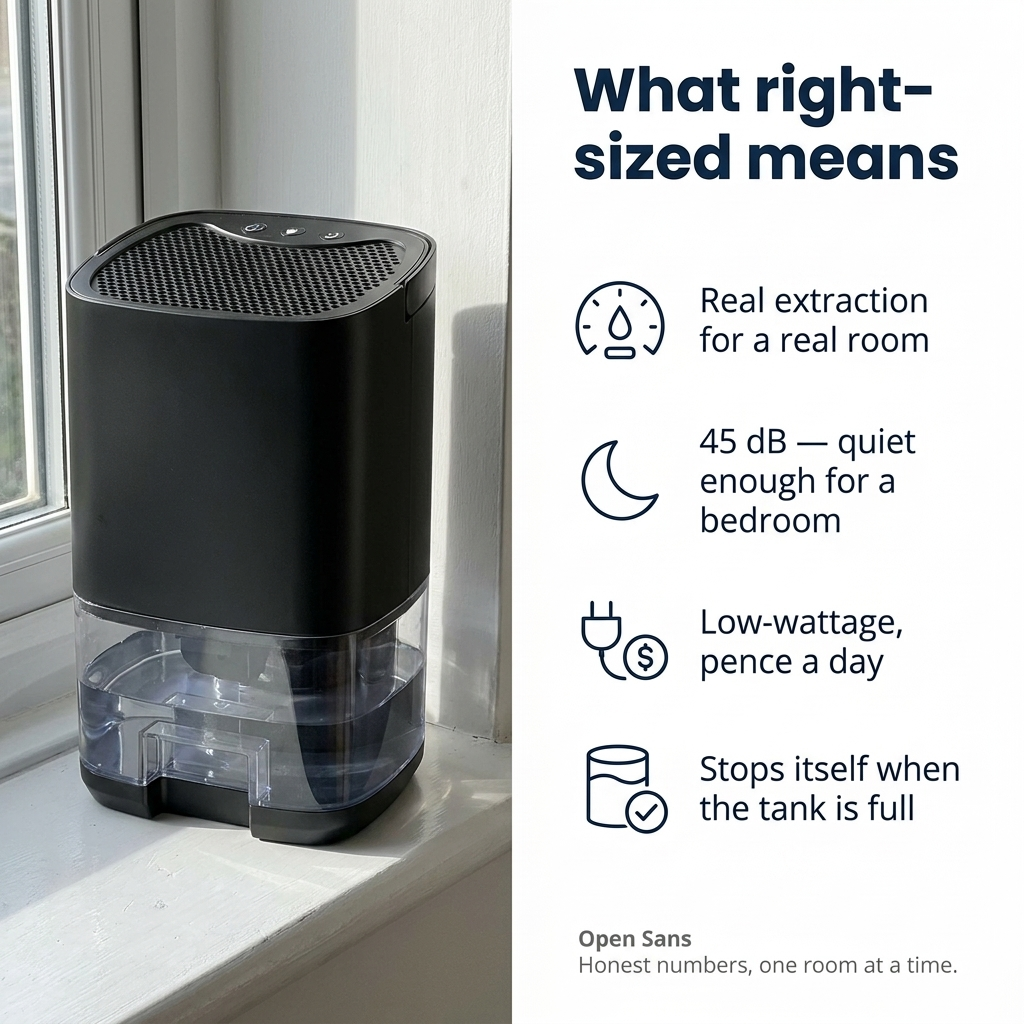
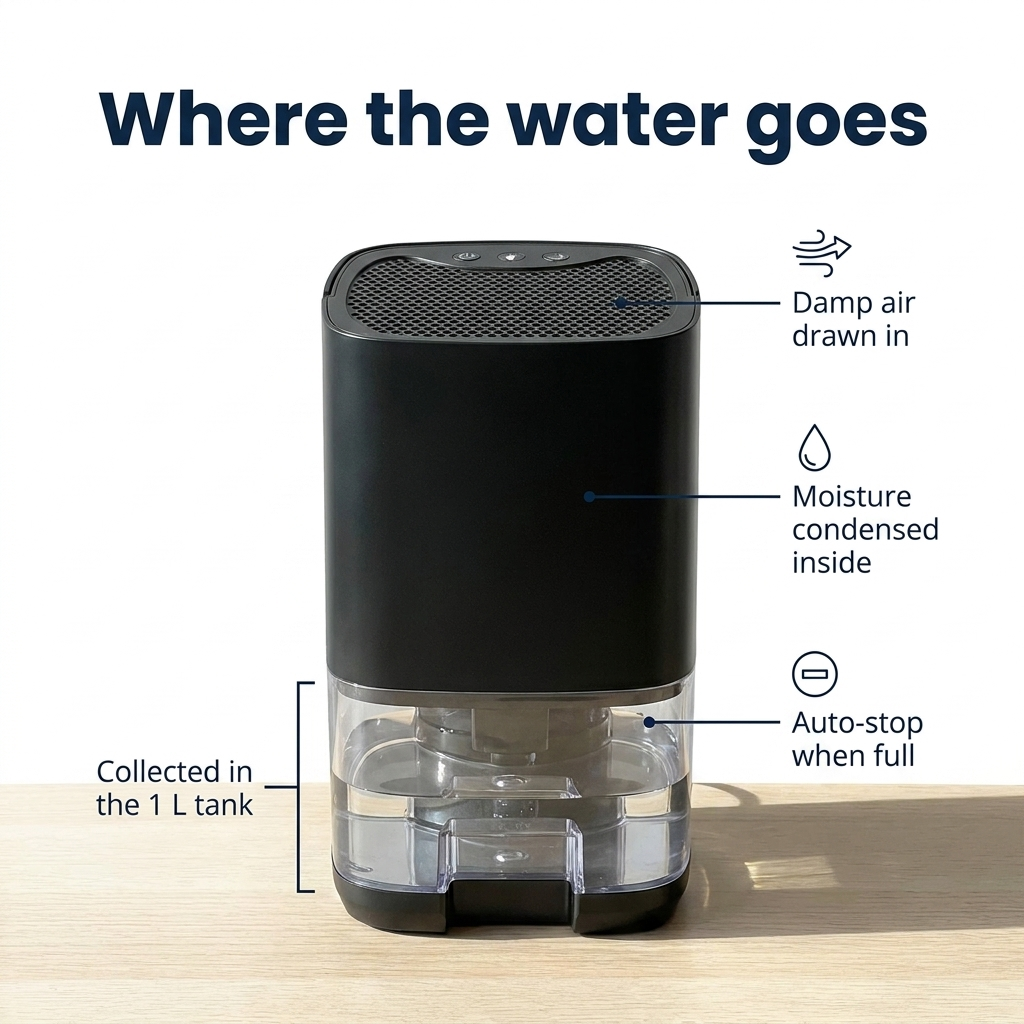
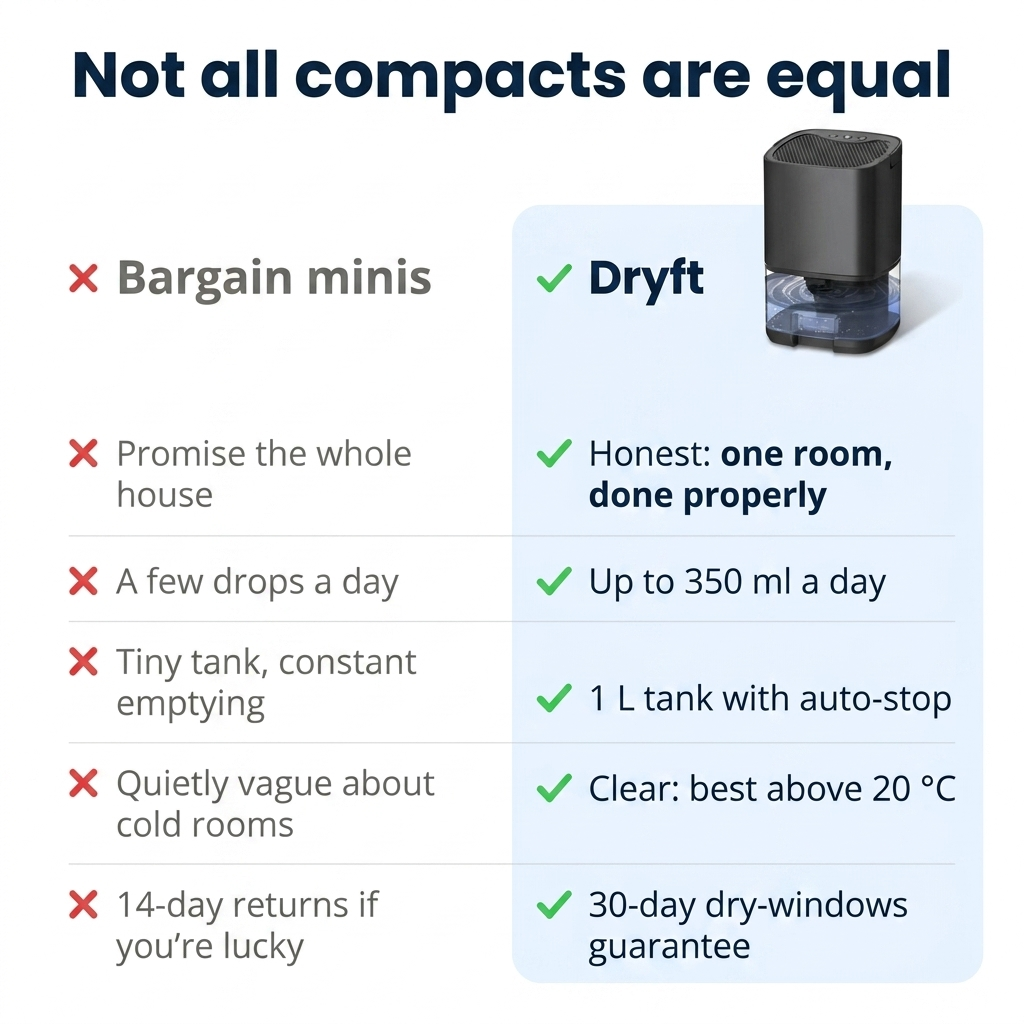
💧 Actually extracts — up to 350 ml a day (30 °C, 80% RH), into a 1 L auto-stop tank that fills as proof
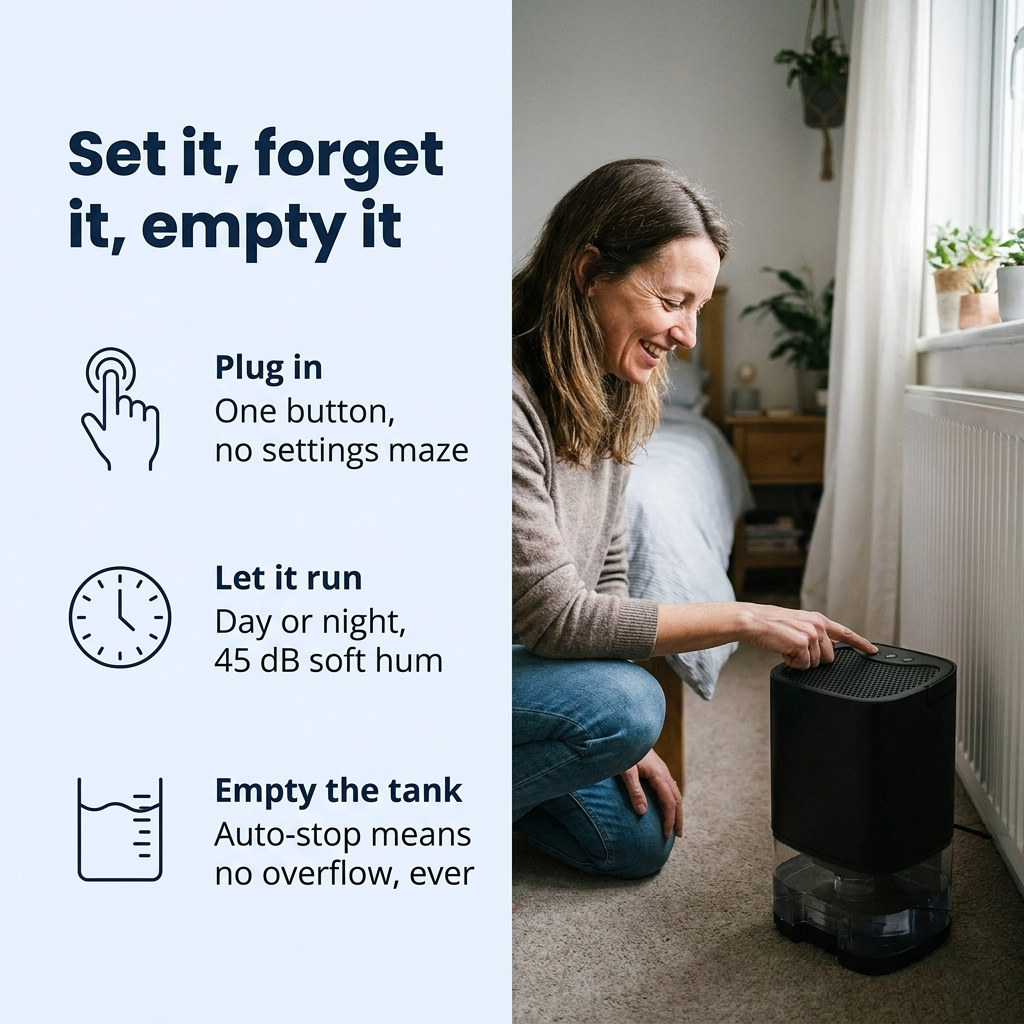
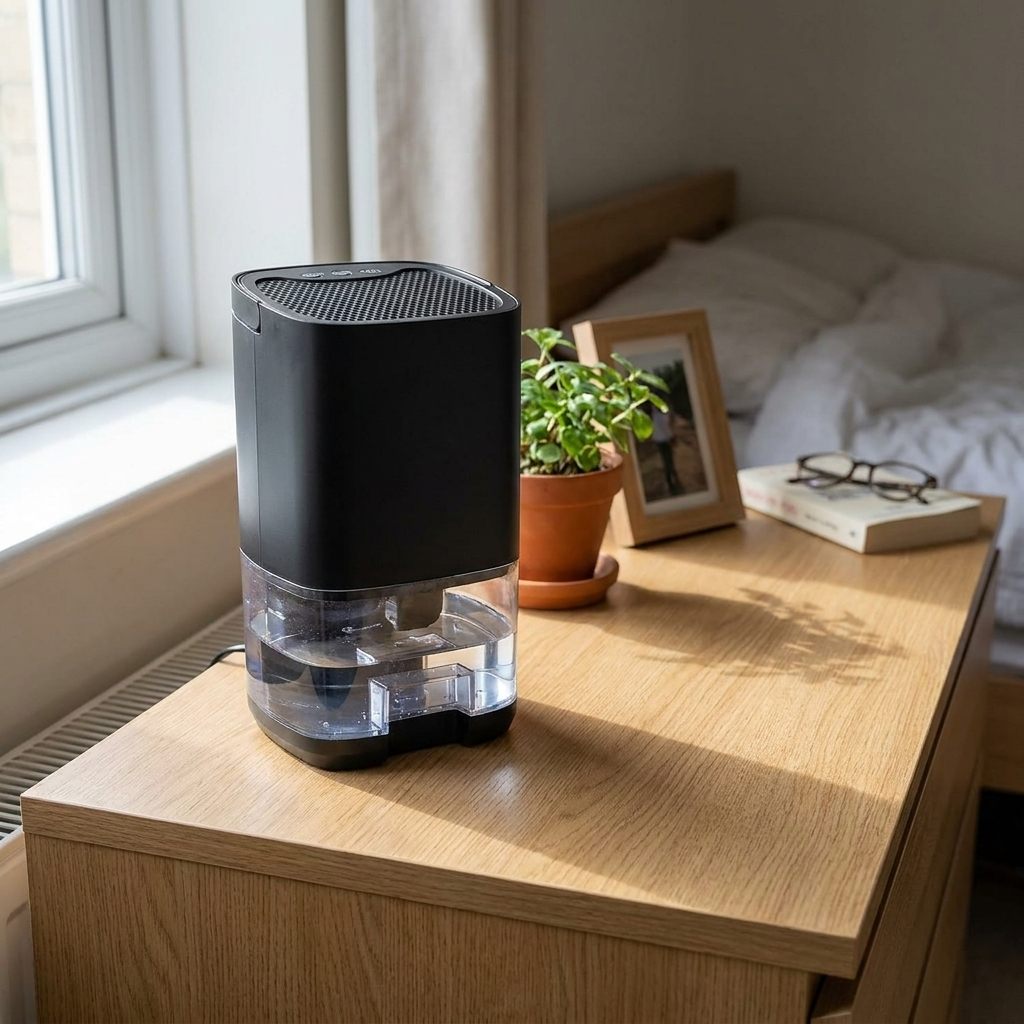
🌙 Night mode for bedrooms — a soft hum with the lights off, made to run while you sleep
🔌 About 1p an hour to run — 36 W low-wattage design you can leave on daily without watching the meter
Does this sound familiar?

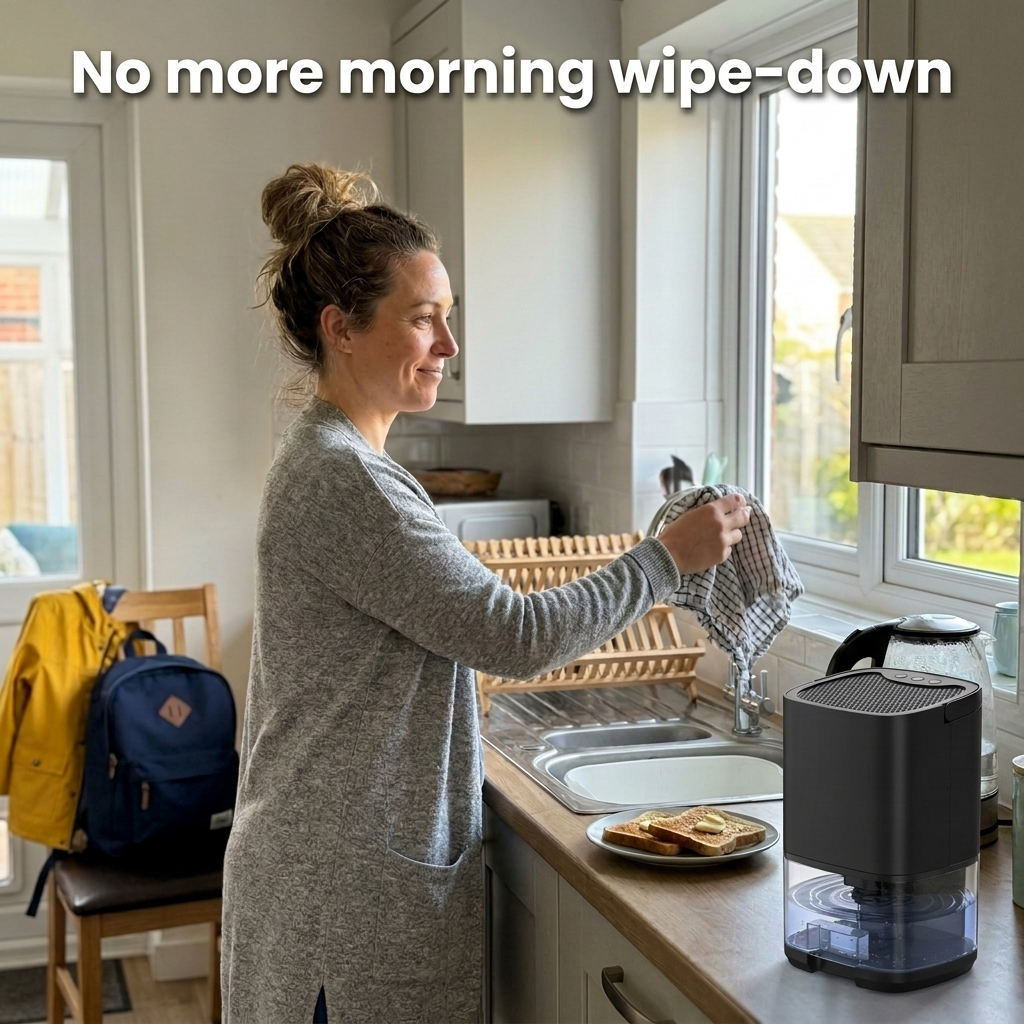
The 6:47 wipe-down
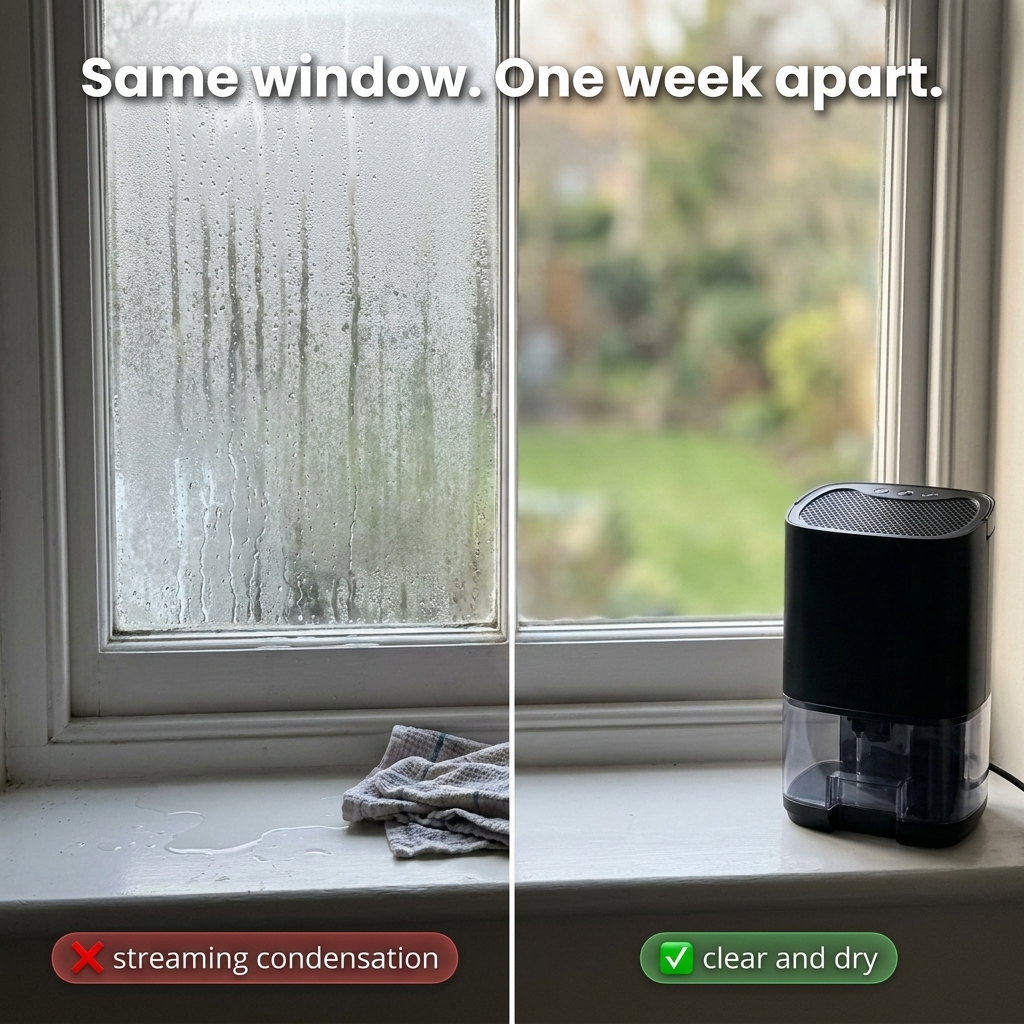
Windows streaming every winter morning — tea towel on the sill before the kettle's even boiled.

The corner that comes back
You sprayed the black spots in October. They're back — and it's only December.

The two-day airer
Washing that hangs around all week and still comes off the airer smelling of damp.
Every winter morning, the same ritual
The heating clicks on. You pull the curtain, and there it is again — the glass streaming, water pooling on the sill, the sealant going grey in the corners. You wipe it down before the school run. You'll wipe it down again tomorrow.
You've tried the sprays — the marks come back, because the spray treats the stain and not the water that feeds it. You've tried cracking a window in January — the heat you paid for pours out, and by evening the glass is wet again. Your landlord's advice? “Ventilate more.”
The physics
Your home makes around 60 litres of water a week. Where does yours go?
Breathing, cooking, showering, drying washing — UK councils put a family of four at around 112 pints of moisture a week, produced indoors, just by living. That water has to go somewhere.
The bathtub with no plughole
Older houses leaked that moisture out without asking — draughts, chimneys, single glazing. Then we sealed all of it to keep the heat in, and never gave the water a way out. So it condenses on the coldest thing in the room: your window. Condensation isn't dirt, and it isn't bad housekeeping. It's a full bathtub with nowhere to drain.
Introducing
Meet Dryft™.
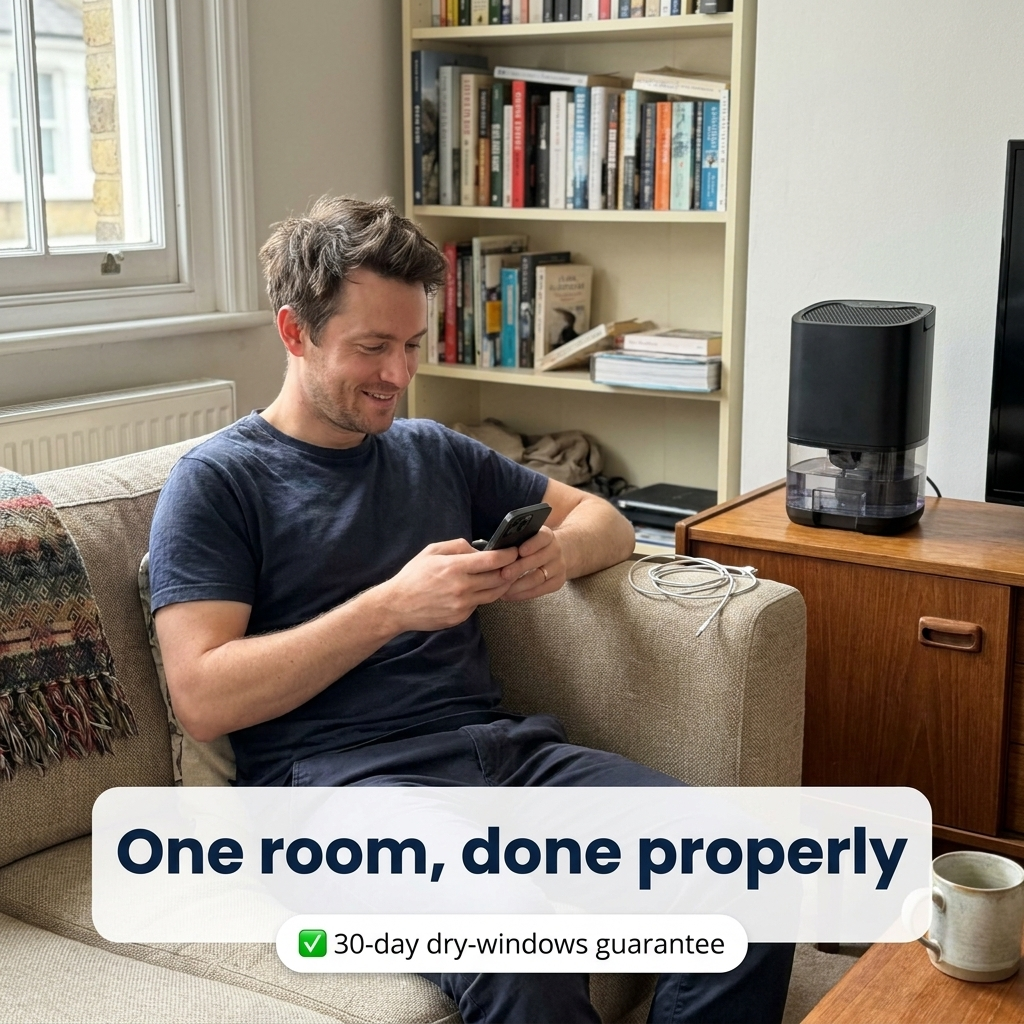
One room, done properly.
A compact dehumidifier that gives one real room its plughole back: it pulls the surplus water out of the air and into a tank you pour down the sink. And because this category is full of listing poetry, the real numbers are printed right here — rated conditions included.
How it dries your room
Peltier extraction — no compressor
Air is drawn over a cold plate, the moisture condenses and drips into the tank. A steady, fan-like hum — not a rattle.
Set-and-forget hygrostat
Pick your target in the healthy 40–60% range; Dryft holds it and idles when the room is there.
Auto-stop tank
Full tank = it stops and a light comes on. No overflow, no puddle, nothing to babysit.
Night mode
Display lights off for bedrooms — it works the overnight hours when condensation actually forms.
12/18-hour timer + auto-defrost
Run it on your schedule; it looks after itself in a chilly room.
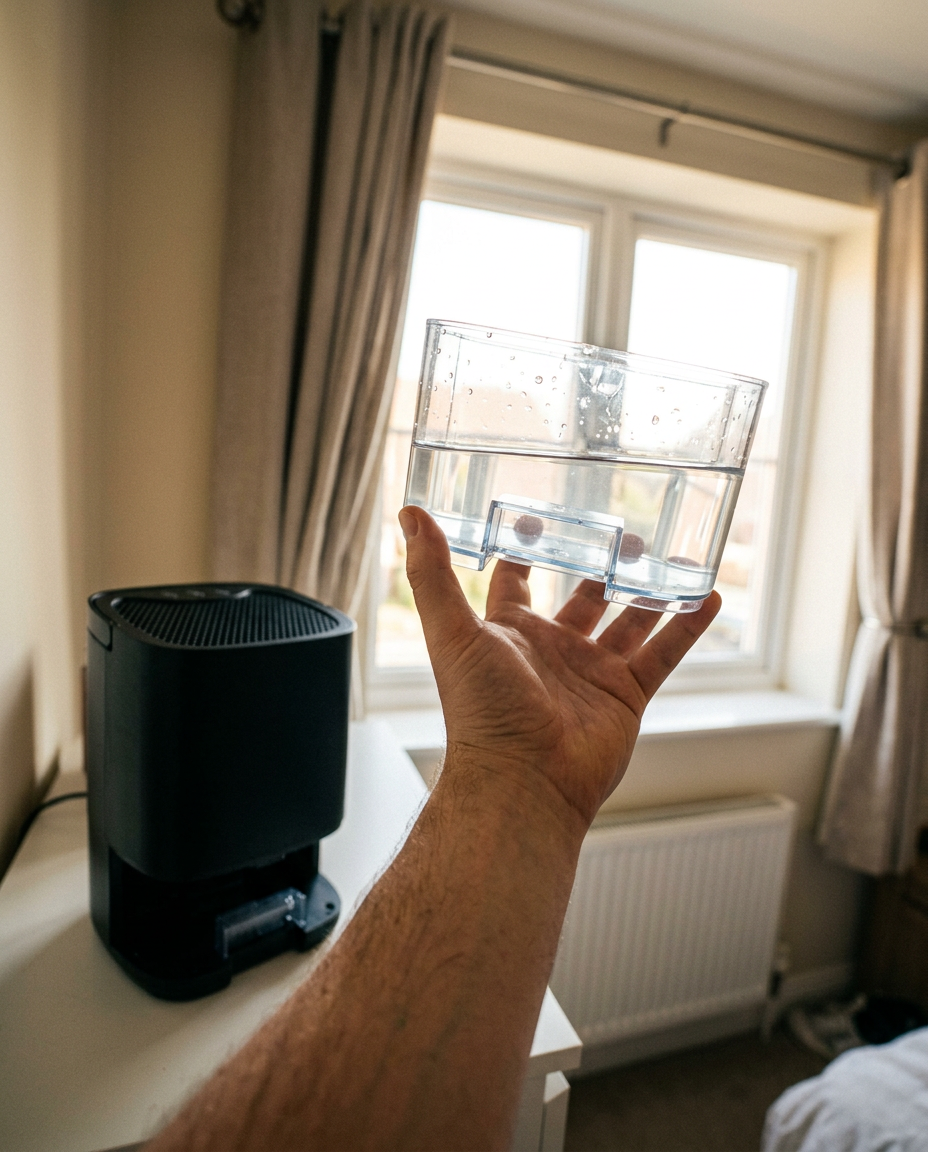
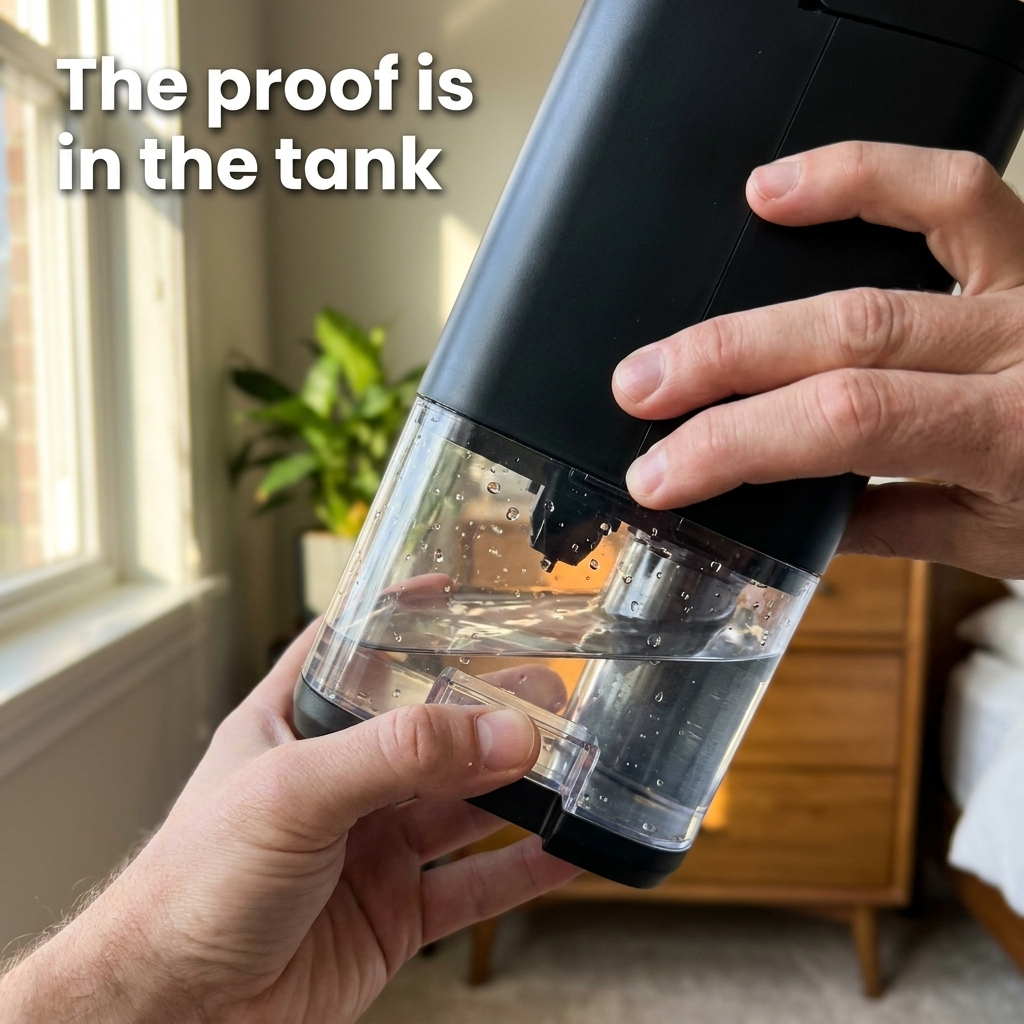
The tank is the receipt
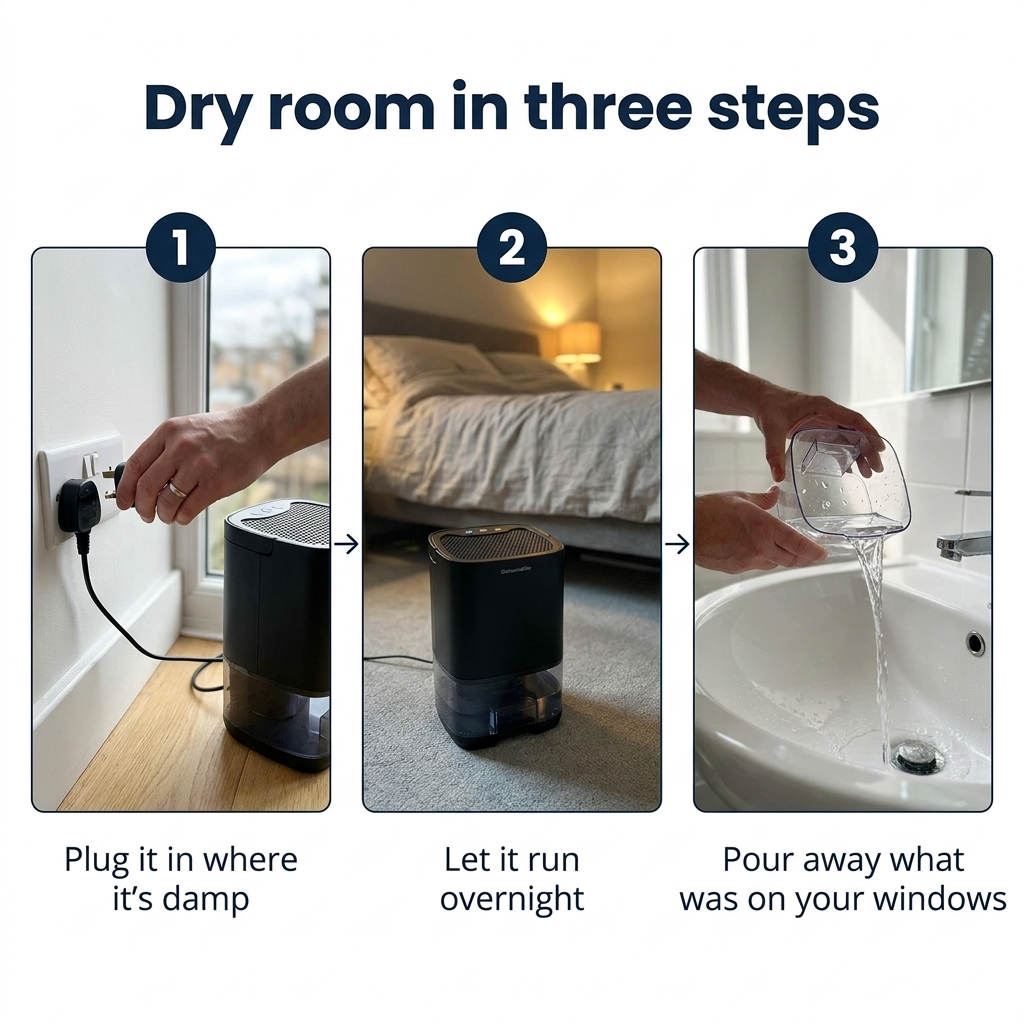
Run Dryft overnight in the problem room and pour out what it caught in the morning. That water didn't appear from nowhere — it's the same water you've been wiping off the glass with a tea towel. Once it's in the tank, it isn't on your windows, your sills or in your wardrobe.
Every home fills it at a different pace — colder rooms slower, drying washing much faster. Emptying it takes ten seconds: slide out, sink, slide back.
You stop guessing whether it's working. You pour the proof away every few days.
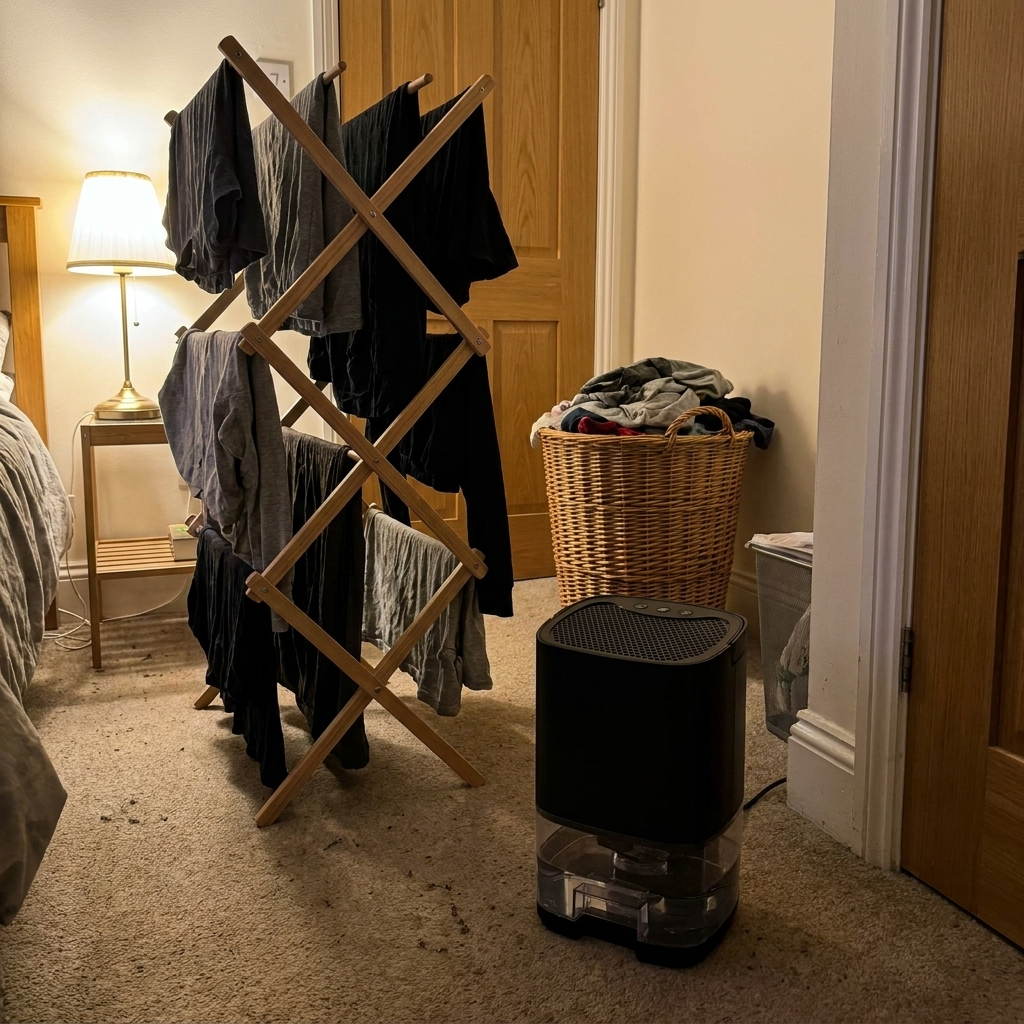
Dry washing by morning — without heating the whole house
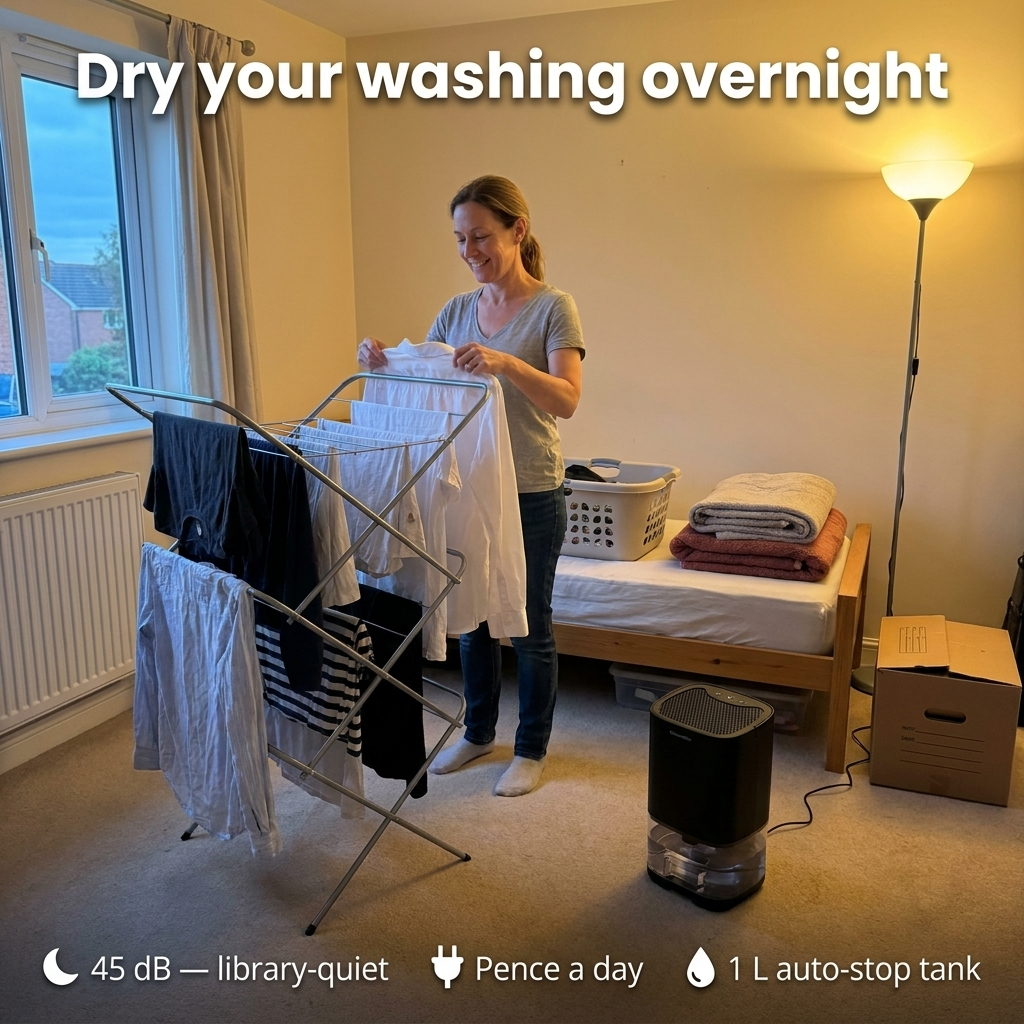
The trick half of Mumsnet already swears by: washing on the airer, Dryft next to it, door closed, overnight. By morning the clothes are dry — and the two litres of water they released are in the tank instead of on your bedroom window.
No tumble dryer at pounds per load. No damp jumpers on radiators making the air worse. No musty smell from clothes that took three days to dry.
Pence overnight, and the washing's done.
A week of water, in and out
Roughly where a family of four's 112 pints come from — and every exit your sealed home actually has.
The condensation calendar
Cold glass + warm damp air = wet windows. That maths starts with the first cold mornings and doesn't stop until spring.
Wait — Jan and Feb should be tallest too. They are: the season runs September to April, peaking through the darkest months. Sort it in summer and you're ready before the first wipe-down; sort it mid-season and you stop feeding the walls from tonight.
Cheaper than the problem it solves
The big compressor brands are genuinely good — for whole houses. Most homes have one or two problem rooms. Start where it drips.


They tried Dryft™
They loved it


Frequently Asked Questions
How much does it cost to run — really?
About 1p an hour. Dryft draws 36 W — a small fraction of what a tumble dryer or an electric heater pulls — so even running it all night costs pennies, not pounds. That belief that “dehumidifiers are expensive to run” comes from the big compressor units; compacts like this are among the cheapest appliances in the house to keep on daily.
Will it keep me awake at night?
It's a Peltier design — no compressor, so the sound is a steady, fan-like hum rather than a rattle, around 40–45 dB depending on the setting, with a night mode that turns the display lights off. Honest answer: it's a gentle background noise, like quiet ventilation — most people sleep through it easily, but if you need total silence, run it in the evening and switch it off at bedtime; the room stays drier either way.
My problem room is cold. Will it still work?
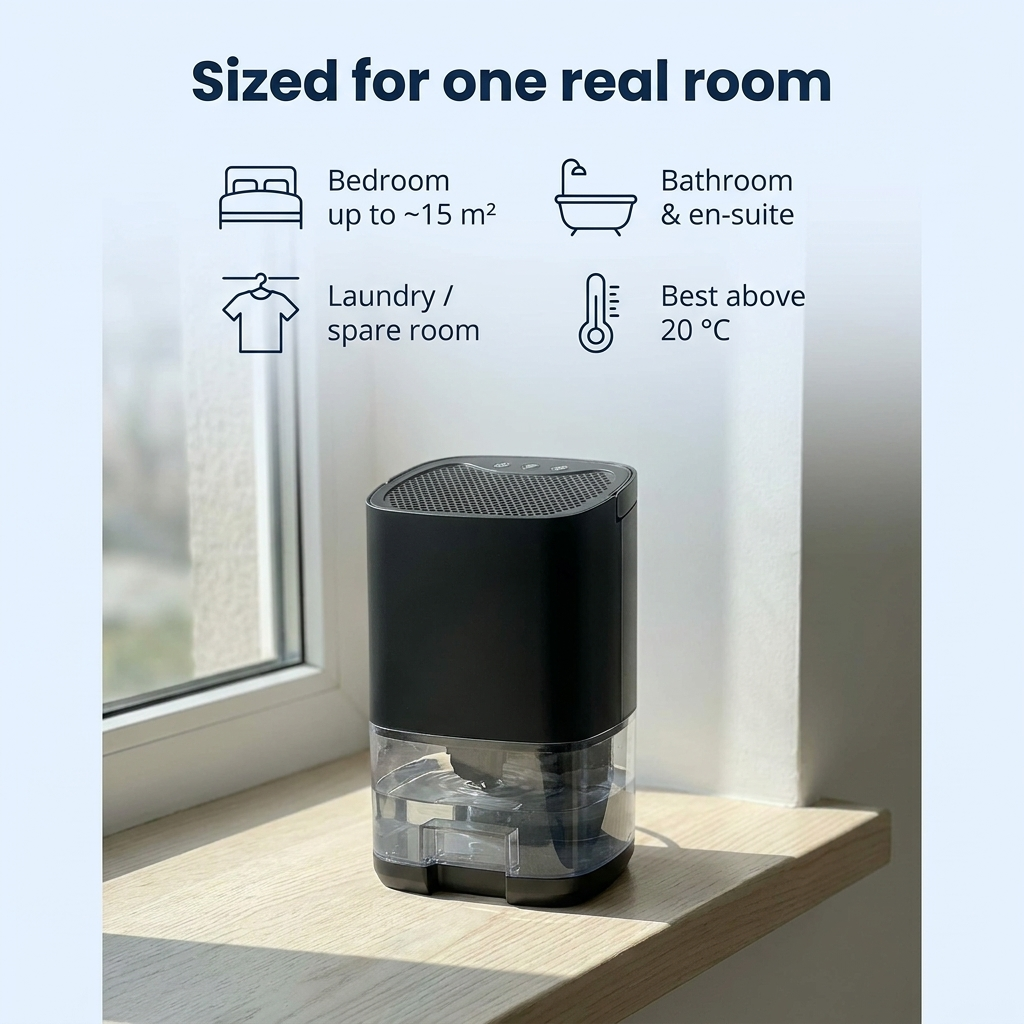
The honest answer: it works best in heated rooms, around 20 °C and up, like every Peltier compact — the difference is we print that and the bargain listings don't. A normally heated bedroom, bathroom or office is fine. An unheated conservatory or garage in January isn't — for those, a compressor unit is the right tool and we'd rather tell you than take the sale.
How often do I need to empty the tank?
Typically every two to three days depending on the room — a damp room with washing drying will fill the 1 L tank fastest, which is exactly what you want to see. When it's full, Dryft stops by itself and a light comes on. No overflow, no puddle, nothing to babysit. Slide the tank out, pour it down the sink, slide it back.
Why not just buy a £200 compressor dehumidifier?
If you need to dry a whole house or an unheated space — do, genuinely. But most homes have one or two problem rooms, where a compressor is overkill: bigger, louder in a bedroom, four times the price. Dryft covers the actual problem for £44.99. Start where it drips.
There's already mould in the room. Is it too late?
Usually not. Clean the existing marks once with a standard mould cleaner — then the job is stopping the damp conditions that feed regrowth, which is exactly what extracting the surplus water does. Keeping the room in the healthy 40–60% humidity range makes it a much harder place for damp patches to return. If water is coming through the wall (rising damp, a leak), that's structural — get a professional first. And if Dryft doesn't make a visible difference in 30 days, return it for a full refund.