
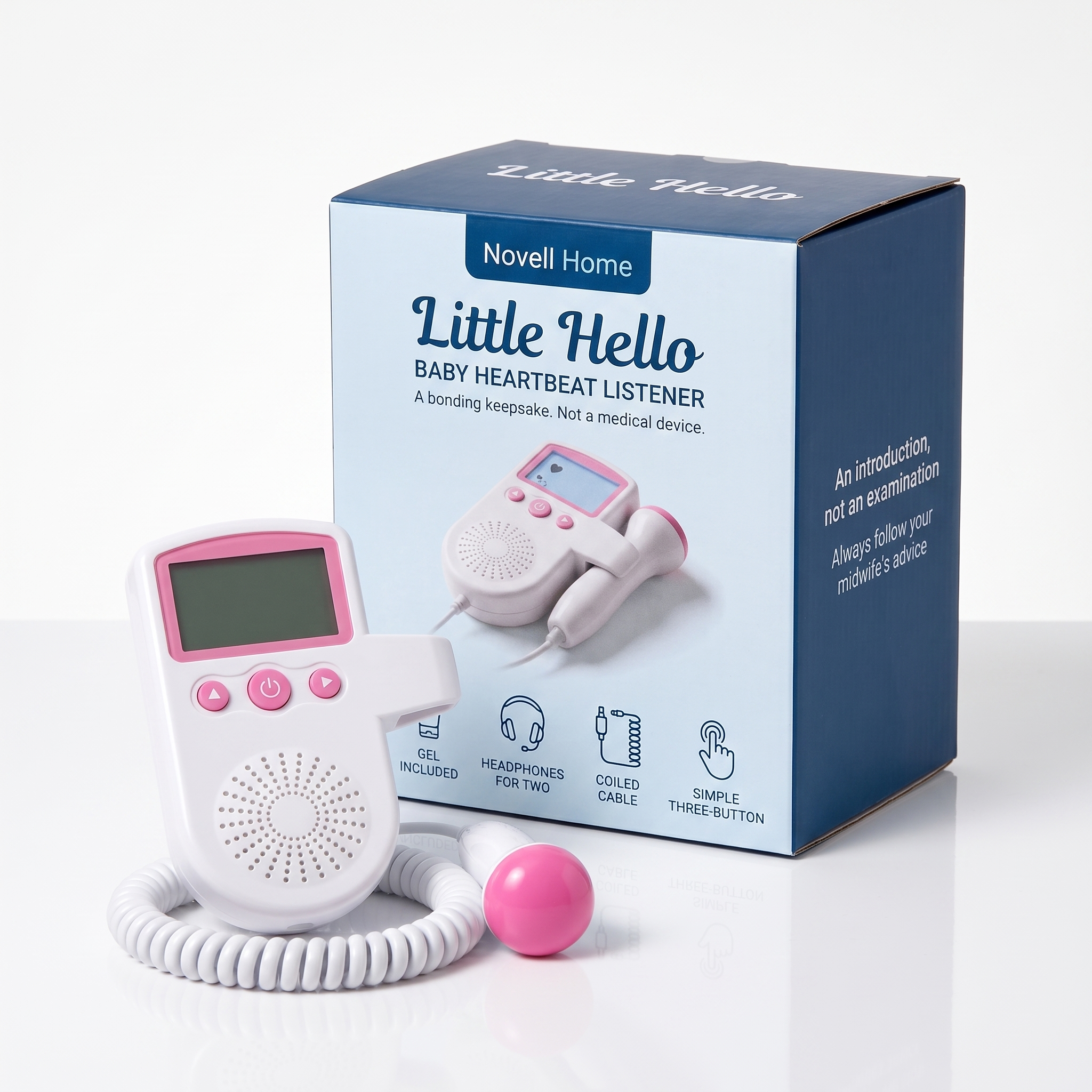

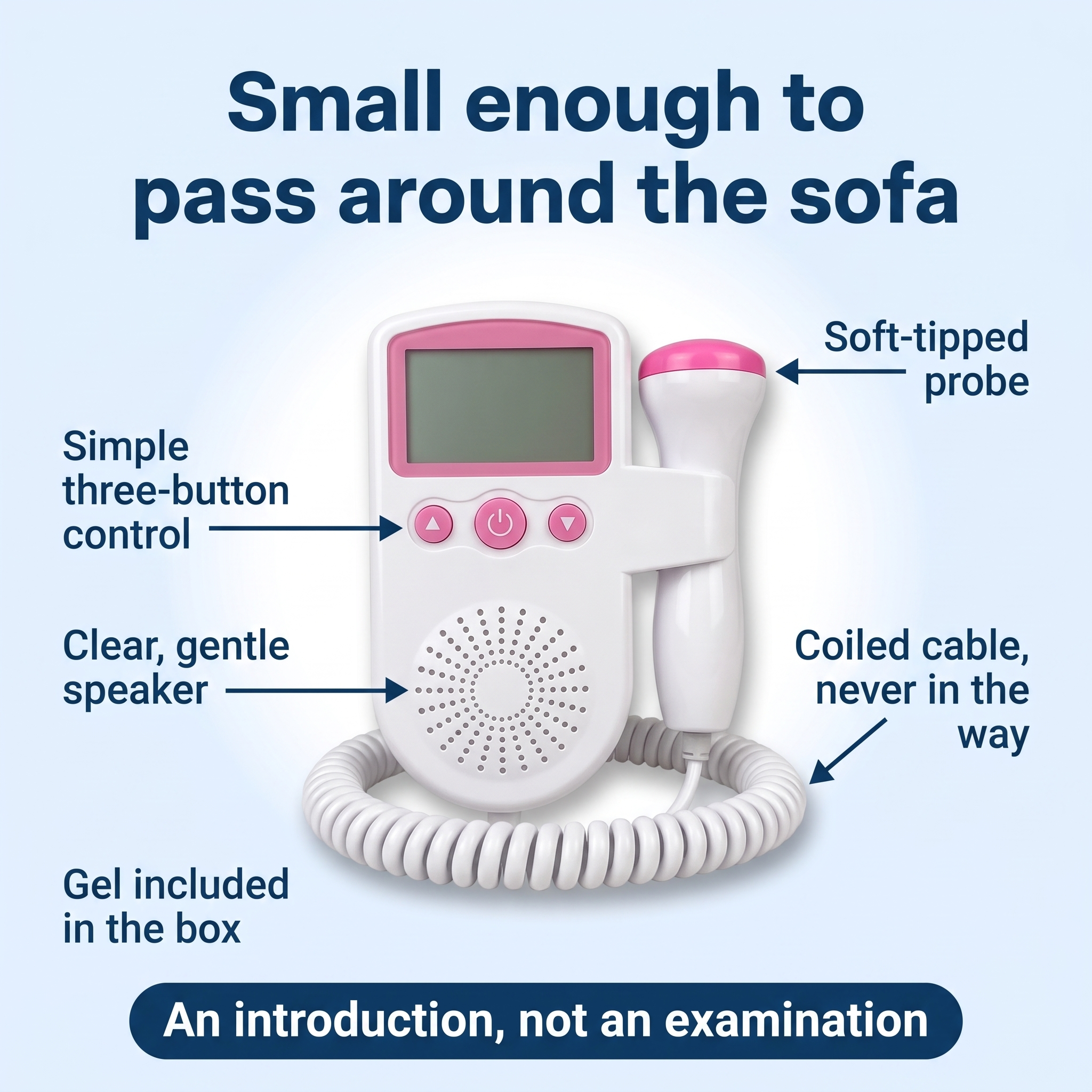

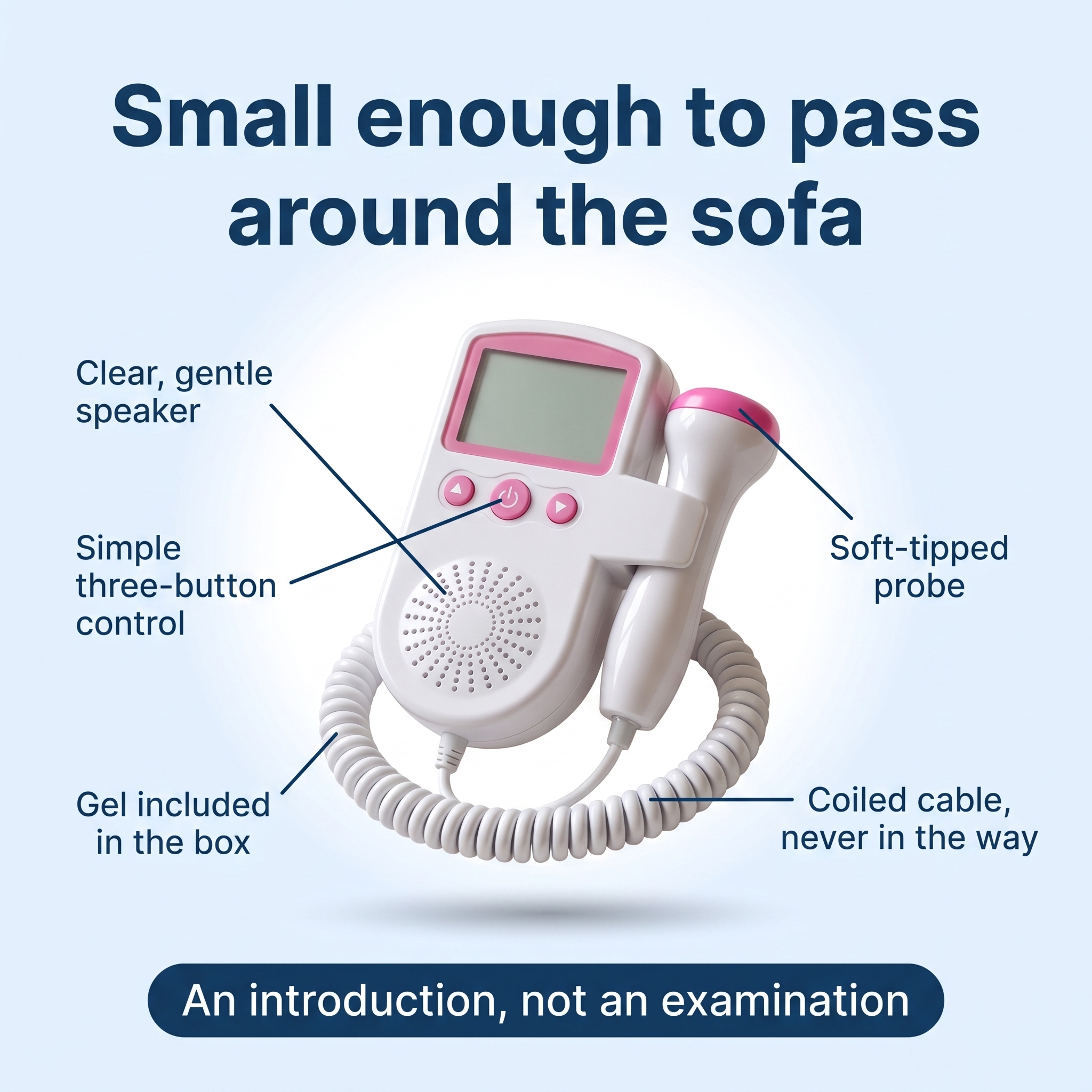
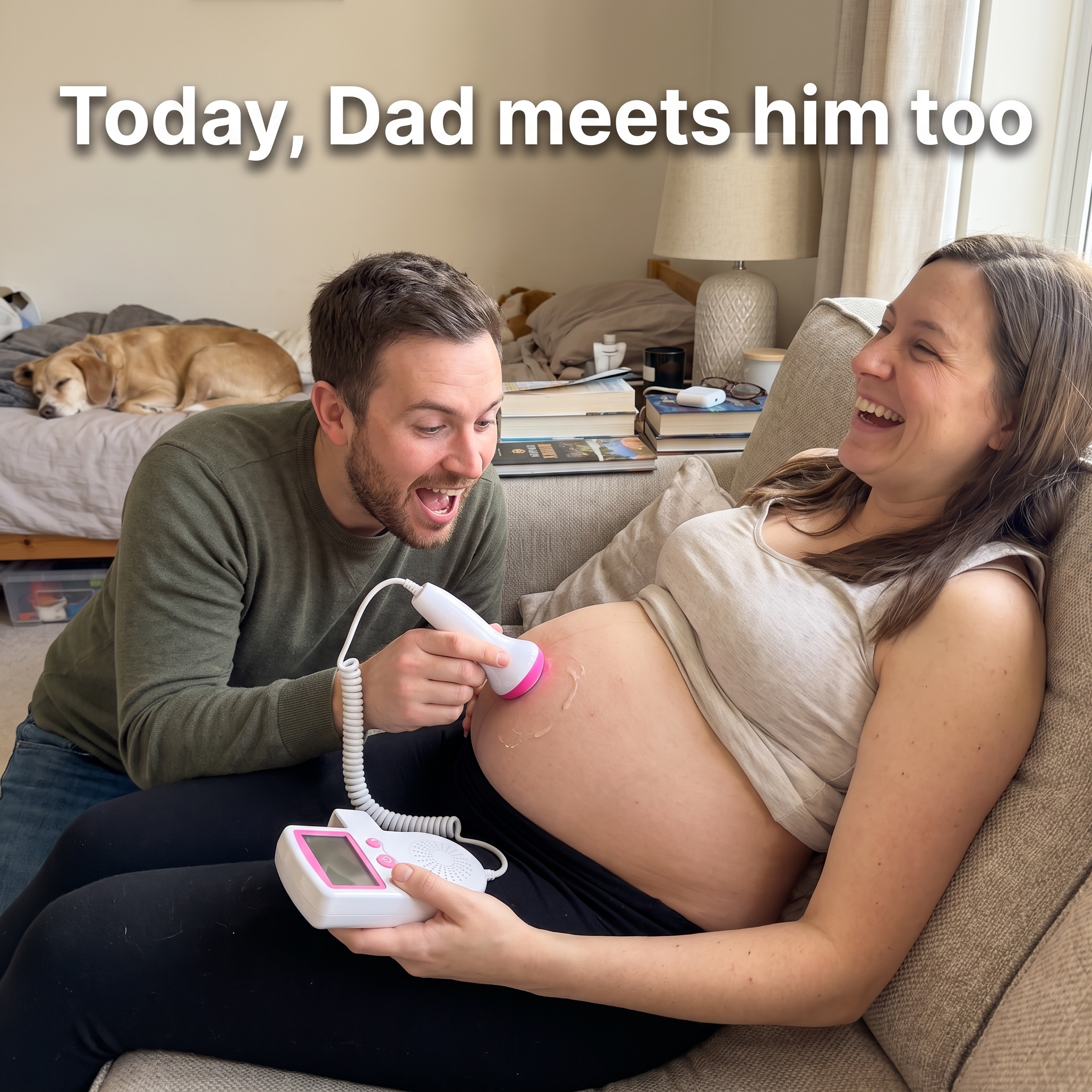
Little Hello™ – Fetal Doppler | Baby Heartbeat Listener
🔊 Built-in speaker — a whole room hears it together, not one person on headphones
👨👩👧 The one thing the partner and the big sister can do too — between the scans
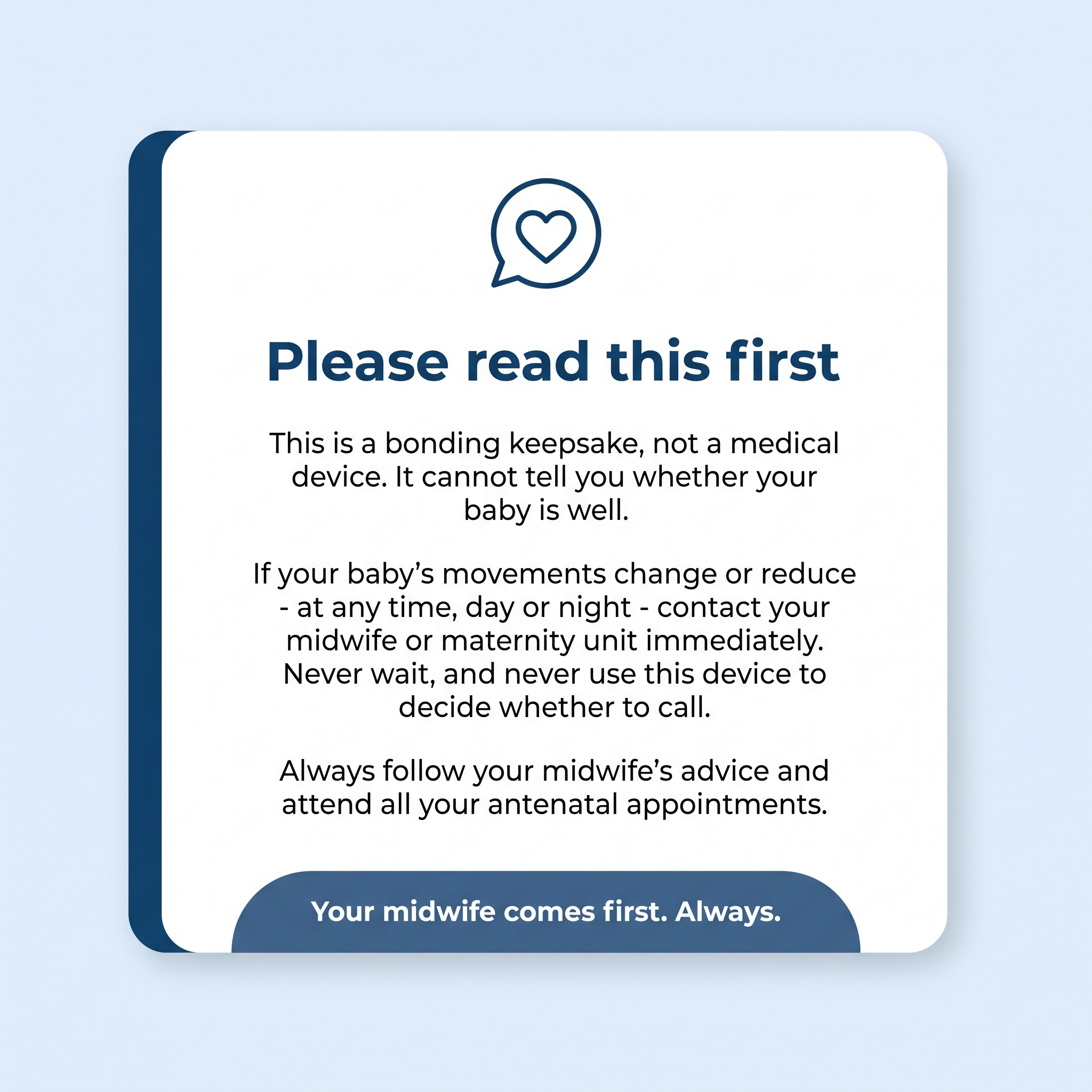
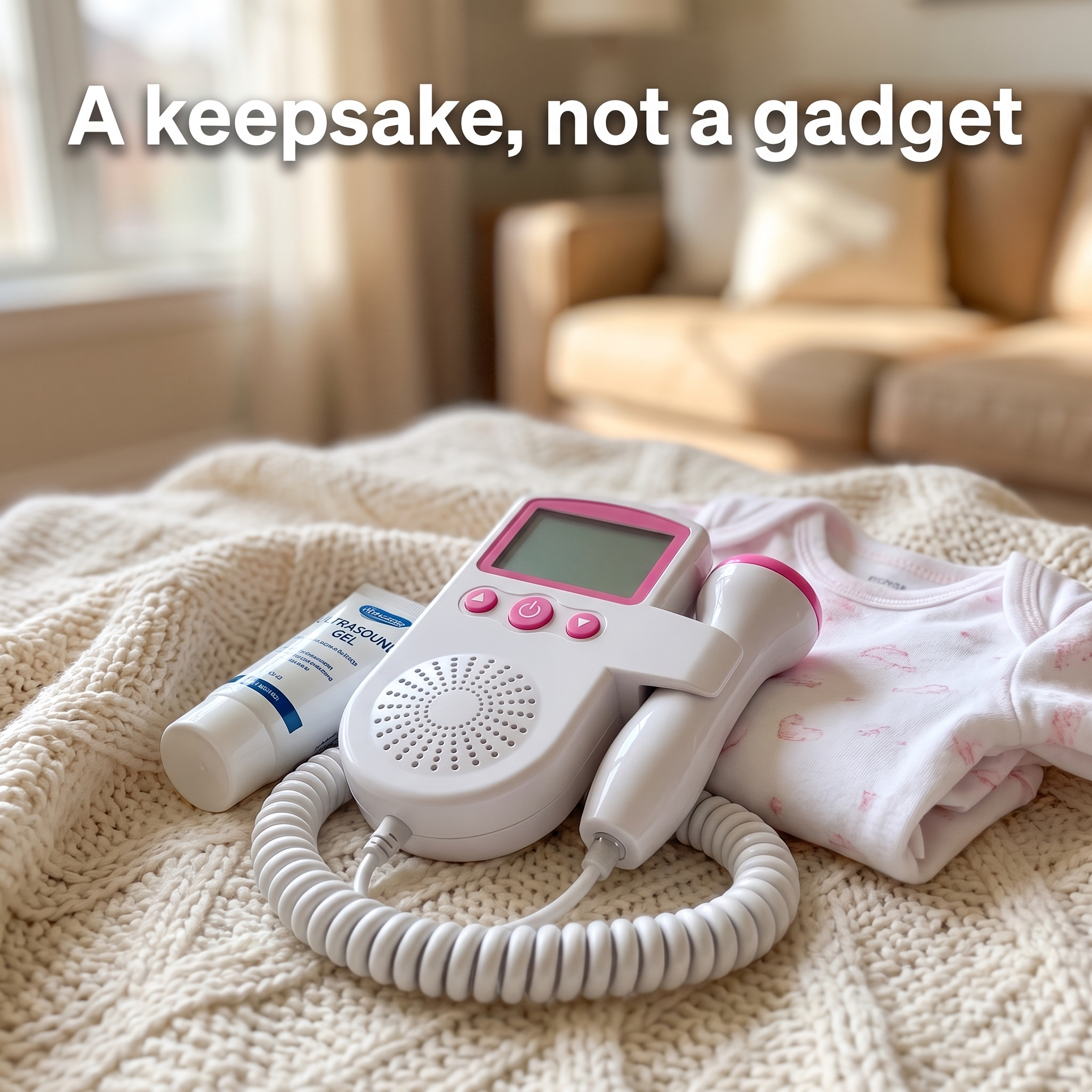
🤍 A keepsake, not a medical device — it can't tell you how your baby is doing
She's known him for months. Everyone else is still waiting.
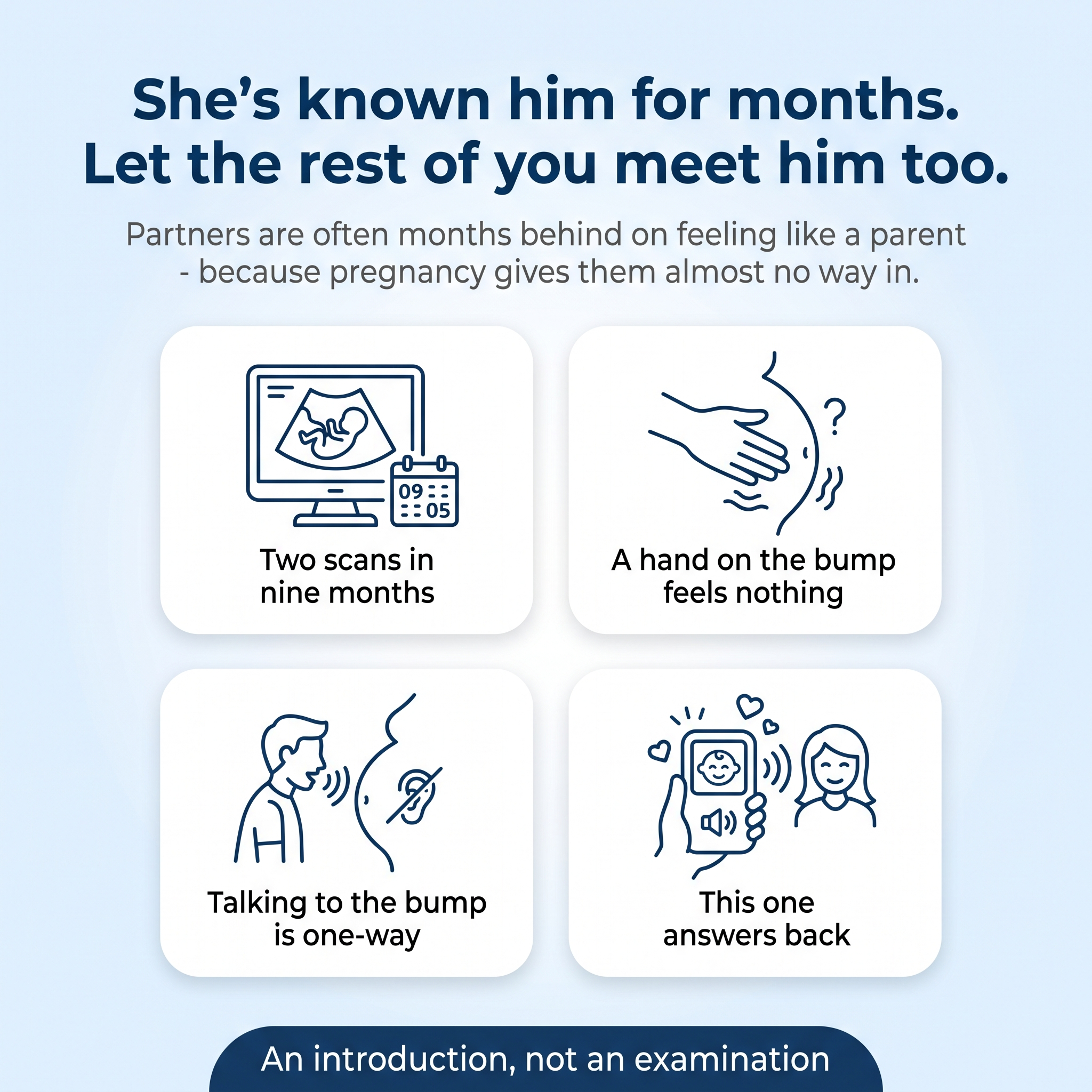
Partners are, on average, up to nine months behind on feeling like a parent. Not because they care less — because pregnancy gives them almost no way in.


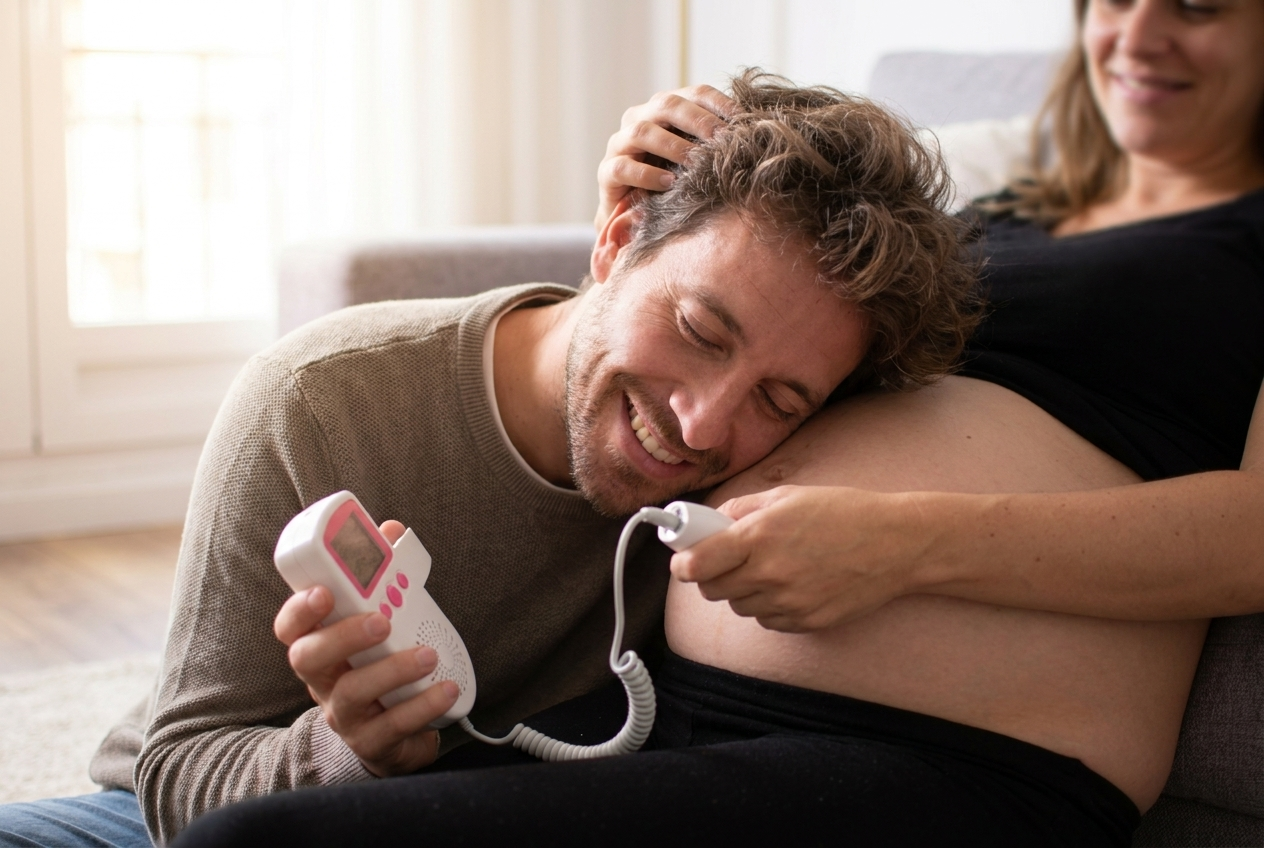
I'd known a photo on the fridge. She'd known him for months.
Twenty-six weeks in, Chloe would grab my hand and say "quick — he's kicking" — and the second my palm landed, he'd stop. Every time.
She'd known this baby for half a year. I'd known a black-and-white photo on the fridge and two afternoons in a hospital corridor. Nobody tells you that you might not feel like a dad yet, or that it's normal, or that it's mostly because nobody ever gives you a way in.
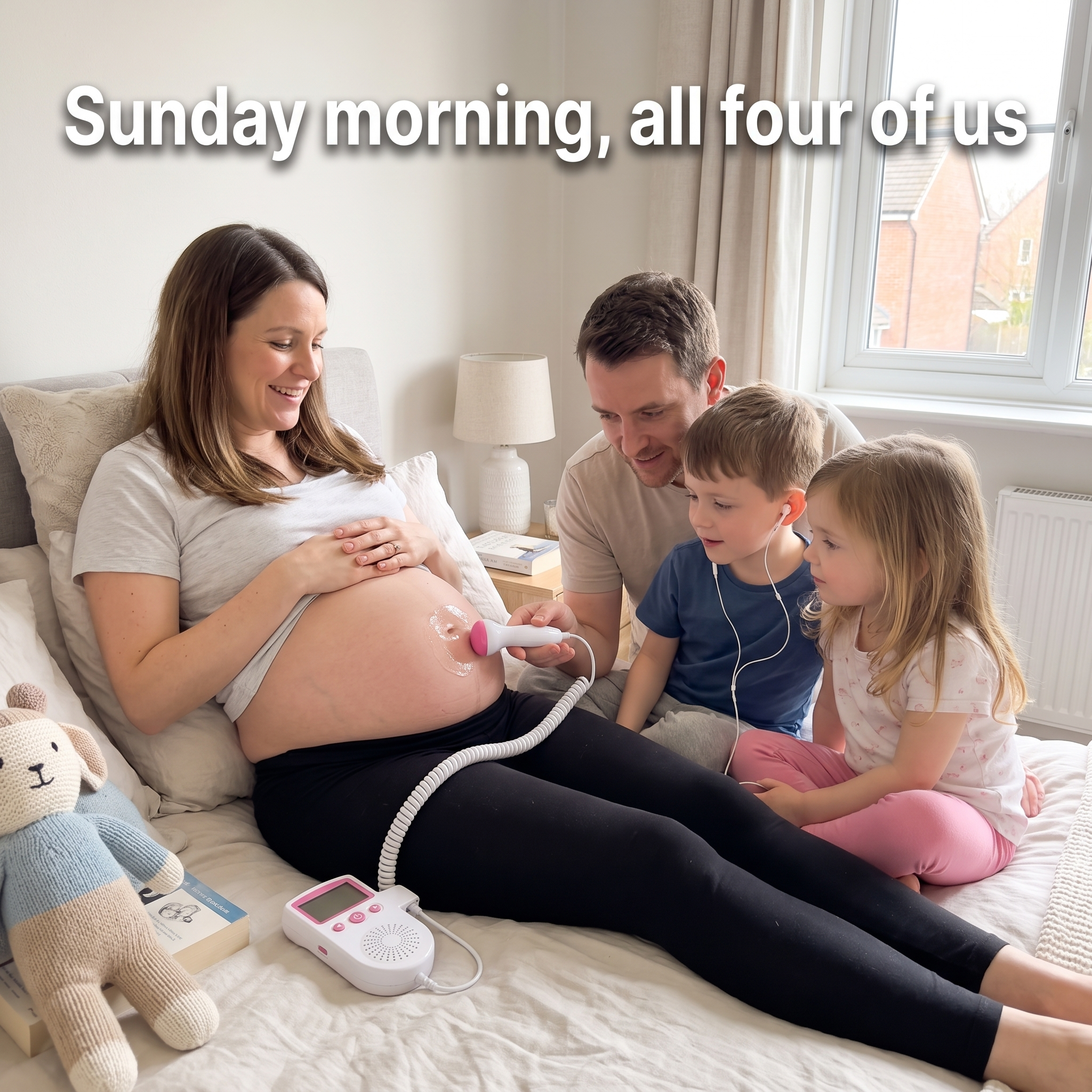
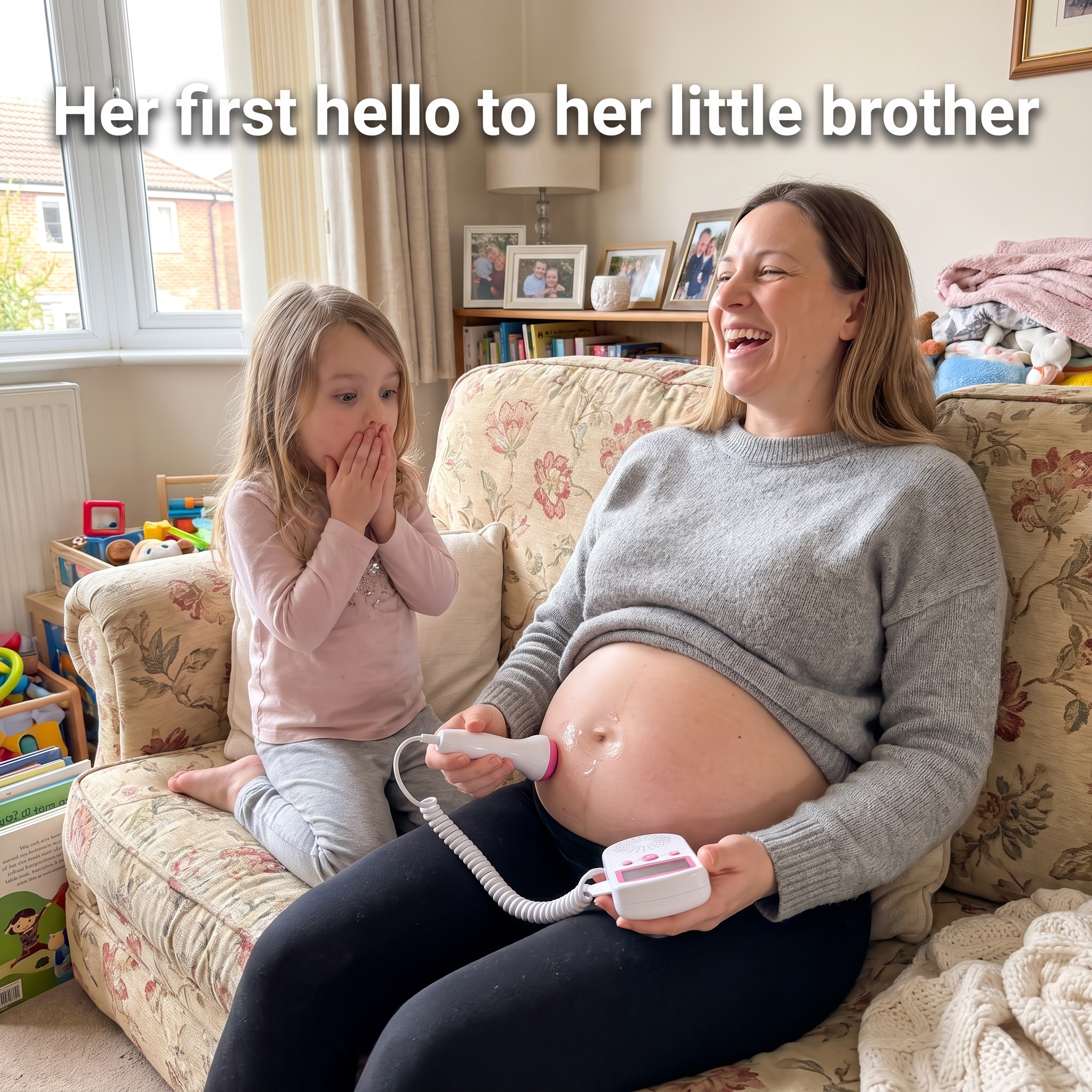
One Sunday we sat on the sofa and I finally heard him — this daft, fast, galloping little sound — and our four-year-old put her ear on the bump and shouted "he's running!".
That's what this is for. Not to work anything out — we had a brilliant midwife for that. Just so the rest of us could meet him too.
An introduction, not an examination
We're not adding a device to your pregnancy. We're giving the sound back to your family.
A moment you can repeat
A scan is an event in a dark room, twice in nine months. This is a Sunday morning on the sofa, as often as you like, with whoever you want in the room.
It finally answers back
Talking and singing to the bump is lovely, but it only goes one way. This is the first thing that gives you something back — on a speaker, so the whole room hears it at once.
They're already listening
By around 18 to 20 weeks a baby's hearing is developing, and they start to know the voices around them. You can hear him before you can see him — and he can hear you.
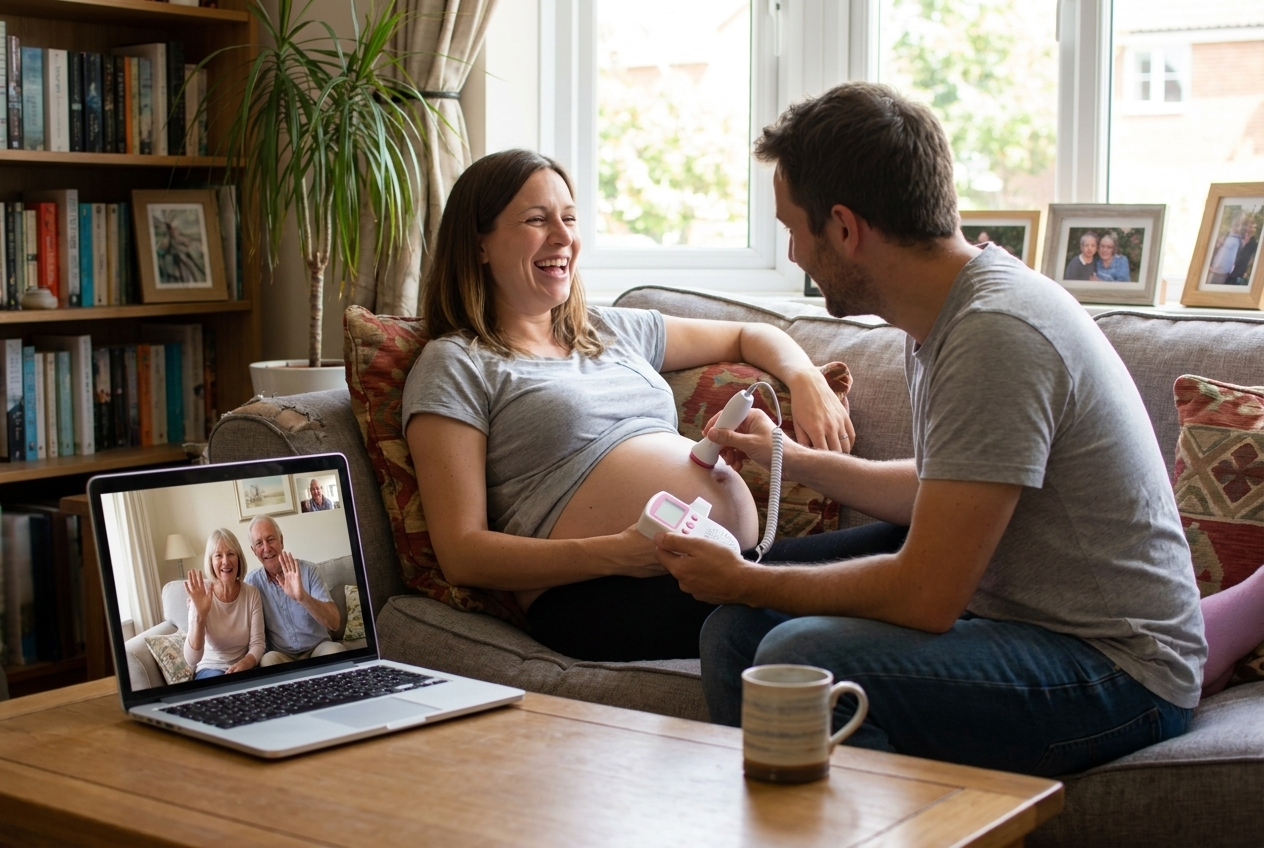
👨👩👧 The people who never get a turn
The mother feels the baby every hour of every day. Everyone else in the family is waiting outside the door for nine months. This is the bit they can be part of.
🧔 The partner — something that's finally his, not borrowed from her experience
🧒 The big brother or sister — suddenly the baby is real, and a bit funny, and theirs to be excited about
👵 Grandparents 200 miles away — on speakerphone, in the room for once
The Pinard horn was invented 200 years ago so a midwife could hear an unborn baby. For most of that history, fathers weren't even allowed in the room.
The scan is the event. This is the Sundays in between.
A private scan is wonderful. It's also one afternoon. This is for the quiet weeks either side of it — and it makes a better present than another sleepsuit.
When it works best — the straight version
The most common disappointment in this category is people expecting it to work first time at 14 weeks. So here is exactly what to expect, before you buy.
✅ It's easiest when
- You're around 20 weeks or more — it can work earlier, but expect to hunt
- You're lying back somewhere quiet, unhurried
- You start low, below the navel, and move very slowly
- You've had a couple of goes already — it's a knack
ℹ️ It's harder when
- You're under 18 weeks — there's simply less to find
- You have an anterior placenta — it sits between the device and your baby. Completely normal, just trickier
- You're sweeping too fast — almost everyone does at first
- You've found a slow steady thump: that's your own pulse. Your baby's is roughly twice as fast
And the thing we most want you to know: if you don't find it, that means you haven't found it. It doesn't mean anything at all about your baby. Message us and a real person will walk you through it.
How the first hello usually goes

Gel on, low down, lie back
Somewhere quiet, no rush. Start below the navel and move the probe very slowly — slower than feels sensible.

Listen for the fast one
A slow steady thump is you. Your baby's is about twice as quick — more of a gallop than a beat.

Then hand it over
This is the whole point. Let him hold it. Let her listen. Put Nan on speakerphone. Record it if you want to keep it.


They tried Little Hello™
They loved it


Frequently Asked Questions
What if we can't find it? Won't that upset us?
This is the honest one, so here it is plainly: not finding it is common, especially before 20 weeks or with an anterior placenta, and it tells you nothing whatsoever about your baby. It means the probe isn't in the right spot yet. Go slower, start lower, try again another day — and message us, because we will genuinely talk you through it. If it's still not for you, send it back within 30 days.
Isn't this the thing midwives say not to use?
What midwives and stillbirth charities warn about is people using one to decide whether their baby is alright — because a heartbeat only tells you about that one second, and someone who hears one might wait instead of ringing. They are completely right, and that is why we don't sell it that way. This is a keepsake for a shared moment. It is never a reason to wait, and it never replaces your midwife.
How early does it work? I'm 16 weeks.
It can work from around 12 weeks, but we'd be doing you a disservice if we pretended that's typical. At 16 weeks expect a hunt and some blank sessions. From around 20 weeks it gets markedly easier, and that's the moment we'd aim for if you're buying it as a gift.
Is it alright to use at home while pregnant?
Keep sessions brief and occasional rather than daily, and follow the instructions in the box. If you have any questions about using one during your pregnancy, ask your midwife — that's exactly the sort of thing they're there for, and we'd rather you asked them than us.
£30 for something we'll use twice?
Most people use it far more than twice, because it stops being a gadget and becomes a small ritual — a few minutes on a Sunday, or whenever someone new comes round. And if it isn't like that for you, there's a 30-day money-back guarantee and free UK returns.